Reviewed · TOURS IN BEIJING
Old Beijing Dinner Tour
Beijing’s best evening meal may begin in a narrow alley with no obvious sign, not at a famous restaurant on a main street. This small-group tour leads you through Old Beijing’s hutongs to local eateries for Mongolian-style hotpot, stuffed dumplings, jianbing, sauced meats, beer, and rice wine.
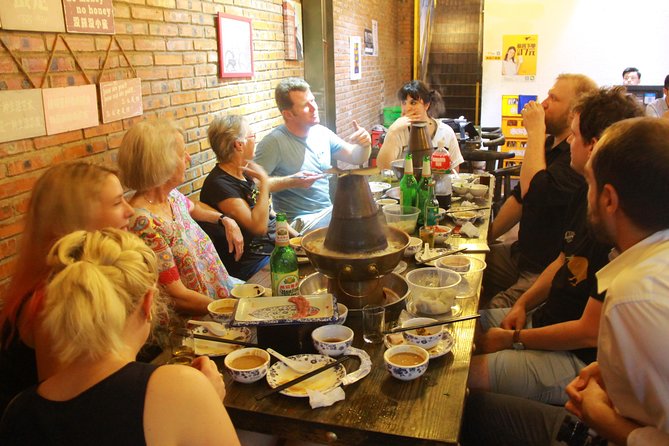
I like the small group, usually eight people and never more than 12, because it keeps the meal social without turning the walk into a parade. I also like the guides’ mix of food and cultural detail, with guides such as Garth, Kelly, Shan, and Zeben explaining where dishes come from and how Beijing neighborhoods work.
The main drawback is quantity. The food adds up to a very large dinner, and one stop can make it hard to do justice to the next. The 7 p.m. start and roughly three-hour length also mean you should plan your return trip before the final rice wine tasting.
Key points to know before booking
- A full meal, not a sample platter: Expect enough food that you may not need another meal for several hours.
- Hutong access: Your guide leads you through narrow lanes and small restaurants that are difficult to locate and navigate alone.
- Several food traditions: Tastings may include Mongolian-style hotpot, hand-stuffed boiled dumplings, Beijing sauced meats, noodles, and jianbing crepes.
- Drinks are part of the evening: Local beer, bottled water, soft drinks, and a rice wine tasting are included.
- Small-group format: The usual group has eight people, with a maximum of 12 if a second guide is added.
- Easy start and finish by metro: Meet near Beixinqiao Station and finish near Zhangzizhong Road Metro on Line 5.
Why this Beijing food walk feels different
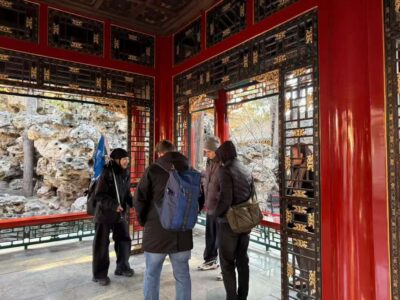
Many food tours keep you on broad commercial streets, moving from one polished restaurant to the next. This one uses the hutongs as its dining room. You walk through narrow lanes around Old Beijing, then stop at modest family-run places where the food is aimed at local regulars rather than sightseers.
That setting matters. Hutongs are more than attractive old lanes. They are living neighborhoods, and the route gives you a look at everyday Beijing away from the grand sights. Your guide handles the navigation, ordering, and explanations, so you can focus on the food instead of trying to decode a menu or locate an unmarked doorway.
I especially value the stories attached to each dish. Guides have explained food origins, Chinese history, local customs, and the people behind the restaurants. The strongest accounts describe the meal as a walk through culinary history, from Mongolian influence and the Silk Road to Beijing’s older dairy and preserved-meat traditions.
The tone also depends on your guide. Garth is frequently singled out for clear explanations and help at the end of the night. Kelly is known for managing a group of eight closely and handling an unexpected restaurant delay with a nearby brewery stop, beer, and fresh fruit. Shan, Zeben, Katie, Jesus, Julia, Eric, and others have also led highly praised evenings. Guide assignments can change, so treat these names as examples rather than a promise.
Other evenings with dinner in Beijing:
- Beijing:Temple of Heaven Private Tour w/Option Show & Dinner
★ 4.8 · 18 reviews - Beijing Hutong Dinner and Beer Walking Private Tour
★ 5.0 · 9 reviews - Beijing: Acrobatic Show with Peking Duck Dinner Private Tour
★ 4.9 · 8 reviews
Meeting at Beixinqiao Station at 7 p.m.
The tour begins near Beixinqiao Station in Dongcheng District. The location is practical because the area is served by public transportation, but a busy station entrance can still be confusing after dark. Read the meeting instructions carefully and allow time to identify the exact meeting point.
There is no hotel pickup or drop-off. You need to reach the starting point yourself and arrange your return from the final stop. Your guide can help with directions after the tour, and several evenings have ended with assistance arranging a taxi or ride back to a hotel.
The walking portion is part of the experience, not simply transportation between restaurants. Hutong lanes can be narrow and confusing, particularly after sunset. That is where the local route knowledge earns its keep. You are not expected to find each place on your own or know how to order before you arrive.
Wear comfortable shoes. The tour lasts about three hours, and the evening includes walking, standing, and eating at several locations. Most people can participate, but anyone with limited mobility should consider the narrow-lane setting before booking.
First tastes: hotpot and northern comfort food
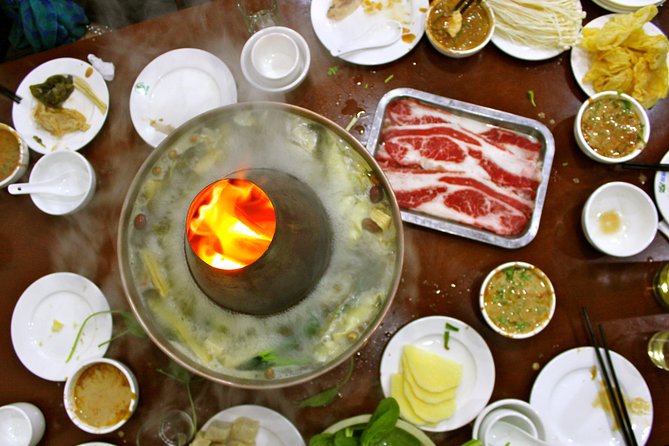
The meal may begin with Mongolian-style hotpot, a generous introduction to northern Chinese cooking. Hotpot is social by nature, with ingredients cooked at the table, and it gives the group an easy way to settle in while the guide explains what is being served.
This can also be the point where pacing matters most. The portions are described as generous, so resist the urge to treat the first course as the entire dinner. You have several more stops ahead, and the tour is designed as a sequence of tastes rather than one large plate followed by a walk.
The food may also include hand-stuffed boiled dumplings, noodles, or other northern specialties. These are useful dishes to try with a guide because shape, filling, dipping sauce, and preparation can vary, and the explanation gives you more than a name on a menu.
Some guides also use the meal to explain how geography and past contacts shaped Beijing food. That context is one of the tour’s strongest features. You are not simply eating familiar Chinese dishes in a new city. You are learning why northern food often leans toward wheat-based foods, dumplings, noodles, and hearty preparations.
Hutong stops, jianbing, and local restaurants
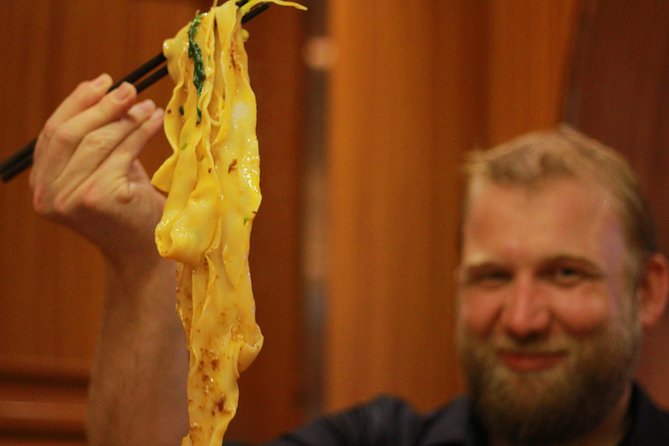
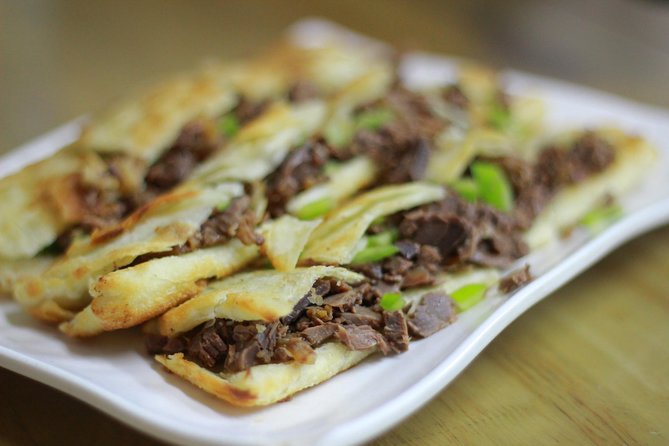
As the evening continues, the route moves between small restaurants and street food stops. One highly praised favorite is jianbing, a savory crepe often made with egg and a crisp element. The dish is quick, inexpensive, and strongly tied to everyday food culture, yet it is easy to miss if you stay with restaurant meals aimed at international visitors.
The tour may also include Beijing sauced meats, chicken, noodles, and other specialties. Exact dishes can change, which is normal for a food walk built around local shops. That variety is a benefit, but it also means you should not book expecting a fixed restaurant menu.
The restaurant stories add character. One stop has been described as a particularly unusual place, with an owner who raises birds, quotes poetry in parks, and taught a dog to ride a child’s scooter. Details like this show what a guided food walk can provide beyond the plate. You meet the personality of a neighborhood, not just its most photogenic buildings.
There can be small delays. A reservation mix-up once led to a wait at a chicken restaurant, but the guide used the time for a nearby microbrewery visit, beer, and fresh fruit. That is a useful sign of what you are paying for: not rigid timing, but someone who can adjust the evening when local dining does not run like a clock.
Other places to sit down and eat in Beijing:
- Beijing: Top Michelin Vegetarian Restaurant Reservation
★ 5.0 · 5 reviews - Beijing Night Tour with Acrobatics Show & PekingDuck Dinner
★ 5.0 · 3 reviews - Shanghai Night River Cruise Tour with Xinjiang Style Dining Experience
★ 5.0 · 324 reviews - Shanghai: Night River Cruise Tour with Xinjiang Style Dining
★ 5.0 · 210 reviews
Nuoyan Rice Wine Shop and the final tasting
The final scheduled stop is Nuoyan Rice Wine Shop, a boutique producer where you sample a small flight of rice wines. The guide explains mijiu, a traditional Chinese rice wine with a long history, and places it within the broader development of rice-based drinks across East Asia.
This closing stop changes the pace. After several savory dishes and local beers, the rice wine tasting provides a quieter finish and gives you a chance to ask questions. It is not described as a full drinking session, but alcoholic beverages are included throughout the tour, so pace yourself.
If you do not drink alcohol, mention your needs when booking. The tour includes local alcoholic beverages, soft drinks, bottled water, and the rice wine tasting. Dietary requirements should also be provided in advance so the operator has time to plan for them.
Finishing near Ghost Street and Line 5
The route finishes near the intersection of Dongsi North Street and Dongsi 10th Alley, close to Zhangzizhong Road Metro Station on Line 5. Ghost Street, or Gui Jie, is nearby and is known for its snack restaurants. The itinerary includes a brief look at the area, although the tour is focused on selected local stops rather than a long restaurant crawl along the main street.
This ending is useful if you want to continue the night independently, but do not assume the tour returns you to your hotel. Check the final metro connection and have your hotel address ready. Guides can help with directions, and the post-tour welcome packet includes restaurant suggestions and local travel tips for the rest of your stay.
I like that the evening leaves you with a practical next step. You receive information on the places visited and additional restaurant recommendations, so the tour can become a starting point for later meals instead of a one-night event.
Is $75 a fair price?
At $75 per person, this is not a bargain dinner in Beijing if you compare it only with the cost of individual street snacks. The value comes from the number of tastings, included drinks, a guide, neighborhood navigation, and access to places you might not locate or order from independently.
The included food is substantial. Hotpot, dumplings, jianbing, sauced meats, noodles, chicken, beer, and rice wine can add up quickly, and the dinner is likely to carry you through the rest of the evening. Bottled water, soft drinks, local alcoholic drinks, and a post-tour information packet are also included.
For me, the best value is the reduction in guesswork. You do not need to search for suitable restaurants, translate every menu, work out which dishes to share, or find your way through the hutongs at night. If you already speak Chinese and have several days to explore slowly, you may prefer to spend less and experiment alone. If this is your first Beijing visit, the fee is easier to justify.
The tour is usually booked well ahead, with an average of 24 days in advance. That suggests you should reserve early if your Beijing dates are fixed, especially since the maximum group size is 12.
Who will enjoy this tour most?
This experience suits first-time visitors who want food and local context in the same evening. It is also a good choice for people who enjoy trying unfamiliar dishes but want a guide to explain what they are eating and handle the practical details.
Couples, solo visitors, and small groups can all fit the format. The usual group size of eight is large enough for conversation but small enough for the guide to explain dishes and monitor dietary needs. If the group reaches 12, a second guide may join.
It is less suitable if you want a quiet, formal dinner, a fixed menu, or a short walk. You should also think twice if you have strict dietary requirements and cannot provide advance notice. The operator asks for dietary information when booking, but the food-focused route is built around several shared local stops.
Families and older participants may find the food approachable, but the hutong lanes and evening walking deserve attention. Most people can participate, yet the experience is not a seated restaurant tour from start to finish.
Timing, cancellations, and practical planning
The scheduled start is 7 p.m., and the experience lasts about three hours. The evening may run longer if a restaurant is delayed or if the group takes time at each stop, so avoid booking a late activity immediately afterward.
Free cancellation is available up to 24 hours before the start time. Changes or cancellations inside that window are not accepted for a refund. The experience can also be changed or refunded if poor weather prevents the tour or if the minimum group size is not met.
Bring your booking confirmation on your phone. The tour uses a mobile ticket, and confirmation is provided when you book. Since the route is on foot, carry only what you need and keep your return directions handy.
Should you book the Old Beijing Dinner Tour?
Book it if you want a large, varied dinner tied to Beijing’s neighborhoods, food traditions, and local personalities. The strongest reasons are the small group, the hutong route, the generous number of tastings, and guides who explain the story behind each stop.
Skip it if you prefer to choose every dish yourself, avoid alcohol, dislike walking through narrow lanes, or want a predictable dinner at one restaurant. Also, do not arrive hungry enough to rush the first hotpot course. This is a long tasting meal, not a quick snack tour.
For most first-time visitors, I would schedule it early in a Beijing stay. You will leave with a better sense of what to order, where to eat, and how the hutongs fit into the city. The welcome packet then gives you useful leads for the rest of your visit.
FAQ
How long is the Old Beijing Dinner Tour?
The tour lasts approximately three hours.
What time does the tour start?
The scheduled start time is 7 p.m.
Where does the tour begin?
You meet near Beixinqiao Station in Dongcheng District, Beijing.
Where does the tour end?
The tour ends near the intersection of Dongsi North Street and Dongsi 10th Alley, close to Zhangzizhong Road Metro Station on Line 5.
Is hotel pickup included?
No. Hotel pickup and drop-off are not included.
How large is the group?
The standard group size is eight people. In some cases, the group can reach 12 people with a second guide.
What food might be included?
Possible tastings include Mongolian-style hotpot, hand-stuffed boiled dumplings, Beijing sauced meats, noodles, jianbing, chicken, and other local specialties.
Are drinks included?
Yes. Bottled water, soft drinks, local alcoholic beverages, beer, and a rice wine tasting are included.
Can dietary requirements be accommodated?
You should provide specific dietary requirements when booking. Advance notice is required so the operator can plan for restrictions.
Can I cancel for a full refund?
Yes, if you cancel at least 24 hours before the experience start time. Cancellations or changes made less than 24 hours before the start are not refunded.
New reviews from Beijing
- Mutianyu Wall, Summer Palace & Old Summer Palace Day Tour★ 4.8 · 34 reviews
- Night Market Haggling Adventure with an English Guide!★ 4.8 · 7 reviews
- BusDa-Mutianyu Great Wall&Forbidden City Full-day Coach Tour★ 4.9 · 11 reviews
- Mutianyu Great Wall Ticket with Roundtrip Cable Car★ 5.0 · 20 reviews
- Mutianyu Great Wall Bus Trip+Ticket 7/8/9/10/13/13:30/15:30★ 4.7 · 24 reviews
- Mutianyu Great Wall Entry Ticket Chairlift Up Toboggan Slide★ 4.9 · 8 reviews
- Mutianyu Great Wall 5-KM Guided Hike with Uphill Cable Car★ 4.8 · 16 reviews
- Mutianyu Great Wall Admission Ticket★ 3.6 · 7 reviews
Tours in Beijing, compared.
Forbidden City Tour(Group/Private)-Tickets Included
Read our review →
T-Square & Forbidden City Group or Private Tour
Read our review →
All-Inclusive Tour: Tiananmen Square, Forbidden City, Great Wall
Read our review →
MuBus: Mutianyu Great Wall ENG/ESP/RUS Guided Bus Tour
Read our review →
4-Hour Small Group Tour to Forbidden City with Entry Tickets
Read our review →
Beijing Full Day Tours: Tiananmen Sq, Forbidden City, Great Wall
Read our review →