
Reviewed · FORBIDDEN CITY TOURS
Forbidden City Admission Ticket – With Guide Option
The most useful part of this experience happens before you reach Beijing: your passport becomes your entry ticket to the Forbidden City. Once the reservation is confirmed, you go to the Meridian Gate, show the same passport used for booking, and enter without hunting for a paper ticket or trying to buy one at the last minute.
I like two things here. First, the service removes a real headache, since Forbidden City tickets are released only seven days ahead and can disappear quickly. Second, you are not pushed through a fixed tour. You can spend roughly two to four hours, or longer if you pace yourself, among the halls, courtyards, gardens, and museum displays.
The catch is important: ticket-only means no guide and no transportation. You must reach the Meridian Gate independently, and every name and passport number must be exact. Crowds, security checks, and a long walk across the complex can also make this feel like a full morning rather than a quick photo stop.
Key points to know before booking
- Passport entry at Meridian Gate: Bring the exact passport used during the reservation. No printed ticket is normally needed for direct entry.
- A seven-day booking window: Tickets are released seven days ahead, so late planning can be risky.
- Main palace areas included: The reservation covers the central halls, the Palace of Heavenly Purity, the Palace of Earthly Tranquility, and the Imperial Garden.
- No built-in transport: Ticket-only customers make their own way to the Meridian Gate and leave through Shenwu Gate or Donghua Gate.
- A large site with real walking: The Forbidden City covers 72 hectares and is said to contain more than 9,000 rooms.
- A good fit for independent sightseers: You get entry arranged in advance, but you must provide your own route, context, food, transport, and possibly guide.
Why the passport system matters
The Forbidden City is one of those Beijing sights where the ticket can be harder to secure than the sightseeing itself. You reserve in advance by submitting your name and passport number. After the ticket is issued, the passport is checked at the entrance, often by scanning it directly.
That is convenient, especially if you do not have a local Chinese phone number or are uncomfortable using Chinese booking systems. At the gate, the process is simple when the details match. Several people have found that they only needed to show their passport and join the correct entry line.
But do not treat the passport detail as a minor formality. A wrong number, misspelled name, or incorrect identity document can create a serious problem because there is no ordinary paper ticket to use as a backup. Check every character before submitting the booking.
The service is intended for overseas clients. Visitors from Hong Kong, Macau, and Taiwan must use the correct Mainland Travel Permit details and select the correct identity document type. Chinese citizens using mainland identity cards should book independently through the official mini-program instead.
Other ways into the Forbidden City from Beijing:
- Beijing: Forbidden City Tour(Group/Private)-Tickets Included
★ 4.8 · 7,974 reviews - Beijing: T-Square & Forbidden City Group or Private Tour
★ 4.8 · 4,446 reviews - All-Inclusive Tour: Tiananmen Square, Forbidden City, Great Wall
★ 5.0 · 2,873 reviews
Meridian Gate is your real starting point
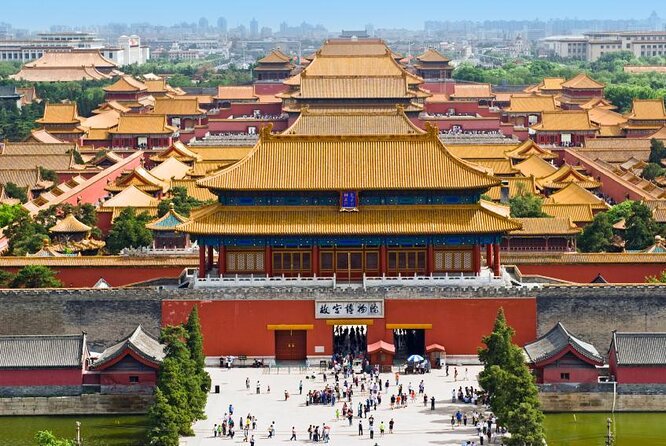
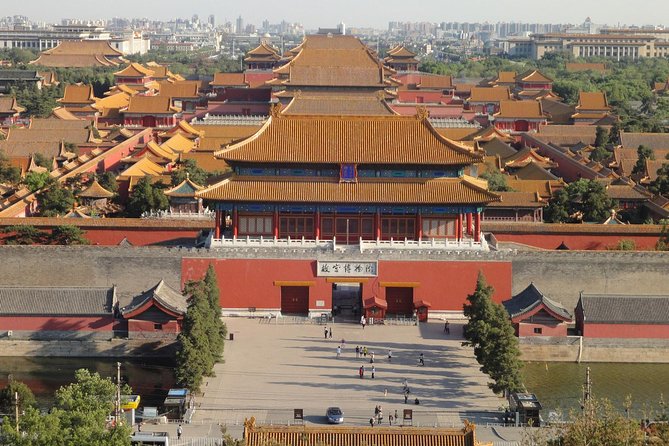
Your visit begins at Meridian Gate, also called Wu Men. This is the southern entrance to the palace complex and the only entrance specified for this reservation. Do not confuse it with the exits on the north and east sides.
Getting to the gate requires planning. You must make your own way there, and several security checks may be part of the approach. The surrounding area can be crowded, and one useful practical detail is that the correct metro exit matters. In this part of Beijing, crossing the road above ground is not always possible, so check your route before setting out.
The selected time is the time from which you can enter, not necessarily the moment you must leave. One booking detail describes a minimum three-hour entry window from the requested time, but the ticket remains valid only on the selected date and within the reserved time arrangement. Treat the time slot seriously, and arrive with enough margin for transport and security.
Once inside, you pass beneath the great gate and begin moving through the former imperial seat of power. The scale changes quickly. What looks like one palace from outside becomes a sequence of huge courtyards, ceremonial buildings, side halls, walls, gates, and enclosed passages.
The imperial route from Ming rulers to Qing emperors
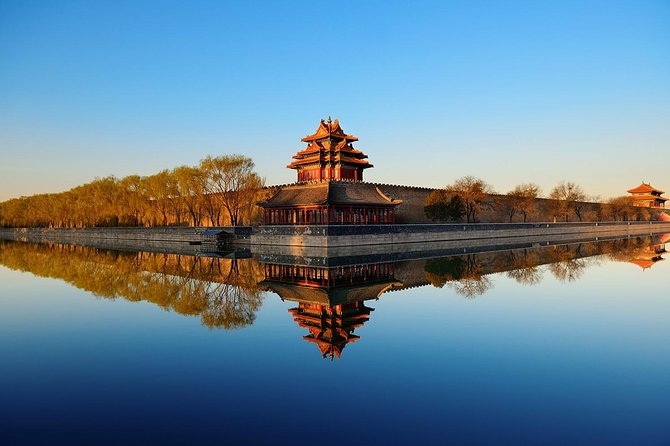
The Forbidden City served as the center of government during the Ming and Qing dynasties from 1368 to 1911. Twenty-four emperors lived and ruled here over more than six centuries.
That history is best understood through the design of the place. Broad courtyards and formal halls were built for ceremony, authority, and controlled movement. The palace was not arranged like a modern museum where every room is open and easy to enter. Much of the power comes from approaching one space, crossing it, and seeing another grand structure lined up beyond.
The complex is often described as having more than 9,000 rooms, though the exact count depends on how rooms are defined. Either way, you are dealing with a huge royal compound, not a small historic house. Give yourself time to slow down and look at roof decorations, painted details, stone ramps, carved surfaces, and the changing proportions of each courtyard.
You may find some interiors closed or limited, while the courtyards remain the main way to experience the architecture. This is one reason an on-site guide or good background reading can help. The ticket gets you through the gate, but it does not automatically explain why one hall mattered more than another.
The central halls and the Dragon Throne
The admission includes the Hall of Central Harmony and the Hall of Preserved Harmony. These buildings form part of the central ceremonial axis and help you understand how imperial events were staged.
The Hall of Central Harmony served as a smaller resting and preparation space for the emperor before major ceremonies. The Hall of Preserved Harmony was used for important occasions and formal gatherings. Their names sound similar, so a guide or map can be useful when you want to keep the sequence straight.
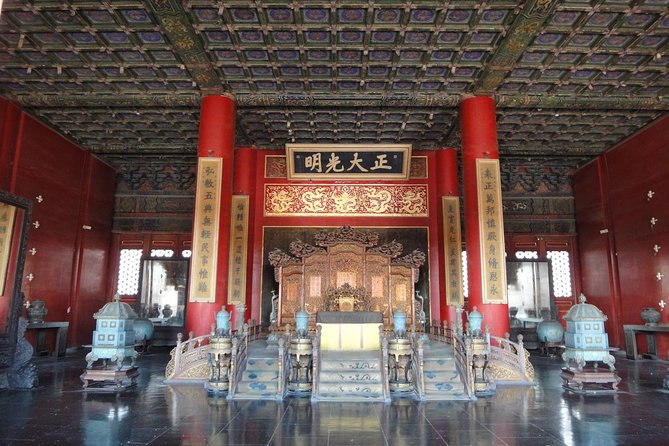
The Dragon Throne is one of the sights most people come to see. It represents the emperor’s authority and gives the palace its strongest sense of ceremony. Expect crowds around major interiors and viewing areas. You may need patience to see the details, and photography rules can affect how you record the moment.
One point worth knowing if you are visiting alone: tripods are not allowed, and placing a phone on a flat platform for a self-timed photo may also be prohibited. If you want a picture of yourself, you may need to ask another person. This is a small rule, but it can be disappointing if you planned the visit around solo photographs.
A few more days out in Beijing worth the ticket
- 4-Hour Small Group Tour to Forbidden City with Entry Tickets
★ 5.0 · 1,863 reviews - Beijing: Tiananmen Square Registration Service(Ticket)
★ 4.5 · 1,704 reviews - Beijing: The Temple of Heaven or Summer Palace Entry Ticket
★ 4.6 · 1,286 reviews - Beijing Forbidden City Ticket Booking (Optional: guide service)
★ 5.0 · 1,263 reviews
The private quarters of the inner palace
The Palace of Heavenly Purity and the Palace of Earthly Tranquility are also included. These names can sound abstract until you see their place within the palace plan. Together with nearby buildings, they represent the inner court and the world of the imperial household.
The Palace of Heavenly Purity was associated with the emperor. The Palace of Earthly Tranquility was linked to the empress and the inner palace. Seeing both helps you move beyond the usual image of the Forbidden City as only a collection of grand public halls.
Here, I would resist rushing from one famous building to the next. Look at the relationship between open courtyards and more secluded spaces. The palace was designed to control privacy, access, rank, and ceremony. Even without a guide, the layout tells you that this was a working court and residence, not simply a grand architectural display.
The ticket does not promise access to every room or every museum display. It covers the listed palace areas, and conditions inside can vary. If a particular gallery is your priority, check on the day rather than assuming every building is open.
The Imperial Garden gives the route a change of pace
At the northern end of the palace complex, the Imperial Garden offers a different mood from the long ceremonial courtyards. It is more intimate, with arranged planting, decorative features, and spaces meant for the imperial household.
This is a useful place to pause because the Forbidden City can feel physically demanding. The broad stone surfaces and long distances create more walking than many first-time visitors expect. A visit described as two to four hours can easily become longer if you stop for photographs, read displays, or explore at a careful pace.
The garden also helps you understand that palace life was not only public ritual. Behind the formal axis were private spaces, daily routines, family relationships, and controlled leisure. You will get more from the site if you allow these contrasts to register instead of treating each building as another quick photo.
The Palace Museum collection adds depth
The Palace Museum houses a collection of about 1.8 million artifacts. Admission to the Forbidden City gives you access to a setting where those objects can be understood in context, although not every artifact is necessarily on display during your visit.
The collection covers the material world of the imperial court and China’s artistic traditions. Depending on the galleries open that day, you might see objects that make the architecture feel less empty and more connected to daily court life. Paintings, ceramics, furnishings, religious objects, and ceremonial pieces can show how the palace functioned as a center of government, ritual, and culture.
The ticket is therefore more than access to a collection of buildings. It places you inside the institution now known as the Palace Museum. Still, keep your expectations practical. The supplied admission list identifies the main halls and garden, but it does not guarantee a specific temporary exhibition, special gallery, or audio guide language.
One Italian audio guide was reported to work poorly, and audio guides are sold separately inside. If interpretation matters to you, bring your own reading material or arrange a proper guide rather than assuming the optional audio service will meet your needs.
Ticket only or guide option?
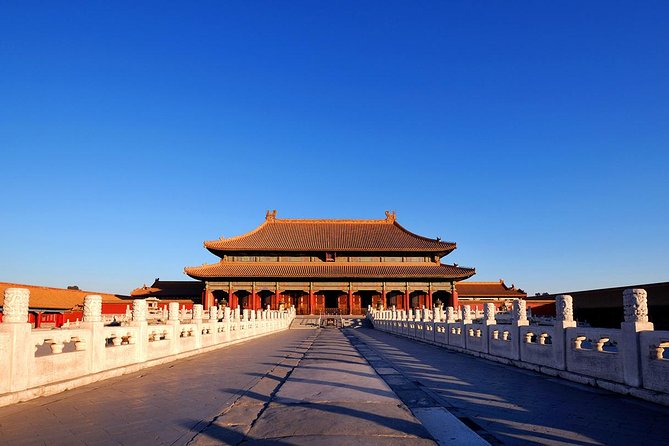
The title presents a guide option, but the included details make a sharp distinction: the ticket-only choice has no guide service and no transportation. You should read the exact option name at checkout before paying.
Choose ticket only if you enjoy moving independently, are comfortable reading a map, and mainly want reliable admission. It is also the better match if you already have a Beijing guidebook, a phone-based audio resource, or a private guide arranged separately.
A guided option can make more sense if the difference in price is reasonable and the guide’s meeting point, language, duration, and inclusions are clearly stated. The supplied information does not provide a guide’s name or a guaranteed language, so do not assume that a guide is included simply because the overall experience mentions one.
The strongest value here is ticket access, not interpretation. You are paying about $9.90 per person for help securing entry to a difficult-to-book attraction. That is a modest cost if it saves you from losing a morning to a sold-out date or from navigating an unfamiliar booking system. It is less attractive if you expect transport, a structured tour, hotel pickup, or detailed historical commentary.
How long should you allow?
The stated duration is approximately two to four hours. That is enough for a focused visit through the main axis, several principal halls, and the Imperial Garden. It is not generous if you want to read museum labels, pause often, and see every open gallery.
I would plan this as a major Beijing activity, not a quick stop between unrelated sights. One person made the sensible mistake of underestimating the site after arriving in Beijing tired. The lesson is simple: do not schedule it when jet lag has flattened you, especially if you want to appreciate the scale.
You may also want snacks and water for a longer visit, although the supplied information does not specify food facilities inside. Wear comfortable shoes and avoid stacking the Forbidden City with too many fixed appointments. The place rewards patience, but it punishes a rushed schedule.
The two exits are Shenwu Gate, near Jingshan Park, and Donghua Gate, near Wangfujing Street. This is useful when planning what comes next. You can leave near Jingshan if you want to continue your sightseeing in that direction, or use Donghua Gate for the Wangfujing area.
Crowds, security, and the best expectations
The Forbidden City is famous for a reason, and it is rarely a quiet private discovery. Crowds can be heavy even outside the busiest season. Some visitors have spent at least 30 minutes moving through the approach and security process, while others found the entry well managed despite large numbers.
The reservation helps with availability, not with turning the palace into an empty monument. You should still expect queues, organized security, and popular viewing areas with other people around you.
That said, the scale gives crowds room to spread out once you are inside. The route is generally easy to follow because the central axis is clear, though the complex is large enough that a simple map can save time. Plan photographs early or late in your visit, and do not judge the whole experience by the first security line.
Booking, cancellation, and who should choose it
Confirmation is normally issued when the reservation is made. If you book within seven days of the travel date, confirmation can take up to 48 hours and remains subject to availability. Tickets are released seven days before the selected date, so book as soon as that window opens.
Free cancellation is available up to 24 hours before the experience start time. Changes or cancellations inside that 24-hour period are not accepted for a refund. The experience also requires good weather, and if poor weather causes cancellation, you are offered a different date or a full refund.
This service suits an overseas visitor who wants the difficult admission step handled in advance and is happy to arrange the rest. It is particularly useful for a short Beijing stay, a layover with enough time, or anyone without a local phone number.
It is less suitable if you need hotel pickup, a guaranteed expert explanation, a fully planned route, or certainty about every interior room. In those cases, confirm the guide option carefully or book a separate guided visit.
Should you book this Forbidden City admission?
I would book it if your main concern is getting through the gate on your chosen date. The passport entry system is simple once the reservation is correct, and $9.90 is reasonable for assistance with a popular ticket that can sell out fast.
Book it with clear expectations. You are buying admission, not a complete Beijing tour. Reach Meridian Gate on your own, bring the correct passport, allow time for security and walking, and decide in advance whether you need a guide.
For independent sightseeing, this is a practical choice with strong value. For a first visit where the meaning behind the halls matters as much as the architecture, choose the guide option only after confirming exactly what it includes.
FAQ
What is included with the Forbidden City admission?
Admission includes entry to the Forbidden City and access to the Hall of Central Harmony, Hall of Preserved Harmony, Palace of Heavenly Purity, Palace of Earthly Tranquility, and the Imperial Garden.
Where do I enter the Forbidden City?
You enter through the Meridian Gate, also called Wu Men.
Do I need to show a printed ticket?
No printed ticket is normally needed for direct entry. You must show the passport used for the reservation.
Can I use any passport at the entrance?
No. Every visitor must present the same passport details submitted during booking. Make sure the name and passport number are accurate.
Is a guide included?
The ticket-only option does not include a guide. It also does not include transportation. If you want a guide, check the selected option and its inclusions carefully.
Is transportation provided?
No transportation is included with the ticket-only option. You must reach the Meridian Gate independently.
How long does the visit take?
The approximate duration is two to four hours, although you may spend longer exploring the 72-hectare complex and its museum areas.
Can children enter free?
Children under six can enter free of charge. A passport must be shown on site.
Can Hong Kong, Macau, and Taiwan visitors book?
Yes, but visitors from Hong Kong, Macau, and Taiwan must book with the correct Mainland Travel Permit and select the correct identity document type.
What happens if I need to cancel?
You can receive a full refund if you cancel at least 24 hours before the experience start time. Cancellations or changes made less than 24 hours ahead are not accepted for a refund.
New reviews from Beijing
- Mutianyu Wall, Summer Palace & Old Summer Palace Day Tour★ 4.8 · 34 reviews
- Night Market Haggling Adventure with an English Guide!★ 4.8 · 7 reviews
- BusDa-Mutianyu Great Wall&Forbidden City Full-day Coach Tour★ 4.9 · 11 reviews
- Mutianyu Great Wall Ticket with Roundtrip Cable Car★ 5.0 · 20 reviews
- Mutianyu Great Wall Bus Trip+Ticket 7/8/9/10/13/13:30/15:30★ 4.7 · 24 reviews
- Mutianyu Great Wall Entry Ticket Chairlift Up Toboggan Slide★ 4.9 · 8 reviews
- Mutianyu Great Wall 5-KM Guided Hike with Uphill Cable Car★ 4.8 · 16 reviews
- Mutianyu Great Wall Admission Ticket★ 3.6 · 7 reviews
Forbidden City Tours, compared.
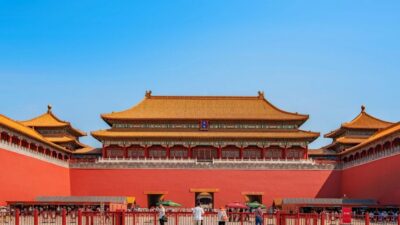
Forbidden City Tour(Group/Private)-Tickets Included
Read our review →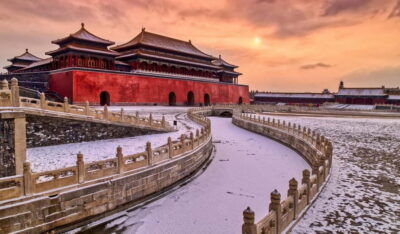
T-Square & Forbidden City Group or Private Tour
Read our review →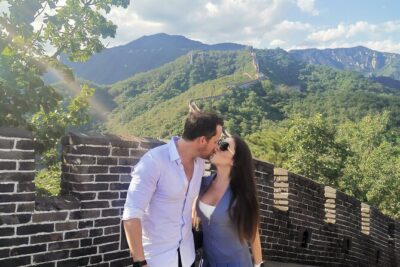
All-Inclusive Tour: Tiananmen Square, Forbidden City, Great Wall
Read our review →
4-Hour Small Group Tour to Forbidden City with Entry Tickets
Read our review →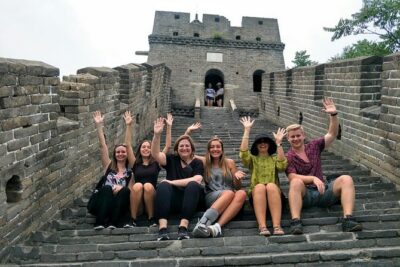
Beijing Full Day Tours: Tiananmen Sq, Forbidden City, Great Wall
Read our review →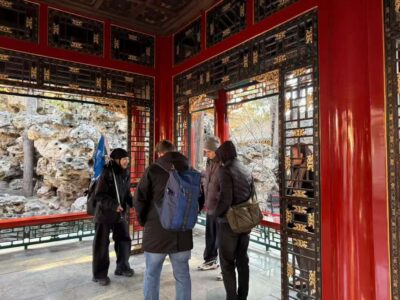
Tianmen Square, Forbidden City & Royal Museum Tours
Read our review →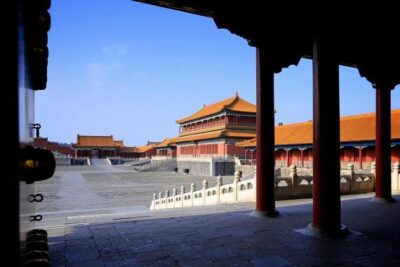
Beijing Forbidden City Ticket Booking (Optional: guide service)
Read our review →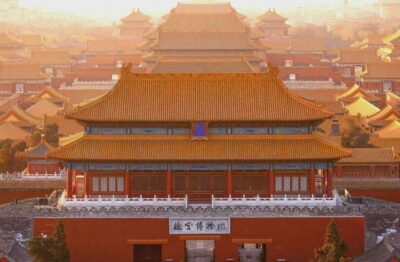
Forbidden City and Tian’anmen Square Waking Tour
Read our review →Browse the lists this tour appears in