
Reviewed · TOURS IN CHENGDU
Discovery more Dujingyan Mt Qingcheng with private guide tour
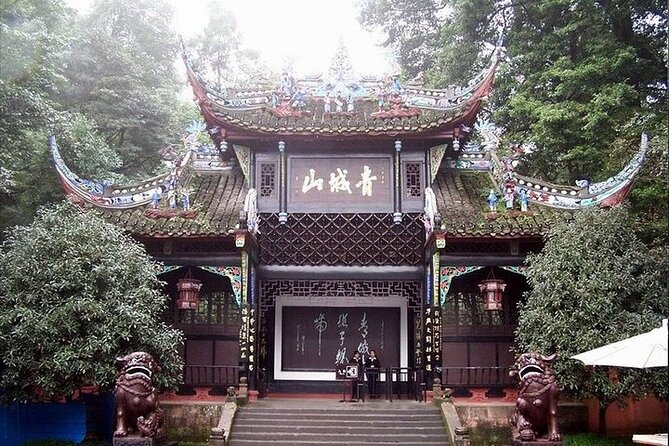
Two major Chengdu sights share one long day here: Dujiangyan’s ancient waterworks and the forested slopes of Mount Qingcheng. One explains how Sichuan feeds its farms, while the other introduces Taoism, temple life, and the mountain scenery that inspired Kung Fu Panda 3.
I like the privacy of a dedicated van and guide, especially when you need help with a complicated site such as Dujiangyan. I also like the mix of walking, cable-car riding, temples, Tai Chi, Qi Gong, and kung fu rather than a day spent only taking photos. The main drawback is stamina: rain, heat, steep paths, and several hours on foot can make this a tiring outing.
Key points to know before booking
- Dujiangyan still works as an irrigation system: See the Fish Mouth Weir and Bottle-Neck Channel, not just a museum display.
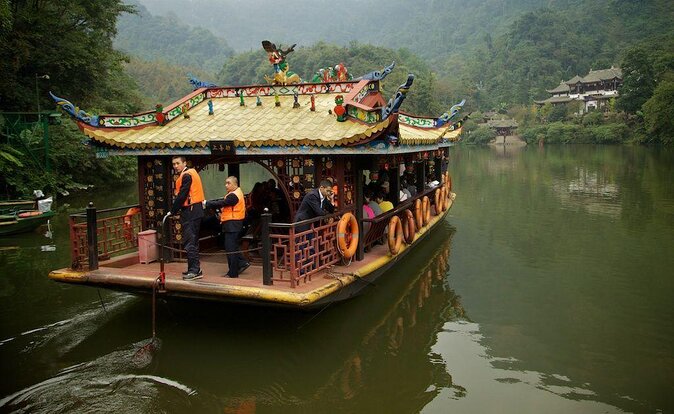
- Mount Qingcheng combines Taoism and movie scenery: Temples, pavilions, forest paths, Moon City Lake, and Shangqing Palace fill the mountain visit.
- The private van saves time: Pickup begins at 8:00 a.m. from a downtown Chengdu hotel, with a maximum group size of nine.
- Kung fu is part of the experience: Expect Tai Chi, Qi Gong, breathing exercises, meditation, and traditional self-defense forms.
- Admission costs extra: The $320 per-person price does not include entrance tickets or lunch, so budget beyond the advertised fare.
- Prepare for a wet, active day: One account describes substantial walking in the rain, so comfortable shoes and weather protection matter.
Why this Chengdu day trip works
This is not a quick photo stop at two famous names. The day links two ideas that help explain Sichuan: practical water control and Taoist thought.
At Dujiangyan, you see a working engineering system created in the 3rd century BC. At Mount Qingcheng, you visit one of China’s important Taoist centers, where mountain setting, temple design, ritual, breathing, and martial arts meet.
I find that combination more rewarding than visiting two unrelated attractions. You get a lesson in local infrastructure in the morning and a slower cultural experience in the mountains later. The private format also gives you a guide who can explain what you are looking at, assuming you choose the English-speaking guide option.
The listed price is $320 per person, which is a serious expense. Its value depends on your group size and priorities. You are paying for a private vehicle, driver service, guide service if selected, and the kung fu experience. The cost does not cover entrance tickets or lunch, so compare the final total with other private day trips before booking.
A few more days out in Chengdu worth the ticket
- Private Half-Day Chengdu Panda Breeding Center Tour with Optional Volunteer
★ 5.0 · 353 reviews - Private Chengdu Day Tour: Giant Pandas and Jinsha Site Museum
★ 5.0 · 142 reviews - Chengdu Panda Research Base Tickets And Optional Private Tour
★ 4.5 · 48 reviews
Leaving Chengdu in a private vehicle
Pickup starts at 8:00 a.m. from your downtown Chengdu hotel. You travel in a private, air-conditioned vehicle with a driver, guide, or both depending on the option you select.
That early start matters. Dujiangyan and Mount Qingcheng are both substantial sites, and the combined program is listed at roughly five to eight hours. The detailed stops add up to about eight hours, though actual timing can vary with traffic, walking speed, weather, and time spent at the kung fu portion.
A private vehicle is useful here because the two attractions require more than a simple city transfer. You can keep your belongings with the vehicle and avoid working out public transport between Chengdu, Dujiangyan, and the mountain. The group limit is nine people, so this is more intimate than a large coach outing, but it is not necessarily a one-person or couple-only tour.
Dujiangyan, where the Minjiang River is put to work
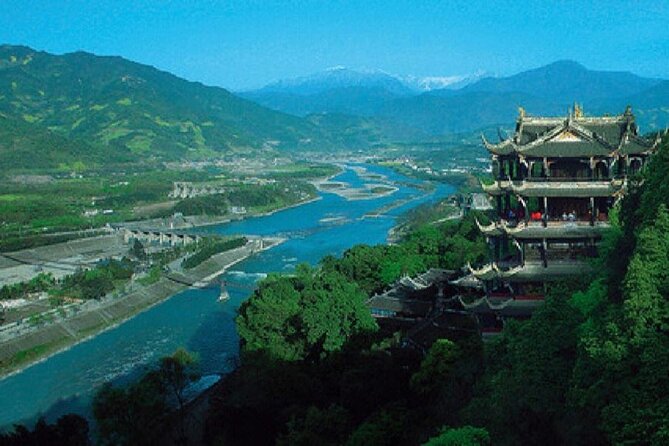
Dujiangyan is the day’s strongest lesson in how ancient engineering can remain useful. Built in the 3rd century BC, it channels water from the Minjiang River to nearby farmland without relying on a conventional dam.
That design is the reason the site matters. Instead of simply blocking the river, the system directs and divides its flow. You can see the Fish Mouth Weir, shaped to guide water, and the Bottle-Neck Channel, which helps funnel it toward the irrigation network.
The names are easier to remember once you see the shapes. The fish-mouth section divides the river, while the bottle-neck passage controls the amount of water moving onward. A guide adds real value here because the engineering can look like a series of walls and channels until someone explains what each section does.
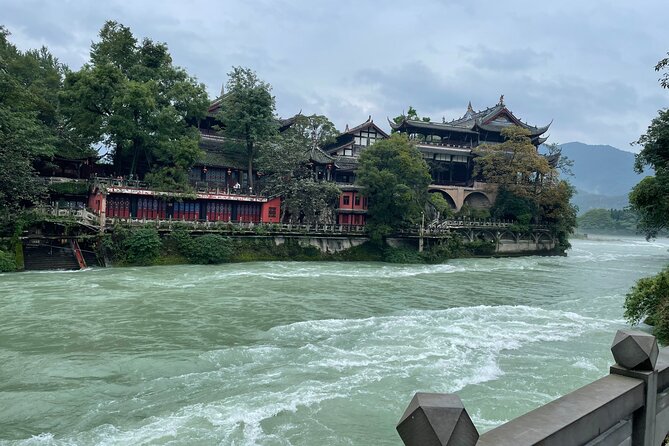
The visit also includes Erwang Temple, or the Two Kings Temple. This large wooden complex sits beside the Minjiang and honors the people associated with the irrigation system’s creation.
Allow yourself time to look up as well as ahead. The temple’s architecture, raised position, and river setting give the stop a different mood from the practical waterworks below. It is not only an engineering visit. It also shows how public works became linked with worship, memory, and local identity.
Crossing Anlan Bridge and walking through Lidui Park
From Erwang Temple, you cross Anlan Suspension Bridge. The bridge gives you views of the river and two of Dujiangyan’s best-known working sections, but it also adds a little movement and height to the visit.
If you dislike swaying bridges or have trouble with extended walking, this is worth considering before you book. The route continues through Lidui Park and its bonsai gardens, so you are on your feet for much of the Dujiangyan portion.
The stop is listed at about three hours, with admission not included. That time sounds manageable, but heat, humidity, rain, and the number of paths can change how it feels. Wear shoes with a firm sole and bring water. The experience includes enough walking that you should not treat it as a light sightseeing stop.
Same city, a completely different day:
- Chengdu: Giant Panda Breeding Research Base Ticket
★ 4.5 · 580 reviews - Half-Day Chengdu Cooking Class with a Local Market Visit
★ 5.0 · 465 reviews - Tuktuk Food Tour Through Chengdu’s Local Eats
★ 5.0 · 435 reviews - Chengdu: Sichuan Opera Shu Feng Yan Yun Evening Show Ticket
★ 4.7 · 185 reviews
Mount Qingcheng, Taoist temples in a forest setting
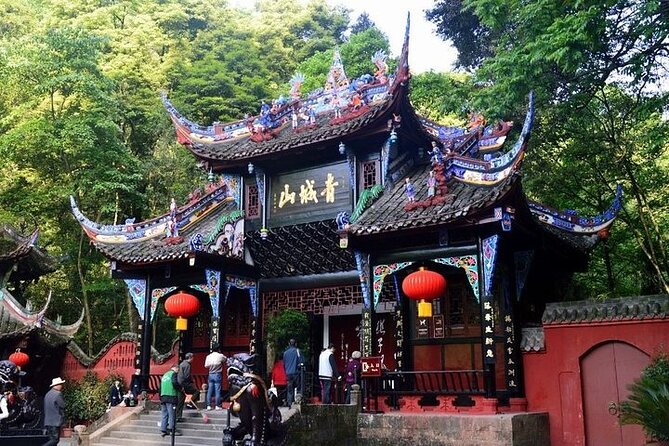
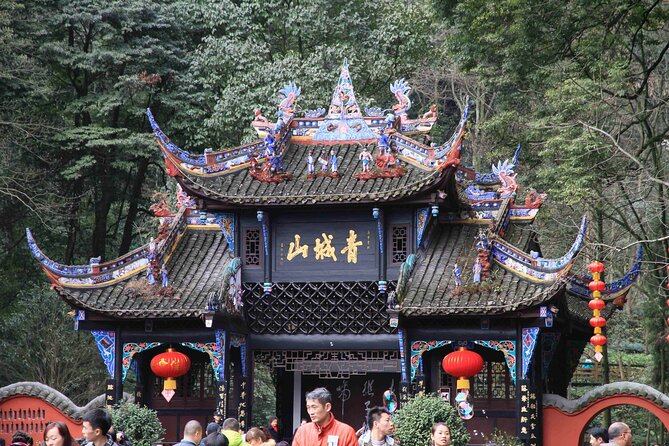
After Dujiangyan, the tour continues to Mount Qingcheng by private vehicle. The mountain is one of China’s important Taoism centers, and its thickly wooded setting gives the temple visit a quiet contrast to the open river works.
The mountain also has a pop-culture connection. Its scenery appeared in Kung Fu Panda 3 and helped inspire the film’s Panda Village. That detail may attract families, but the actual appeal is broader: the mountain gives you a place to connect Taoist ideas with architecture, movement, and nature.
On arrival, you take an electric cart to the entrance. From there, the route includes temples, pavilions, Moon City Lake, and a cable car ride toward Shangqing Palace.
The cable car reduces some of the climbing, but it does not turn the visit into a no-walking excursion. You should still expect paths and uphill sections around the temple area. One account describes the day as involving tremendous walking, including time in the rain. Take that warning seriously.
Shangqing Palace and the Taoist side of the tour
Shangqing Palace is presented as the mountain’s essential building. It sits at about 3,280 feet, or 1,000 meters, and its origins reach back to the Jin Dynasty period from AD 265 to 420. The present complex was rebuilt in the 1800s.
The setting is part of the attraction. The complex includes serene temples and an old gingko tree, giving you more than a single grand hall to photograph. A good guide can help explain Taoist beliefs, the role of the temple, and the way the buildings fit into the mountain.
The cultural portion is especially useful if you have little background in Taoism. You learn about its core principles and its links to Chinese martial arts and health practices. This is not simply a temple visit with a few dates attached. The program aims to show how belief, breathing, controlled movement, and daily well-being connect.
The English guide option deserves careful attention. English-speaking service is included only if you select that guide option. One account specifically describes a full day with no English spoken, which suggests you should confirm the guide choice rather than assume that every booking includes English commentary.
The kung fu and wellness session
The included kung fu experience gives the tour a hands-on element. The listed activities include Tai Chi and Qi Gong lessons led by Taoist martial arts masters, with an emphasis on slow movement and energy cultivation.
You may also practice traditional kung fu techniques inspired by Taoist ideas, including self-defense forms based on softness overcoming hardness. Meditation and breathing exercises are part of the program as well, with a focus on calm and mental clarity.
The exact location and timing of this session are not specified, so do not assume it will take place at a particular temple or at a fixed point in the schedule. Ask when booking if the kung fu component is especially important to you.
I like this feature because it gives the mountain visit a purpose beyond looking at buildings. You are asked to notice how posture, breath, balance, and controlled movement relate to the ideas being discussed. Still, the program is not described as a full martial arts course. Think of it as an introductory cultural activity.
What the long day feels like
The listed duration is five to eight hours, but the two detailed stops are described as about three hours at Dujiangyan and five hours at Mount Qingcheng. That makes this a full and active day, particularly if the kung fu session is added to the sightseeing schedule.
Weather can shape the experience. The tour requires good weather and may be canceled if conditions are poor. If that happens, you are offered another date or a full refund. Even when the tour runs, rain can make the mountain paths more tiring and slippery, so pack a light rain layer and protect your phone.
The practical packing list is simple:
- Comfortable walking shoes
- Rain protection
- Water
- Sun protection for warm weather
- Space in your day for a late return if the schedule runs long
Lunch is not included. No lunch arrangement is specified, so confirm how and when the meal break will work. You should not count on the $320 fare covering food.
Who gets the best value from the $320 price
This tour makes the most sense for a small private group that wants transport and a guide without managing two major day trips independently. Couples, families, and friends who value door-to-door service may find the private van worthwhile.
The maximum group size is nine, which can also make the cost more reasonable when shared across a larger party. For a solo visitor or a pair on a tight budget, the price may feel high once you add entrance fees and lunch.
The tour is a good fit if you want:
- Two major sights in one day
- Private transport from Chengdu
- Taoist culture explained through temples and practice
- A cable-car ride combined with mountain walking
- A guide who can help with the Dujiangyan route
- An introductory kung fu and wellness session
It is less suitable if you want a slow day, dislike stairs and hills, or prefer to spend hours at only one site. The experience is also not ideal if you expect every detail to be included in the advertised price. Admission tickets remain separate.
Booking details that matter
Confirmation is provided when you book. Free cancellation is available up to 24 hours before the local start time, with a full refund. Changes or cancellations made less than 24 hours before departure are not accepted for a refund.
The tour requires a minimum number of participants. If that minimum is not reached, you are offered another date or experience, or a full refund. Service animals are allowed, and the activity is near public transportation, though the main arrangement is private pickup.
Most people can take part, but the walking demands deserve more attention than the general participation note. The rain experience and long route make personal fitness, footwear, and weather planning more important than the simple label of a standard sightseeing tour.
Should you book this Chengdu tour?
Book it if you want a packed cultural day that joins ancient water engineering, Taoist temples, mountain scenery, and introductory martial arts. The private vehicle and small maximum group are useful advantages, and the combination of Dujiangyan and Qingcheng gives the day more range than either stop alone.
Skip it if you want a relaxed schedule, dislike extended walking, or need all costs included upfront. Confirm the English-speaking guide option, ask how the kung fu practice fits into the day, and budget for admission tickets and lunch before committing.
The strongest reason to choose this experience is its mix of ideas. You do not only see Dujiangyan and Mount Qingcheng. You see how water management, Taoist thought, temple life, and physical practice can all form part of one Sichuan day.
FAQ
Where does the tour start?
Pickup starts at 8:00 a.m. from your downtown Chengdu hotel.
How long does the experience last?
The tour lasts approximately five to eight hours. The detailed schedule lists about three hours at Dujiangyan and five hours at Mount Qingcheng.
Is transportation private?
Yes. Private van and driver service are included.
What is the maximum group size?
The activity has a maximum of nine participants.
Is an English-speaking guide included?
An English-speaking guide is included if you select the guide option. You should confirm that option when booking.
Are entrance tickets included?
No. Entrance tickets are paid separately on site.
Is lunch included?
No. Lunch is not included in the tour price.
What do you see at Dujiangyan?
You visit the irrigation system, Erwang Temple, Anlan Suspension Bridge, the Fish Mouth Weir, the Bottle-Neck Channel, Lidui Park, and its bonsai gardens.
What happens at Mount Qingcheng?
You take an electric cart to the entrance, visit temples and pavilions, see Moon City Lake, ride a cable car, and visit Shangqing Palace.
What is included in the kung fu experience?
The program includes Tai Chi and Qi Gong lessons, traditional kung fu techniques, meditation, and breathing exercises.
Can I cancel for a full refund?
Yes. You can cancel at least 24 hours before the local start time for a full refund. Poor weather or failure to meet the minimum number of participants may also lead to an alternative date or a full refund.
New reviews from Chengdu
- Classic 3-Day Jiuzhaigou Private Tour(Transportation+Tickets)★ 5.0 · 8 reviews
- Jiuzhaigou National Park Tickets Booking★ 4.5 · 4 reviews
- Classsic sichuan Opera at sichuan Provincial Theater★ 5.0 · 4 reviews
- Panda, Leshan, and Emei Mountain 2-day tour★ 5.0 · 4 reviews
- Visiting Chengdu Panda Base in a Half Day★ 5.0 · 4 reviews
- Mini Group: Half-Day Chengdu Pandas Guided Tour★ 5.0 · 3 reviews
- Sichuan Opera with face-changing at Sichuan opera theater★ 4.5 · 6 reviews
- Tea Village in lost Town and Buddha 1 day tour★ 5.0 · 32 reviews
Tours in Chengdu, compared.

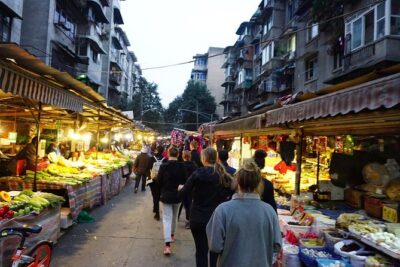
Half-Day Chengdu Cooking Class with a Local Market Visit
Read our review →

Private Half-Day Chengdu Panda Breeding Center Tour with Optional Volunteer
Read our review →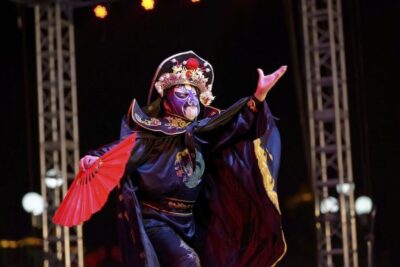
Sichuan Opera Shu Feng Yan Yun Evening Show Ticket
Read our review →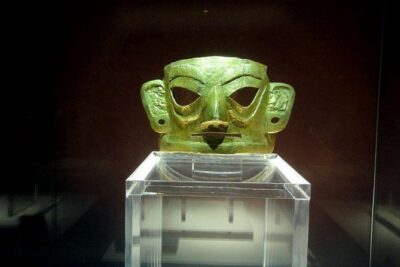
Private Chengdu Day Tour: Giant Pandas and Jinsha Site Museum
Read our review →
Visiting Dujiangyan Yaan Wolong Panda Base Optional Volunteering
Read our review →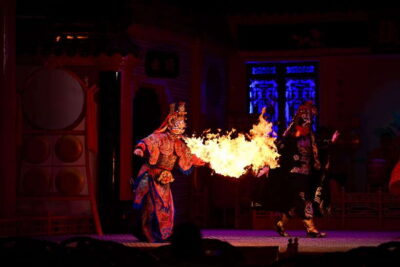
Chengdu Sichuan Opera Show Ticket – Shu Feng Ya Yun
Read our review →Browse the lists this tour appears in