
Reviewed · CAVES, GORGES & WATERFALLS
Datong Yungang Grottoes and Hanging Monastery 1-day from Beijing by Train
The most remarkable part of this day trip is the distance it covers without asking you to spend the night away from Beijing. A two-hour bullet train ride puts you in Datong, where you can see the Yungang Grottoes and the cliff-hugging Hanging Monastery in one long day.
I like the private format, which gives your group its own guide and a better chance to keep moving on schedule. I also like the English commentary, especially at Yungang, where thousands of carved figures can otherwise blur into a long succession of dark caves.
The catch is the clock. You have about 12 hours for trains, driving, two major sights, and lunch, so this is an efficient introduction rather than a slow archaeological visit. The Hanging Monastery can also require a long wait from March through October, and entering it may not be practical if the line exceeds 1.5 hours.
Key points at a glance
- Two-hour bullet train connection: Beijing to Datong by high-speed rail makes this ambitious day trip possible without an overnight stay.
- 5th-century Buddhist art: Yungang contains 252 grottoes and more than 51,000 Buddha statues and small figures.
- Three faiths in one temple: The Hanging Monastery combines Buddhist, Taoist, and Confucian elements on a sheer cliff.
- Private guiding: Only your group takes part, with a dedicated English-speaking guide in Datong.
- Shanxi food at lunch: You get a chance to try regional cooking that is different from standard Beijing fare.
- Peak-season warning: From March through October, advance reservations for the Hanging Monastery are required and difficult to secure.
Why Datong works as a long day from Beijing
Datong is far enough from Beijing to feel like a real change of scene, yet the bullet train keeps the journey manageable. The rail trip takes about two hours each way, turning what once would have been a punishing overland outing into a possible extra day for a visitor based in the capital.
You should still treat this as a full day, not a casual side trip. The operating window is roughly 7:00 a.m. to 11:30 p.m., and the stated duration is about 12 hours. An early start is part of the bargain, but it lets you reach two of northern China’s major historic sites in one outing.
I see the train as a major part of the value. You avoid spending the whole day in a road vehicle, and the smooth, quiet ride gives you a useful break before and after the sightseeing. The train also makes the trip feel more like a visit to Shanxi than an oversized Beijing excursion.
The tour is private, so your group is not tied to strangers’ pace or interests. That matters here because the schedule is tight. A strong guide can help you spend more time looking at the important details and less time sorting out the day’s movements.
Other caves, gorges and falls near Beijing:
- Longqingxia Gorge Cruise and Guyaju Cave Dwellings Private Day Tour
★ 5.0 · 60 reviews - Beijing to Datong See YunGang Cave, Hanging Temple (Bullet Train)
★ 5.0 · 39 reviews - Beijing Private Tour to Badaling Great Wall and Longqing Gorge with Boat Ride
★ 5.0 · 26 reviews
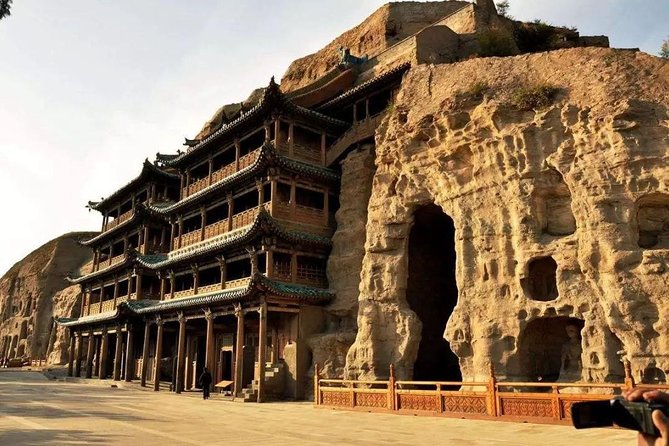
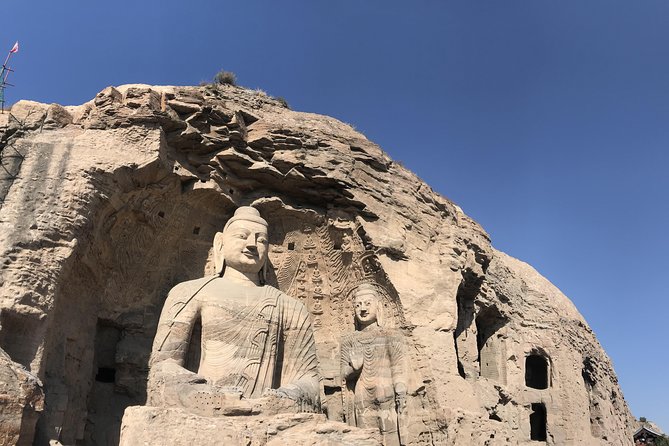
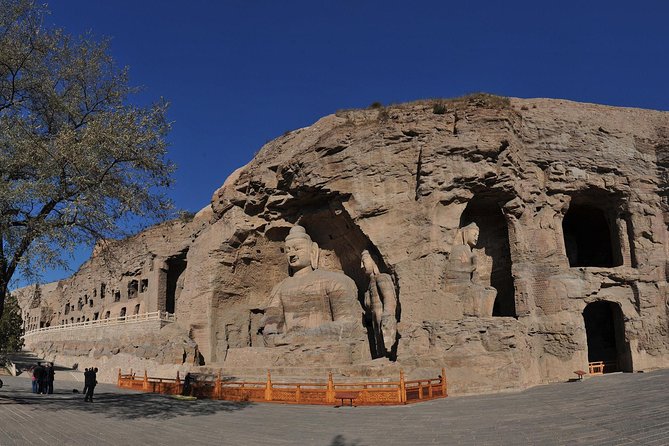
Yungang Grottoes and 51,000 carved figures
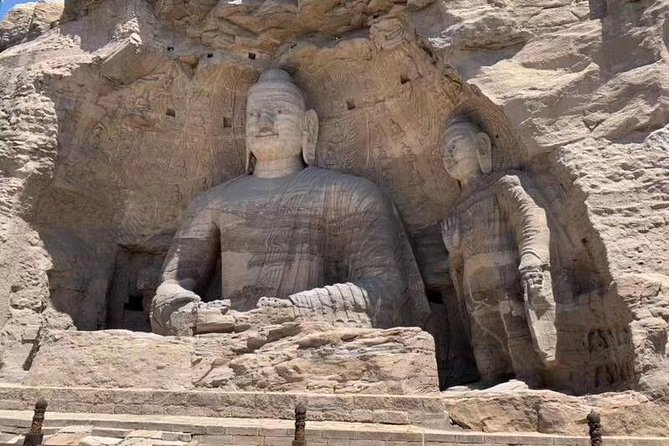
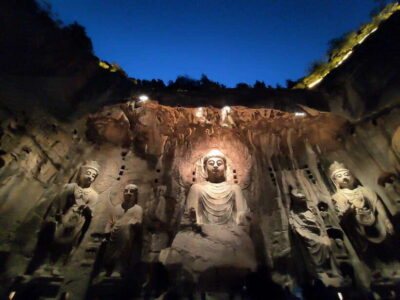
Yungang is the artistic heart of the trip. The grottoes were cut between 460 and 525 AD during the Northern Wei Dynasty, making them some of the finest surviving examples of early Chinese Buddhist cave art.
The site includes 252 caves and more than 51,000 Buddha statues and statuettes. That number is so large it can become meaningless until you are standing in front of the carvings. Then the variety begins to register: large cave interiors, smaller figures, patterned surfaces, and faces shaped more than 1,500 years ago.
The site is recognized as a UNESCO World Heritage Site for the way Buddhist artistic ideas from south and central Asia joined Chinese traditions. That background gives you a useful key to what you are seeing. This is not simply a collection of old statues. It records the movement of religious art across Asia and its adaptation under imperial sponsorship.
You have about two hours here, with admission included. That is enough for a strong first look, especially with an English-speaking guide who can point out the significance of the main carvings and explain the site’s place in Shanxi history.
It is not enough for every cave and every detail. If you are drawn to sculpture, religion, or early Chinese history, you may wish you had longer. The tour’s strength is that it gives you a focused visit rather than pretending that one afternoon can cover the whole complex.
I especially value the guide at Yungang because scale can work against you. With 252 grottoes, it is easy to lose your sense of priority. A guide such as Star, praised for clear English explanations and strong time management, can turn a huge site into a readable story.
Expect the setting to feel historic and serious rather than polished for entertainment. The appeal is the workmanship, age, and religious meaning. You are looking at stone surfaces shaped by hand, not a modern museum display designed to explain everything at a glance.
The Hanging Monastery on Hengshan
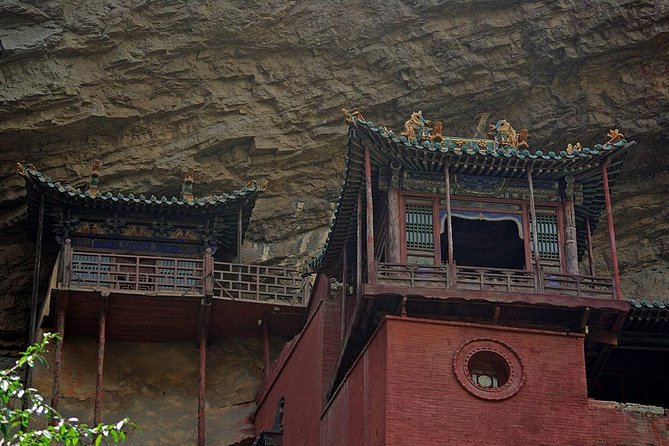
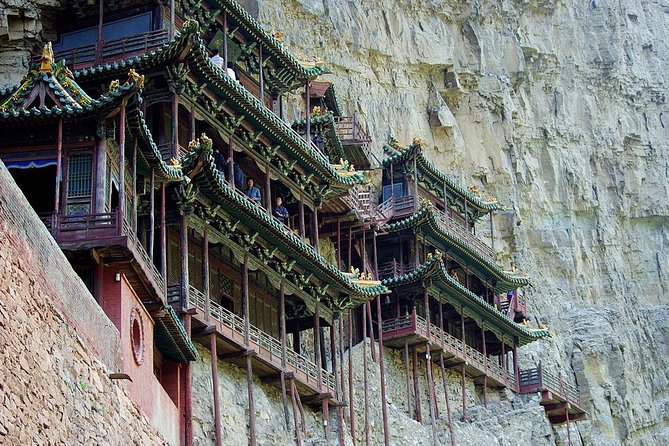
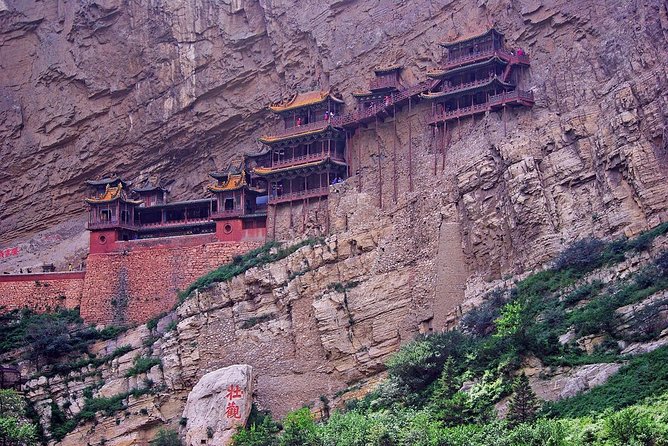
The second major stop is Xuankong Si, usually called the Hanging Monastery. This 1,500-year-old temple is built into a sheer cliff near Datong, with wooden supports set into the rock.
Its physical position is the obvious attraction, but the religious mix makes it even more unusual. Buddhism, Taoism, and Confucianism are represented within the same complex. That combination gives the temple a broader cultural meaning than its dramatic appearance alone suggests.
You have about one hour here, and admission is included. The visit is much shorter than at Yungang because the site is compact, access is controlled, and the seasonal demand can be intense.
The important practical warning concerns March through October. Advance reservations of at least one week are required during the busy season, and securing an entry time can be difficult. If the wait to enter stretches beyond 1.5 hours, the sensible choice is to view the temple from below rather than sacrifice the rest of the day.
That is not a poor substitute. The view from below lets you understand the temple’s most striking feature: a small complex attached to a towering cliff face. You lose the close look at the interior, but you avoid turning one attraction into the entire day.
If entering matters greatly to you, ask about the reservation situation before committing to this trip. The tour provider notes the seasonal pressure clearly, but actual access still depends on availability. The private format helps with time management, though it cannot remove the site’s visitor limits.
A guide can make or break this schedule
The guide is one of the strongest reasons to book this as an organized trip instead of trying to assemble the day yourself. Datong has two sites with different access issues, a train schedule, local transport between stops, and a limited sightseeing window.
Your Datong guide speaks English and is expected to explain local history and culture, not simply lead you from gate to gate. Star is specifically identified as a guide who kept the commentary engaging while managing the timetable carefully.
That combination matters. Yungang needs context, while the Hanging Monastery needs practical decisions about timing. A guide who can explain what you are seeing and adjust the day when the temple queue becomes unreasonable is more useful than someone who only provides directions.
The private setup also gives you a dedicated team. You can ask for clarification, spend a little longer on a carving that interests you, or keep the pace brisk if you are watching the clock. The exact amount of flexibility is not stated, so you should not assume that every timing change is possible, but a private group is still less rigid than a large shared coach.
Pickup is offered, and the meeting information lists access near public transportation. Confirmation is sent within 48 hours, subject to availability. Those details matter because an early departure and a same-day return leave little room for confusion at the start.
Other journeys by rail from Beijing:
- Beijing to Xi’an See Terracotta Warriors with Bullet Train Round Trip Transfer
★ 5.0 · 238 reviews - Beijing: Xi’an Terracotta Tour by Train-All Tickets Included
★ 5.0 · 27 reviews - Private Day Trip to Tianjin from Beijing by Bullet Train
★ 5.0 · 22 reviews - Beijing:Bullet Train Tour to Hanging Temple&Yungang Grottoes
★ 5.0 · 16 reviews
Shanxi food between the major sights
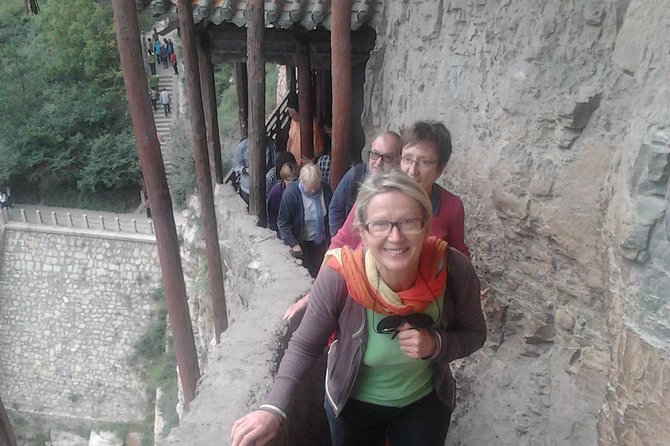
Lunch is more than a pause to refuel. The plan includes a taste of Shanxi-style food, which gives you something local that you may not find in Beijing.
The information provided does not name the restaurant or list the dishes, so I would not book this expecting a particular meal. Think of it as a regional food stop built into a busy sightseeing day. It adds a sense of place and breaks up two major historic visits.
Food is also one reason a private guide helps. You can ask what you are eating and how it differs from everyday Beijing cooking. That kind of explanation can turn a quick meal into a small lesson in regional culture.
Do check the final booking details to understand what is covered in the lunch arrangement. The experience promises the chance to taste Shanxi-style food, while the supplied details do not clearly say that the meal itself is included in the $399 price.
Is $399 a fair price?
At $399 per person, this is not a budget outing. The price makes more sense when you value time, privacy, and coordination rather than simply counting entrance tickets.
You are paying for a full-day operation from Beijing, a fast rail connection, local touring in Datong, admission to both headline sites, a private group arrangement, and an English-speaking guide. The included admission tickets remove one common nuisance, while the guide takes on the hard work of keeping two distant attractions within one day.
The comparison is simple. If you try to arrange this independently, you may spend less in some cases, but you will need to coordinate the Beijing to Datong train, local transport, admission arrangements, the Hanging Monastery reservation, meal timing, and the return journey. A mistake in one part could put the return train or the second attraction at risk.
The private format is especially valuable for two or more people who want their own pace and commentary. Solo visitors may find the cost harder to justify, since the price is per person and the trip still involves a very long day.
Group discounts are offered, though the amount is not specified. Ask about the discount before booking if you are traveling with several people. The mobile ticket is convenient, and free cancellation is available up to 24 hours before the start time. Changes or cancellations inside that window are not accepted for a refund.
Who will enjoy this Datong day trip
I would choose this excursion if you have an extra day in Beijing and want major cultural sites rather than another city-center attraction. It suits you especially well if you value historical explanation, dislike changing hotels, and prefer a private guide to handling a complicated day alone.
It is also a good fit for anyone interested in Buddhist sculpture, ancient architecture, or the way different religious traditions appear together in Chinese history. Yungang gives you art on a grand scale, while the Hanging Monastery gives you an architectural surprise.
You should think twice if you want an unhurried visit. Two hours at Yungang and one hour at the Hanging Monastery are useful but limited. The early start, late finish, and possible peak-season wait can make the day tiring.
The trip is suitable for most people, according to the provided participation information, but the schedule still calls for stamina. You will be moving between transport, outdoor areas, cave sites, and a cliffside temple complex. No detailed accessibility information is provided, so ask before booking if mobility is a concern.
My booking advice for the best chance of success
Book as early as you can, particularly for a March through October departure. The Hanging Monastery requires advance reservations in peak season, with at least one week noted as the minimum, and demand can be high.
When you receive confirmation, check the train departure details, pickup point, guide assignment, meal arrangements, and the plan for the temple if entry is delayed. The confirmation arrives within 48 hours when availability allows, but the temple reservation remains the key pressure point.
Keep your expectations focused. This is not a slow study tour of every cave or a leisurely mountain outing. It is a carefully packed day that gives you two exceptional places, regional food, and an English-speaking guide without asking you to spend the night in Datong.
Should you book it?
Yes, if you have only one spare day in Beijing and want to see Yungang and the Hanging Monastery with transport and timing handled for you. The bullet train, private format, included admission, and strong guide support make the high price easier to understand.
I would hesitate only if you dislike early starts, need a relaxed pace, or are visiting during peak season without a firm temple reservation. For everyone else, this is one of the more worthwhile ways to reach Datong from Beijing in a single day, provided you accept that efficiency, not leisure, is the point.
FAQ
How long does the Beijing to Datong tour last?
The experience lasts approximately 12 hours, including the train journeys, sightseeing, meal stop, and local transport.
How long is the bullet train ride from Beijing to Datong?
The bullet train takes about two hours each way.
What sights are included?
The tour visits the Yungang Grottoes and the Hengshan Hanging Monastery, also known as Xuankong Si.
Are admission tickets included?
Admission tickets for both the Yungang Grottoes and the Hanging Monastery are included.
Is this a private tour?
Yes. Only your group takes part, with a dedicated team working for you.
Is an English-speaking guide provided?
Yes. The Datong guide speaks English and explains Shanxi history and culture. Star is one guide associated with this experience.
Is pickup available?
Yes. Pickup is offered, and the meeting information notes that the area is near public transportation.
Do I need to reserve the Hanging Monastery in advance?
From March through October, advance reservations of at least one week are required and can be difficult to secure.
What happens if the wait at the Hanging Monastery is too long?
If the on-site wait exceeds 1.5 hours, viewing the temple from below is recommended instead of waiting to enter.
Can I cancel for a full refund?
Yes. You can cancel at least 24 hours before the experience begins for a full refund. Cancellations or changes made less than 24 hours before the start time are not accepted for a refund.
New reviews from Beijing
- Private Transfer to Mutianyu Great Wall with professional driver★ 5.0 · 19 reviews
- One day tour to downtown Tianjin from Beijing by high speed train★ 5.0 · 3 reviews
- camp on the Great Wall overnight with sunrise and sunset on the wall★ 5.0 · 11 reviews
- ZANBUS: Trip to the Jinshanling Great Wall Departing at 7:30 AM★ 5.0 · 5 reviews
- BusDa:Ancient Great Wall &Badaling Great Wall Full-day Bus Tour★ 4.5 · 6 reviews
- Yuxiandu Chinese Royal Cuisine Museum with Show and Royal Banquet★ 5.0 · 4 reviews
- Wild Great Wall Hikes★ 5.0 · 10 reviews
- Wild Great Wall Huanghuacheng Half Day Tour★ 5.0 · 15 reviews
Caves, Gorges & Waterfalls, compared.
Gulong Gorge Skywalk Glass Bridge and Waterfall View Private Tour
Read our review →
Private Xi’an Tour: Terracotta Warriors, Hanyangling Museum, Cave Homes
Read our review →
1-Day Guilin Tour to Reed Flute Cave, Xianggong Hill, Bamboo Boat and Night Show
Read our review →
Leshan Grand Buddha Scenic Area and Panda Park Day Tour
Read our review →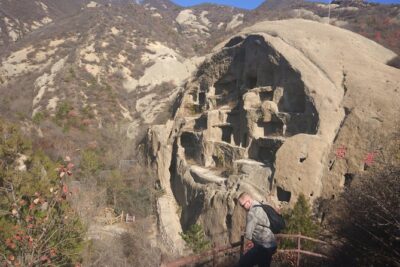
Longqingxia Gorge Cruise and Guyaju Cave Dwellings Private Day Tour
Read our review →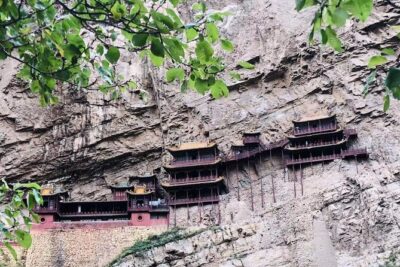
Beijing to Datong See YunGang Cave, Hanging Temple (Bullet Train)
Read our review →
Browse the lists this tour appears in