
Reviewed · OLD TOWN & ANCIENT VILLAGE TOURS
Chongqing: Surreal Urban, Ancient Town, and Secret Viewpoint
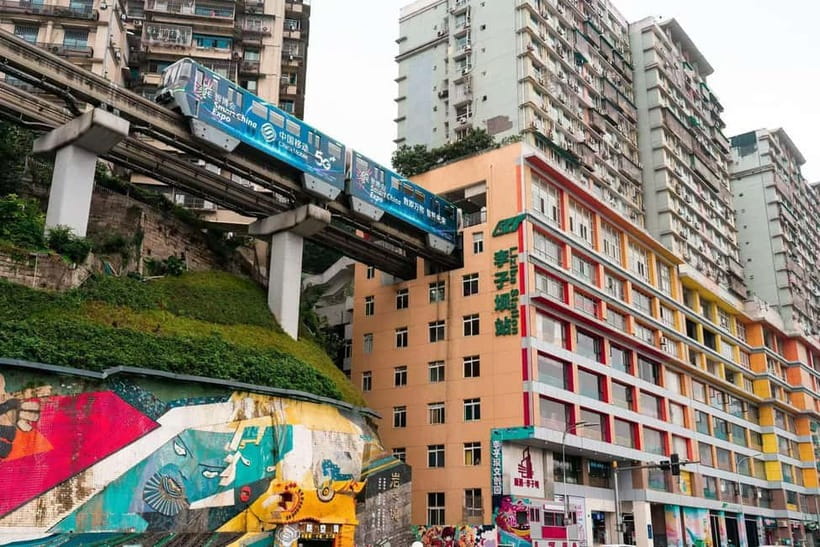
The most startling moment comes early: a monorail train passes through a residential tower, then you ride that same line through the building yourself. Add the Yangtze cableway, a confusingly high viewpoint at Kuixing Tower, and old streets where tea, snacks, and card games carry on as usual. This is Chongqing in one full, fast-moving day.
I like the way the tour mixes famous sights with local corners. The cableway and Liziba give you the postcard views, while Longmenhao Old Street and the teahouse near Ciqikou show how people actually spend time here. I also like the language choice and personal service. Diego leads in Spanish, while guides such as Hao, Linxin, Flora, and Sofia have helped make the day feel tailored rather than mechanical.
The catch is the pace. Ten hours, steep city streets, crowds, and several transfers can wear you down. Lunch is not included, and Chongqing traffic may mean using taxis in congested areas instead of staying in one private vehicle all day.
Key points to know before booking
- Liziba is more than a photo stop: You see the monorail enter the apartment building, then ride the train through it.
- Kuixing Tower explains the 8D nickname: Its strange vertical layout can make one floor feel like the 22nd.
- The Yangtze cableway is a ticketed highlight: Your ride gives you broad views of the river, hills, and high-rises.
- Ciqikou supplies the old-town atmosphere: Expect shops, food smells, narrow lanes, and plenty of people.
- The route includes quieter places: Longmenhao Old Street and the City Planning Exhibition Gallery balance the crowded stops.
- The $216 price covers useful extras: Pickup and drop-off, a guide, cableway and gallery tickets, two local snacks, and drinks are included.
Chongqing in one long, well-planned day
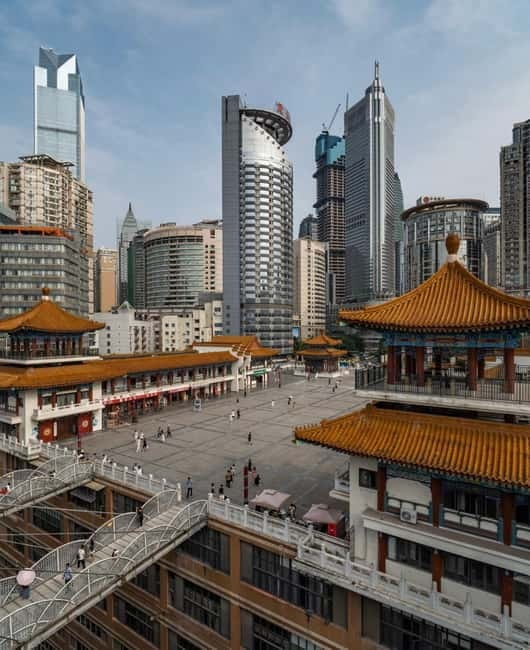
Chongqing can be hard to read from street level. Roads rise into hills, towers sit above lower streets, and a station that looks like a ground-level entrance may open onto a much higher floor. That is why a guide helps here. You spend less time trying to understand the city map and more time noticing how the city works.
This is a private or small-group experience for one to 12 people, with pickup and drop-off anywhere in Chongqing city. You choose from English, Chinese, Spanish, Japanese, Korean, Russian, French, or Italian guiding. The guide confirms the pickup details the evening before, which is useful in a city where addresses and entrances can be confusing.
The day lasts about 10 hours. That is enough time to cover a wide range of Chongqing, but it is not a relaxed, two-stop outing. You should expect walking, stairs, photo stops, public transport, and changing viewpoints. Wear shoes that can handle a long day on hard pavement.
Other old towns within reach of Chongqing:
- Half-Day Bike Tour of Shanghai Old Town with Food Tasting
★ 5.0 · 306 reviews - Leshan Giant Buddha and Huanglongxi Ancient Town Day Trip
★ 4.5 · 45 reviews - 9 days Ancient Town Tour
★ 5.0 · 21 reviews
Liziba Monorail: Chongqing’s most famous urban trick
At Liziba, you see one of Chongqing’s signature scenes: the monorail passes through a residential high-rise. The design is not quite as impossible as it first looks. The rail line occupies part of the building, while apartments and other spaces use separate areas. Still, from the viewpoint, the effect is wonderfully strange.
Your guide helps you find the right angle for photographs. Timing matters because the train appears, enters the building, and disappears quickly. Sofia has been especially helpful with photographs and with finding a good position for the shot, which matters when the viewing area is crowded.
The useful part is that you do not only watch. You ride the monorail yourself and pass through the building. That changes the experience from a quick photo stop into a short piece of Chongqing transport that you can feel and hear from inside the carriage.
Do not expect a long scenic railway journey. The attraction is the design and the sensation of passing through a tower in the middle of a dense city. Crowds can gather around the viewpoint, so patience helps. If photography is important to you, keep your camera ready but do not let the perfect image take all your attention.
Kuixing Tower and the city’s vertical confusion
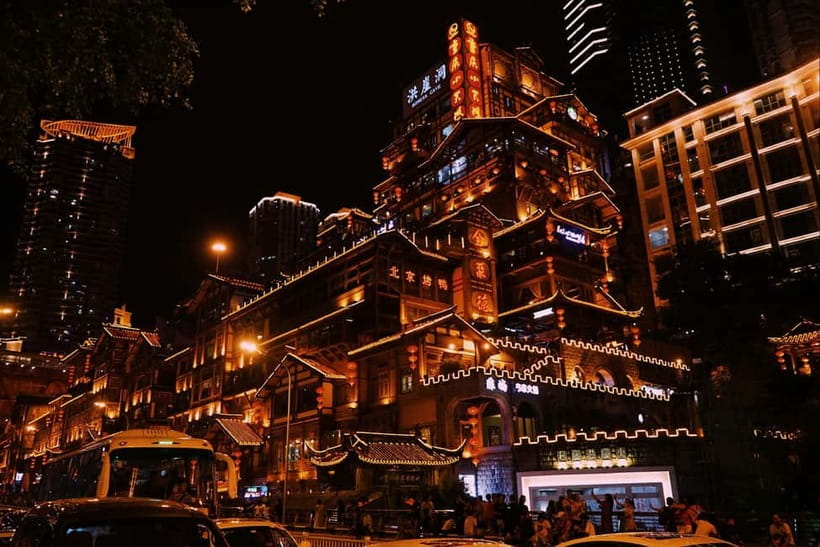
Kuixing Tower sits in Yuzhong District, in a quieter setting than the major transport attractions. It was once linked with prayers for success in academic work, but its main appeal today is the view and the way it reveals Chongqing’s unusual height changes.
Here, you can lose your sense of direction. A place that feels like a ground floor may connect to what seems like the 22nd floor. That odd relationship between streets, towers, bridges, and hills explains why Chongqing is often called China’s 8D city.
I like this stop because it gives you a mental key for the rest of the day. After Kuixing Tower, the city feels less like a collection of random towers and more like a place built around rivers, slopes, and limited flat ground. You can look toward the Jialing River and take a quieter pause before moving on.
The stop may be less instantly recognizable than Liziba or the cableway. If you want only famous photo points, it could seem modest. If you want to understand why Chongqing feels so different from a level-grid city, it is one of the most useful parts of the route.
Crossing the Yangtze by cableway
The Yangtze River Cableway is the day’s classic ride. Locals call it the city’s air bus, and the name fits. The cabins move high above the river between Chongqing’s two banks, giving you a broad look at the water, steep terrain, and clusters of tall buildings.
The ride is short, but the view changes quickly. From the cabin, you see Chongqing as a river city and a mountain city at the same time. That is a better introduction than seeing the river only from a road or riverside path.
The cableway ticket is included, which is important because this is one of the more sought-after activities in the city. Crowds can affect the wait and the space inside the cabin. Your guide can help you manage the process, but you should still expect some queueing at a popular attraction.
Try to look in several directions rather than focusing only on the skyline. The contrast between the Yangtze, layered hillsides, and modern towers is the point. If you dislike heights, this may be the one part of the day that feels uncomfortable. For most people, it is an efficient way to see the city from a perspective that roads cannot provide.
Other trips that stay off the main sights in Chongqing:
- Chongqing: Magic Night View and Secret Viewing Spots Tour
★ 5.0 · 27 reviews - Chongqing Night Tour: River Cruise and Hidden Views
★ 5.0 · 3 reviews - Beijing Hutong Walking Food and Beer Tour at Hidden Restaurants
★ 5.0 · 1,132 reviews - Eat Like A Local: Shanghai Night Food Tour
★ 5.0 · 616 reviews
Ciqikou Ancient Town, where the old port still feels active
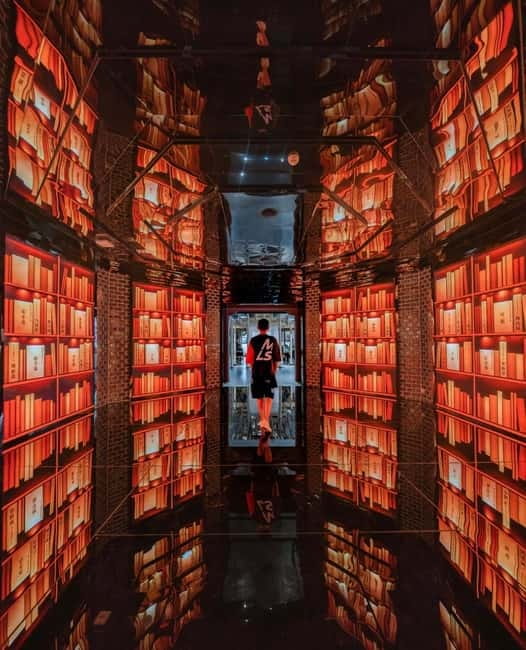
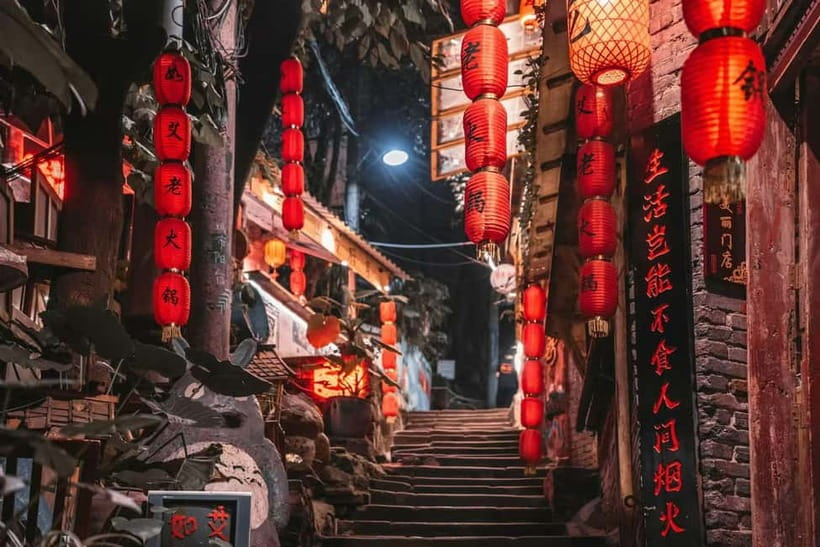
Ciqikou is a historic port town with old buildings, narrow lanes, shops, local snacks, and strong food smells. It is also one of the busiest stops on the route, so do not expect an untouched village. Its appeal comes from seeing an old commercial area still being used, even though it is now a major stop for visitors.
You can wander through the lanes, browse local products, and sample food. Two local snacks and drinks are included during the day, though lunch is not. Your guide can recommend local dishes, which is helpful because the choice can feel overwhelming and not every stop will suit your taste.
I would give Ciqikou enough time to slow down. Look above the shop fronts for older construction details, then step aside from the main flow when you need a break. The central lanes can feel crowded, especially at busy times. That is part of the experience, but it also means this is not the best place for a calm, quiet walk.
The old town works well after the modern sights. Liziba shows an ingenious transport system, while Ciqikou shows how older streets and trade routes remain part of daily city life. You get both sides of Chongqing in the same day.
The City Planning Exhibition Gallery and the riverfront view
The Chongqing Urban Planning Exhibition Gallery gives you context for the city you have been seeing. A large city model, multimedia displays, and changing exhibits explain how Chongqing developed as a mountain city and how planners handle rivers, slopes, roads, bridges, and dense construction.
The gallery is more than an indoor break. It helps you understand why the city can feel so layered. After seeing the actual streets and rail lines, the model lets you pull back and see their relationship. If you enjoy maps, architecture, transport, or city design, this may be one of the most satisfying stops.
Entry is included. The gallery also has riverside views, and you can walk along the promenade outside to watch boats pass. From there, the contrast is clear: modern high-rises rise above steep, stacked hillsides, while the river keeps its own broad line through the city.
This stop may appeal less if you want nonstop street action. I see it as a useful pause that turns the day from sightseeing into understanding. The exhibits give names and structure to the strange urban form you have been photographing since morning.
Longmenhao Old Street and a slower side of Chongqing
Longmenhao Old Street brings the day back to street level. Restored buildings, old trees, cafes, independent bookshops, artist studios, and a traditional teahouse create a more lived-in feel than the main commercial lanes at Ciqikou.
The teahouse is especially worthwhile if you want a simple local encounter. Sofia has helped visitors talk with people there, where locals drink tea, play cards, and spend time together. You should not expect a staged cultural show. The appeal is watching an ordinary social setting and having help with the language when conversation is possible.
This is one of the best places to let the schedule breathe. You can look at the old buildings, notice the riverfront setting, and enjoy a drink without needing a major attraction every few minutes. The restored appearance means it is not untouched old Chongqing, but the bookstores, cafes, studios, and teahouse give it character.
Depending on the day’s traffic and crowd levels, your guide may adjust the order or transport. That flexibility is useful in Chongqing. The route is ambitious, and a rigid plan would be less practical than a guide who can make sensible changes.
Guides, group size, and the human side of the day
The guide is a major part of the value here. Diego has led Spanish-language days with a friendly, patient manner, and he has helped people reach the places they wanted to see. Maria Elena specifically valued feeling safe and comfortable with Spanish support.
Hao has taken particular care of an older family member during a full day, showing that the pace can be adjusted when someone needs extra attention. Linxin has made the day more personal by noticing specific interests and steering conversation toward them. Flora has helped with photographs and avoided crowded areas by showing quieter local places.
These details matter because Chongqing is not always easy to navigate alone. A good guide is not simply reciting dates. The guide can explain why the city is built this way, help with local conversation, find a photo angle, and decide when a taxi makes more sense than a private car.
A group of one to 12 is a wide range. A smaller group should feel more flexible and personal. A group near the maximum will be less nimble at crowded viewpoints and during boarding. If you are booking for a larger party, custom arrangements are available by inquiry.
Is $216 a fair price?
At $216 per person, this is not the cheapest way to see Chongqing. The price makes more sense if you value a full-day guide and door-to-door support in a difficult city to navigate.
You receive pickup and drop-off within Chongqing city, a guide in your chosen language, the Yangtze cableway ticket, the City Planning Exhibition Gallery ticket, two local snacks, and drinks. Lunch is the main extra cost, and the guide provides suggestions for local food.
For a first day in Chongqing, I think the price can be reasonable because the itinerary covers several different parts of the city. You are not paying for one attraction. You are paying for transport help, interpretation, translation, route planning, and access to a day that would take more effort to organize independently.
The value drops if you prefer slow travel or already know the city well. You may spend less using public transport and choosing only two or three sights. You also need to accept that traffic can lead to taxis in congested areas, rather than one private vehicle remaining with you throughout.
What to bring and who should book
Bring your passport or ID card, comfortable shoes, and a camera. Your phone is likely to be useful too, but the essential advice is simple: wear shoes for a long day and keep water or a drink close at hand.
This experience suits first-time visitors who want a broad introduction to Chongqing, families who would like help with transport, and people who want both famous sights and less obvious neighborhoods. It is also a good fit if you want a guide in a language other than English or Chinese.
It is not suitable for wheelchair users. The combination of stairs, steep streets, public transport, crowds, and changing urban levels makes mobility a real concern. People who tire easily should discuss their needs with the provider before booking, even though the guide can show care and adjust attention during the day.
You can reserve now and pay later, and cancellation is available up to 24 hours in advance for a full refund. Those terms help if your Chongqing plans are still changing.
Should you book this Chongqing day tour?
Book it if you want to understand why Chongqing feels so unusual, not just collect a few skyline photographs. The strongest combination is the Liziba monorail, Yangtze cableway, Kuixing Tower, and the old streets at Ciqikou and Longmenhao.
I would choose it for a first visit, especially if language, navigation, or city traffic feels daunting. The guides add real value through local conversation, photo help, and flexible transport decisions.
Skip it if you prefer to set your own slow pace, dislike crowded attractions, or want to spend a whole day in one neighborhood. At $216, the tour earns its price through coverage and support, not through luxury. For an ambitious first look at Chongqing, that trade can be worthwhile.
FAQ
How long does the Chongqing tour last?
The tour lasts approximately 10 hours.
What attractions are included?
The route includes the Liziba Monorail Viewpoint and monorail ride, Kuixing Tower, the Yangtze River Cableway, Ciqikou Ancient Town, the Chongqing Urban Planning Exhibition Gallery, and Longmenhao Old Street.
Is the Yangtze River Cableway ticket included?
Yes. The Yangtze River Cableway ticket is included in the price.
Is entry to the City Planning Exhibition Gallery included?
Yes. Admission to the Chongqing Urban Planning Exhibition Gallery is included.
Is lunch provided?
No. Lunch is not included, but the guide provides recommendations for local food.
Are snacks and drinks included?
Yes. Two local snacks and drinks are included during the day.
What languages are available?
Guiding is available in English, Chinese, Spanish, Japanese, Korean, Russian, French, and Italian.
How many people can join the tour?
The stated group size is one to 12 people. Larger groups can ask about custom options.
Is the tour suitable for wheelchair users?
No. The experience is not suitable for wheelchair users.
New reviews from Chongqing
- Chongqing: Trendy Spots, Cableway & Ferry Private Tour★ 5.0 · 7 reviews
- Chongqing:One-day Wulong HikeTrip(GeoPark+Fairy Mt)car incld★ 5.0 · 3 reviews
- Chongqing: Qingyu Banquet Experience with Show and Dinner★ 4.8 · 6 reviews
- Chongqing: Wulong Private Day Exploration Tour★ 4.6 · 10 reviews
- Chongqing: Private Day Tour to Wulong Karst Geological Park★ 5.0 · 7 reviews
- Chongqing: Wulong 2 Spots All-inclusive Luxury Private Trip★ 5.0 · 8 reviews
- Chongqing One-Day Trip: Wulong’s 3 Essentials★ 4.6 · 3 reviews
- Chongqing: One-Day Extravaganza: Hit All the Must-See Spots!★ 4.7 · 9 reviews
Old Town & Ancient Village Tours, compared.
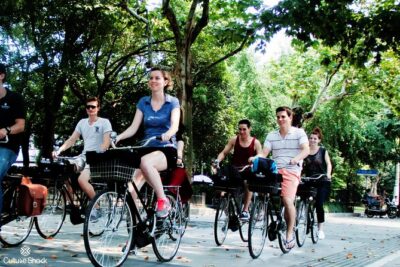
Half-Day Bike Tour of Shanghai Old Town with Food Tasting
Read our review →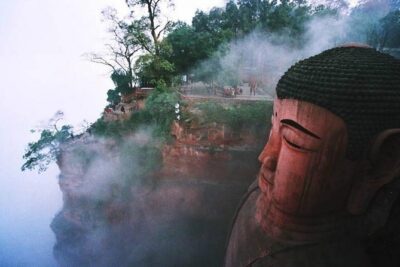
Leshan Giant Buddha and Huanglongxi Ancient Town Day Trip
Read our review →
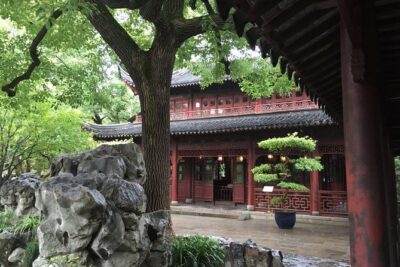
3-Hour Shanghai Yu Garden &Old Town Private Tour with Tea Tasting
Read our review →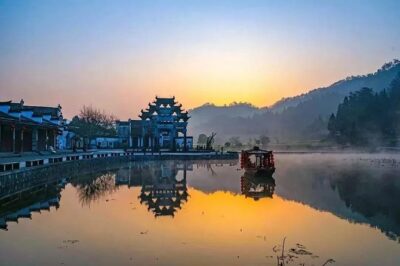
Hongcun Ancient Village Half-Day Private Tour from Huangshan
Read our review →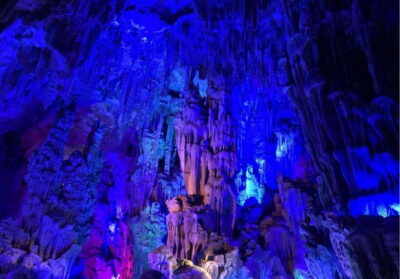
Elephant Trunk Hill, Reed Flute Cave & Daxu Old Town
Read our review →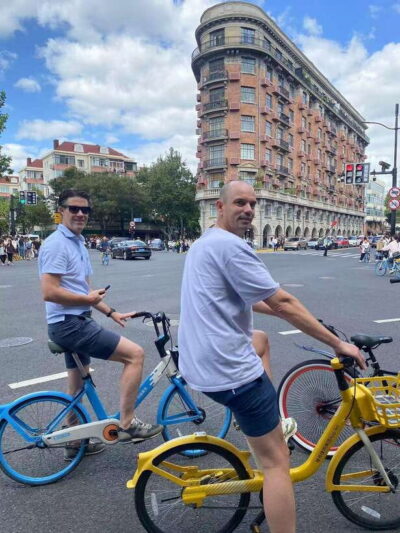
Explore Shanghai’s Old Town & Suzhou River by Bike
Read our review →Browse the lists this tour appears in