
Reviewed · SHOWS & PERFORMANCES
Chongqing 1941 theatre: Tea Art Performance with Folk Art
Chongqing 1941 theatre packs a lot into 45 minutes: a 1.2-meter long teapot, Sichuan drama with kung fu, pipa music, storytelling, magic, and facial makeup changes, all served with covered-bowl tea and a small snack. I like the tea-and-show pairing, which gives you a local custom to enjoy rather than just a seat in a theater. I also like the mix of short folk acts, since you get a quick taste of several Chinese performance traditions.
The catch is value. At $31 per person, this is not a cheap 45-minute show, and the Chinese-only presentation may limit the experience for some visitors. One booking experience also found the ticket much cheaper at the theater, so checking the on-site price before paying online is sensible.
Key points before you book
- A giant 1.2-meter teapot: The long-mouth-pot tea act is the visual oddity of the program and one of its most memorable moments.
- Five or more traditional acts: Expect opera, kung fu, pipa music, money-board singing, magic, folk customs, and facial makeup changes.
- Tea and snack included: You receive covered-bowl tea and a small snack, usually nuts and similar bites.
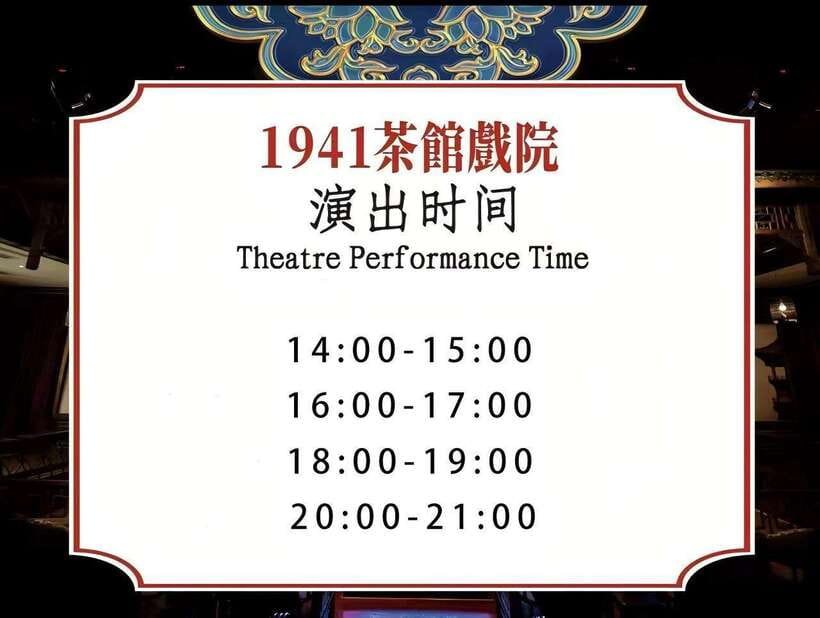
- Short and easy to fit in: The entire show lasts 45 minutes, making it useful on a busy Chongqing sightseeing day.
- Front seats can be interactive: Sitting near the stage may bring you into direct contact with the performers.
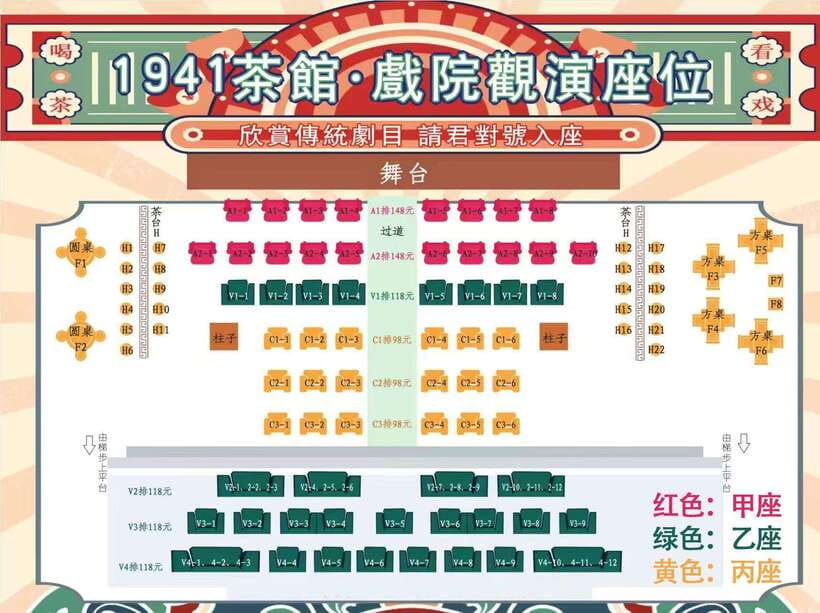
- Arrive early: You are asked to arrive 30 minutes ahead, and late arrivals do not receive the tea.
A quick taste of Chongqing folk entertainment
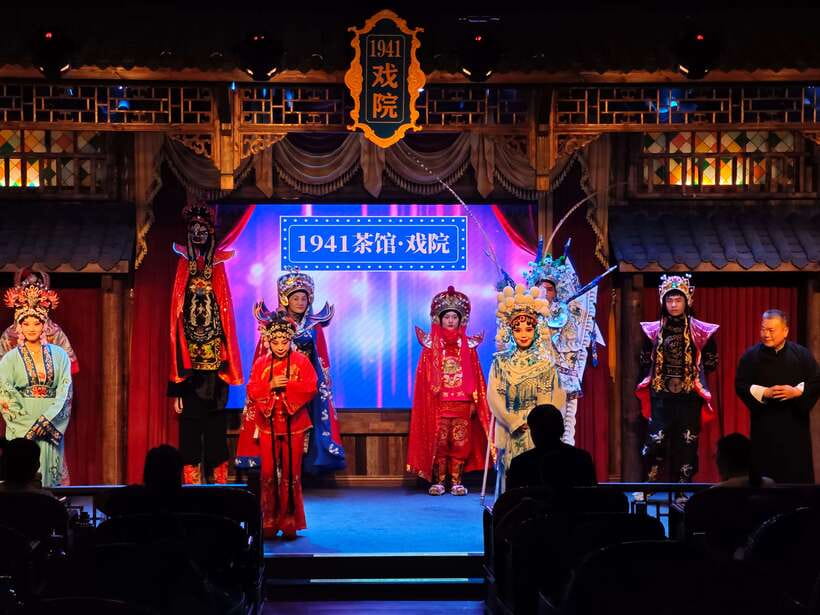
This is not a long theater evening with a single plot. It is a compact sampler of Chinese folk performance, arranged as a series of quick acts. That format suits you if you want cultural entertainment without giving up half a day.
The show brings together traditional music, opera, magic, folk customs, and tea craft. You may not understand every spoken line, since the host and performance are in Chinese, but much of the program works through movement, music, costumes, visual tricks, and audience interaction.
That matters in Chongqing, where tea houses have long been places for conversation, entertainment, and informal performance. Here, the tea is not just a drink handed over at the door. It forms part of the setting, giving you a small link to a familiar local social custom while the stage program unfolds.
The presentation is best viewed as a cultural sampler rather than a polished large-scale theater production. The audience can be small, which may make the room feel quiet at times. On the other hand, a smaller audience can make the performers more responsive and give you a better chance of being noticed.
Other shows and performances in Chongqing:
- Chongqing: Qingyu Banquet Experience with Show and Dinner
★ 4.8 · 6 reviews - Red Theatre Beijing Acrobatic Show Tickets
★ 4.9 · 461 reviews - Shanghai: Circus World ERA Theatre Acrobatics Ticket
★ 4.9 · 283 reviews
Finding the theater at Yutian Building
The meeting point is the garage entrance of Yutian Building, next to the time elevator. From there, you go up to the eighth floor. This is a detail worth taking seriously because a building garage entrance is not the sort of place you can always spot while rushing through a busy city street.
Give yourself extra time to find the building and elevator. The instructions call for arrival 30 minutes before the start, and that buffer is useful for a city theater hidden inside a larger building rather than presented as a prominent streetfront attraction.
Transportation is not included. You need to make your own way to Yutian Building, and personal expenses are also your responsibility. The activity is indoors, so once you reach the venue, you have a break from Chongqing’s weather and steep urban walking routes.
The theater is wheelchair accessible. That is helpful, though you should still allow time to reach the correct entrance and floor.
Tea first, then the folk arts sampler
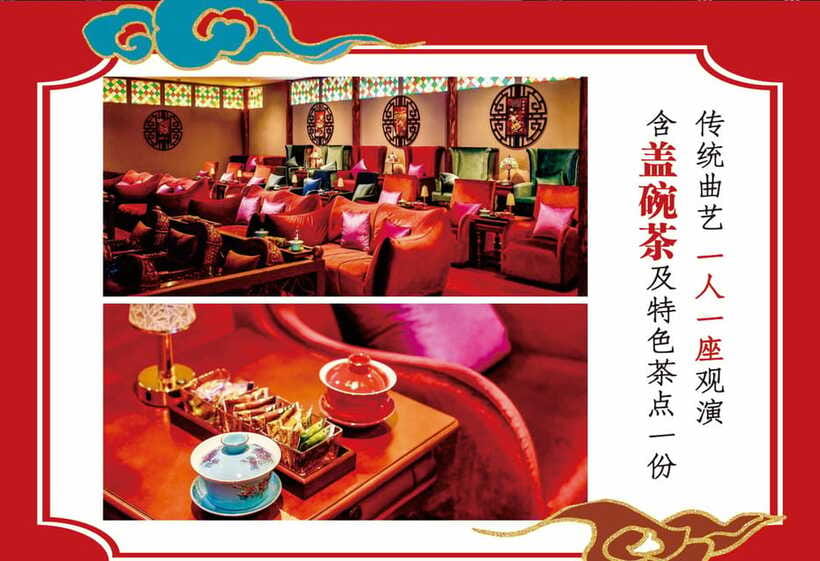
The included refreshment is a covered bowl of tea, also known as gaiwan tea, along with a special snack. A gaiwan is a lidded cup or bowl used to steep and drink tea. You can use the lid to hold back the leaves while sipping, though first-time drinkers may need a moment to get the angle right.
The tea is part of the welcome. You sit down, receive the bowl and hot water, and have something warm to drink before or during the performance. The snack is small rather than a meal. It may be made up of nuts and similar bites, so eat beforehand if you expect dinner-sized refreshments.
The late-arrival rule is important: tea will not be provided if you arrive late. That gives you another reason to reach the venue well before the starting time. You do not want to spend part of a 45-minute show trying to catch up while missing the tea service.
The tea service also helps the program feel less like a standard stage ticket. If you enjoy small cultural details, this may be the part that gives the evening its local character. If you mainly want a high-production theater show, the tea will feel more like a pleasant extra than the main attraction.
The long-mouth-pot tea performance
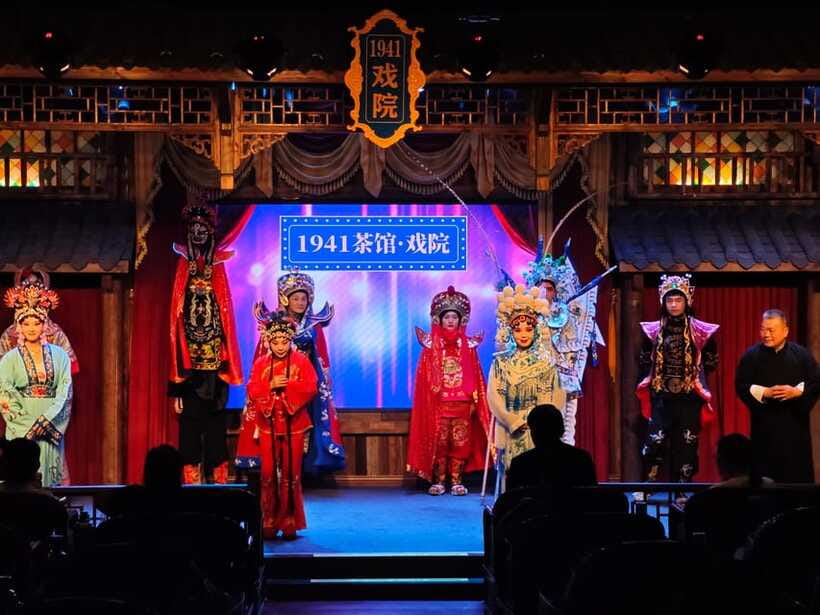
One of the signature acts uses a teapot with a spout about 1.2 meters long. The performer handles the pot at a distance, pouring tea with a mix of control, timing, and showmanship.
This is the kind of act that crosses language barriers well. You do not need an explanation to understand the physical challenge. The teapot itself creates the surprise, and the performance turns ordinary tea service into a small feat of coordination.
It also gives the program a clear connection between stage entertainment and the drink in your own hands. You are not just watching tea being poured in a formal ceremony. You are seeing tea preparation turned into a folk art performance.
Same city, a completely different day:
- Chongqing Wulong National Park Private Tour
★ 5.0 · 87 reviews - Chongqing: Two Rivers Night Cruise- Yangtze & Jialing Rivers
★ 4.5 · 64 reviews - Chongqing deep explore & private car service including meals
★ 4.9 · 51 reviews - Chongqing: 1-day Essential Guided City Tour without Car
★ 5.0 · 44 reviews
Sichuan drama, kung fu, and facial makeup
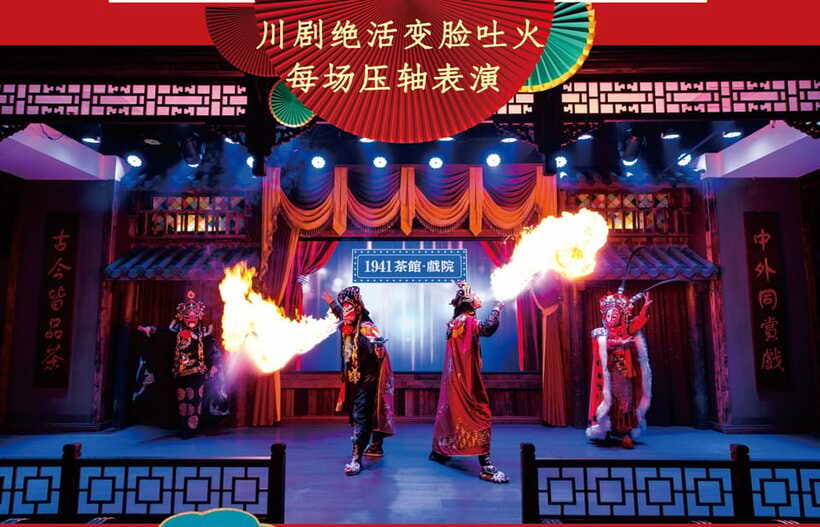
The Sichuan drama segment, identified as Human Good, adds theatrical action to the program. Kung fu is part of the performance, giving this section more movement than a quiet opera scene.
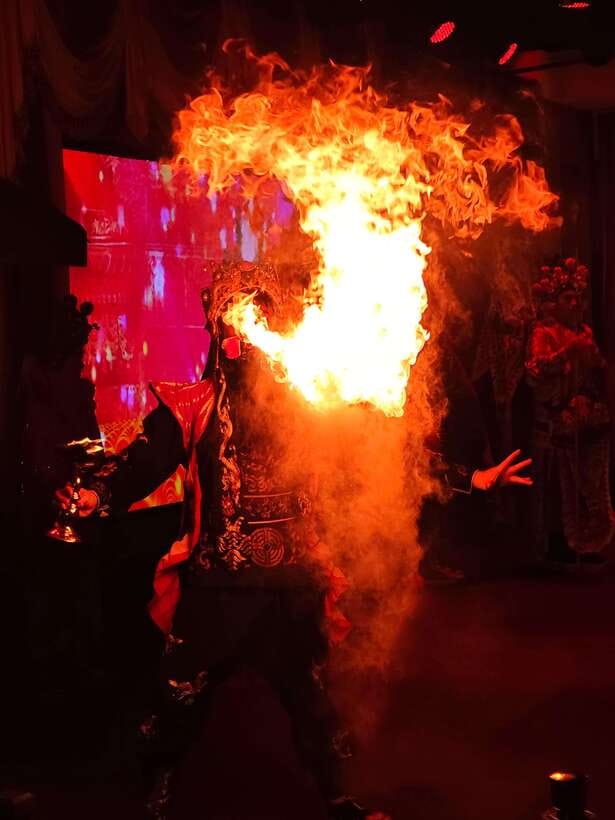
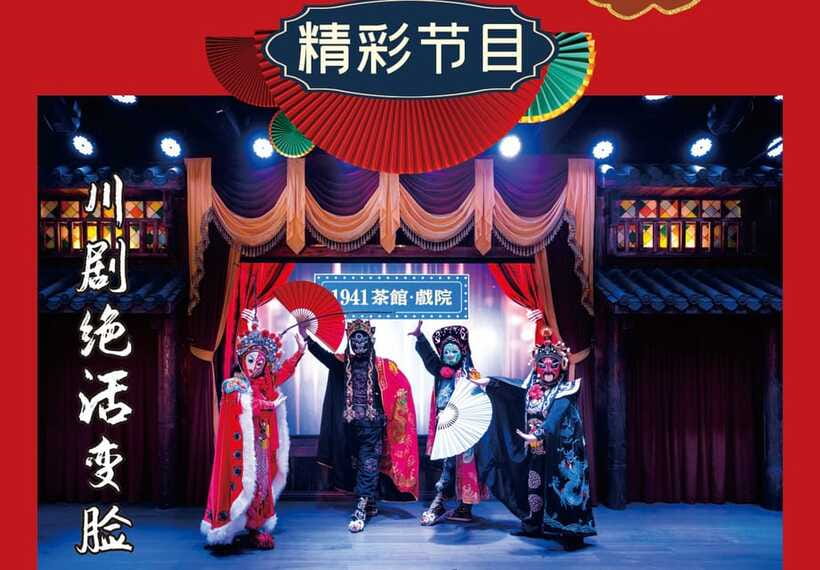
The facial makeup act adds another visual highlight. Traditional Chinese stage makeup can signal character, mood, or role through bold colors and patterns. Here, the effect is presented as a quick stage surprise rather than a long lesson in opera makeup.
You might also see a facial makeup changer at close range, depending on your seat and the way the act is staged. The possibility of seeing the makeup up close, or even touching the performer’s face during audience interaction, is one of the unusual features of the show. It is not guaranteed, so do not book solely for that moment.
This segment is especially useful for visitors who want something more playful than a formal concert. The mix of costume, movement, kung fu, and visual change gives the program energy, even when you cannot follow every spoken word.
Pipa music with a bright, interwoven sound
The pipa performance brings a quieter, more musical mood. The pipa is a traditional Chinese four-stringed instrument with a pear-shaped body, played upright with the fingers.
Its sound can be clear, ringing, and fast, with separate notes blending into a flowing pattern. In this show, the pipa act gives you a chance to hear a traditional instrument rather than seeing only physical comedy and stage tricks.
I would not expect a long concert piece. The program is designed as a sampler, so the pipa performance is likely one part of the sequence rather than the entire focus. Still, it helps balance the louder acts and gives the show a more graceful middle section.
If you are interested in Chinese music but do not want to commit to a full concert, this short performance may be just right. If you want deep musical context or a long recital, you will find the treatment brief.
Money-board singing and storytelling
The quyi money-board act combines singing and storytelling. Quyi is a broad Chinese tradition of spoken and sung folk performance, and the money board is a small percussion instrument used to mark rhythm.
This kind of act depends more heavily on language than the tea art or kung fu. Since the host and programs are in Chinese, you may miss parts of the story or jokes. Even so, the rhythm, hand movements, and tone can still make the act enjoyable without translation.
For a first introduction, the short format works well. You get a sense of how storytelling and music can share one performance, rather than seeing only dance or instrumental music. The limitation is that you will not receive much explanation of the tradition during the show.
Magic, folk customs, and audience contact
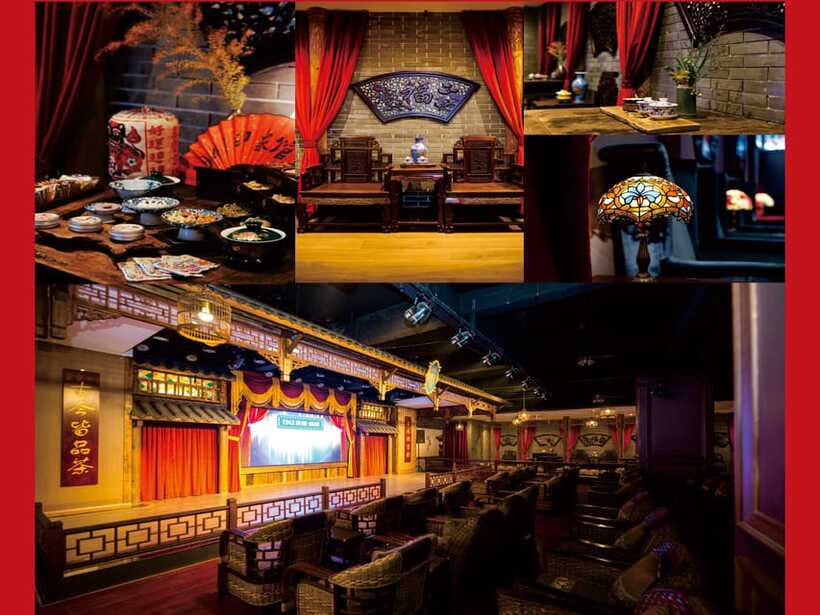
The program also includes magic and folk customs. These acts add variety and keep the pace moving. You might see a trick that depends on surprise, a custom presented through costume or gesture, or a short piece designed to involve the audience.
The smaller room and modest audience can work in your favor here. A front-row seat may place you close to the performers, and direct interaction can make the show feel personal. One audience member reported being greeted, seated, and involved often from the front row, followed by an invitation to take a photo with the performers after the show.
That photo opportunity is a useful extra if you enjoy a keepsake. It is not the same as a formal meet-and-greet, and you should not assume every visitor gets equal stage time. Still, sitting close gives you the best chance of seeing expressions, costume details, and small sleight-of-hand movements.
A quiet audience can also change the mood. With only a few people in the room, the show may not have the roar of a full theater. Some visitors may find that disappointing, while others will appreciate the direct contact and lack of crowding.
Is $31 fair for 45 minutes?
At $31 per person, you are paying for a short, hosted cultural program with tea and a snack. That works out to a fairly high price by the minute, especially if you compare it with a longer city attraction or a full evening performance.
The value improves if you specifically want a convenient introduction to several Chinese folk arts. You receive a seat, tea, refreshments, and a compact run of acts without needing to plan separate venues. For a first-time visitor with limited time, that convenience has real worth.
The value weakens if you expect a large production, English explanations, a substantial meal, or a full-length opera. This is a small sampler. Its appeal comes from variety and access, not scale.
There is also a price warning worth acting on. One booking experience found the ticket much cheaper when purchased at the theater. The exact difference can change, but you should check the local box-office price before committing online. If the direct price is much lower, the online booking convenience may not justify the extra cost.
The booking option does offer flexibility. You can reserve now and pay later, and cancellation is free up to 24 hours before the activity for a full refund. Those terms help if your Chongqing schedule is still shifting.
Who will enjoy this show most?
I would recommend it to you if you want a short cultural stop with strong visual variety. Families, first-time visitors to China, and anyone curious about tea customs may find the mix easy to sample. You do not need prior knowledge of Chinese opera to enjoy a long teapot, kung fu, colorful makeup, and magic.
It also suits a rainy afternoon or an evening when you want an indoor activity that does not require a major time commitment. The 45-minute length leaves room for dinner or another Chongqing sight.
You may want to skip it if you need English interpretation, dislike audience participation, or want a serious theater performance. The language barrier is real, even if many of the physical acts remain understandable. The show is also less appealing at full price if your main goal is simply to drink tea.
Arrive early, ask for a front seat if possible, and eat something before you go. The snack is a small accompaniment, not a meal.
Should you book Chongqing 1941 theatre?
Book this experience if you want a quick, visual introduction to Chinese folk entertainment and like the idea of drinking gaiwan tea while watching the stage. The long-mouth teapot, pipa music, kung fu, money-board storytelling, magic, and facial makeup act give you plenty of variety in 45 minutes.
I would be cautious about booking at $31 without checking the theater price first. If you find a lower direct rate, the show becomes easier to recommend. At the full online price, book it for the cultural mix and close audience contact, not for length, translation, or a grand theater production.
FAQ
How long does the Chongqing 1941 theatre experience last?
The performance lasts 45 minutes.
What is included in the ticket?
The ticket includes the traditional performance, one covered-bowl tea, and one special snack per person.
Will I receive tea if I arrive late?
No. Tea will not be provided if you arrive late, so arrive 30 minutes before the activity starts.
Where is the meeting point?
Meet at the garage entrance of Yutian Building, next to the time elevator. The venue is on the eighth floor.
Is the activity conducted in English?
The host or greeter speaks Chinese, and the listed activity language is Chinese.
Is the theater wheelchair accessible?
Yes, the activity is wheelchair accessible.
Can I cancel for a full refund?
Yes. You can cancel up to 24 hours in advance for a full refund. You can also reserve now and pay later.
New reviews from Chongqing
- Chongqing: Trendy Spots, Cableway & Ferry Private Tour★ 5.0 · 7 reviews
- Chongqing:One-day Wulong HikeTrip(GeoPark+Fairy Mt)car incld★ 5.0 · 3 reviews
- Chongqing: Qingyu Banquet Experience with Show and Dinner★ 4.8 · 6 reviews
- Chongqing: Wulong Private Day Exploration Tour★ 4.6 · 10 reviews
- Chongqing: Surreal Urban, Ancient Town, and Secret Viewpoint★ 5.0 · 8 reviews
- Chongqing: Private Day Tour to Wulong Karst Geological Park★ 5.0 · 7 reviews
- Chongqing: Wulong 2 Spots All-inclusive Luxury Private Trip★ 5.0 · 8 reviews
- Chongqing One-Day Trip: Wulong’s 3 Essentials★ 4.6 · 3 reviews
Shows & Performances, compared.
Shanghai Circus World: ERA2 Intersection of Time Acrobatics Show
Read our review →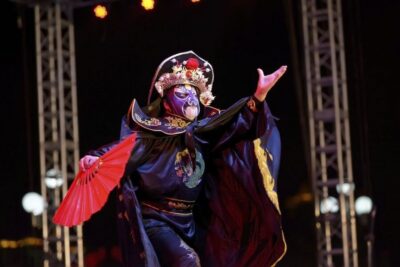
Sichuan Opera Shu Feng Yan Yun Evening Show Ticket
Read our review →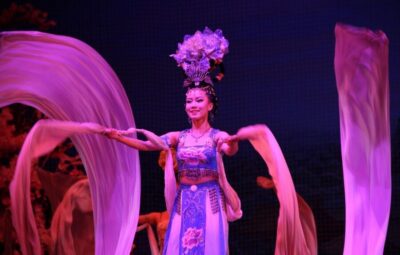
Great Tang Dynasty Night Show & Dumpling Meal Option
Read our review →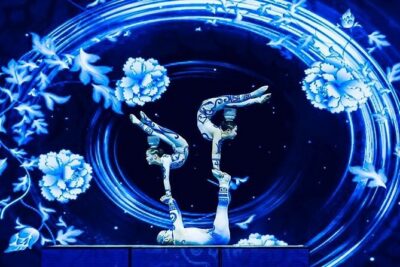
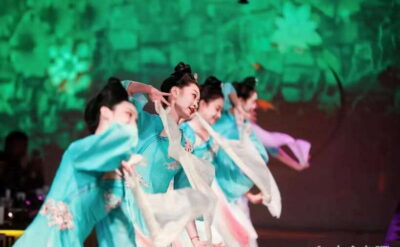
Royal Banquet with Chinese Cultural Performance
Read our review →
Beijing Roast Duck Banquet and Acrobatics Show with VIP Seats Evening Tour
Read our review →Browse the lists this tour appears in