
Reviewed · MUSEUMS
Chengdu: Du Fu Thatched Cottage Museum Ticket for Adult
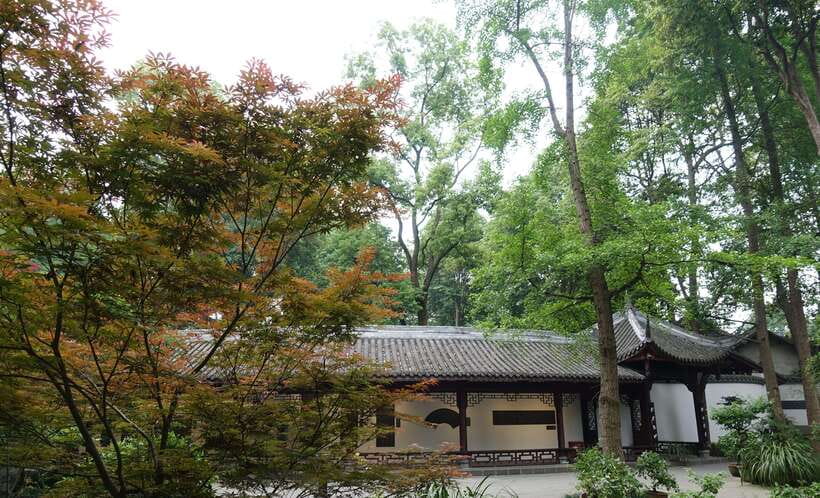
Du Fu Thatched Cottage is more than an old literary address. It is a calm, spacious garden where one of China’s greatest poets wrote over 240 poems during nearly four years in Chengdu. I like the way poetry and place remain tied together, and I like the chance to see both a reconstructed thatched hut and formal Ming and Qing buildings.
The other pleasure is the setting. Bamboo, streams, leafy paths, and classical Chinese architecture make this a welcome break from city streets. The main drawback is simple: this is an admission ticket, not a guided tour, so you’ll need to bring your own context or read the displays carefully.
Key things to know before you go
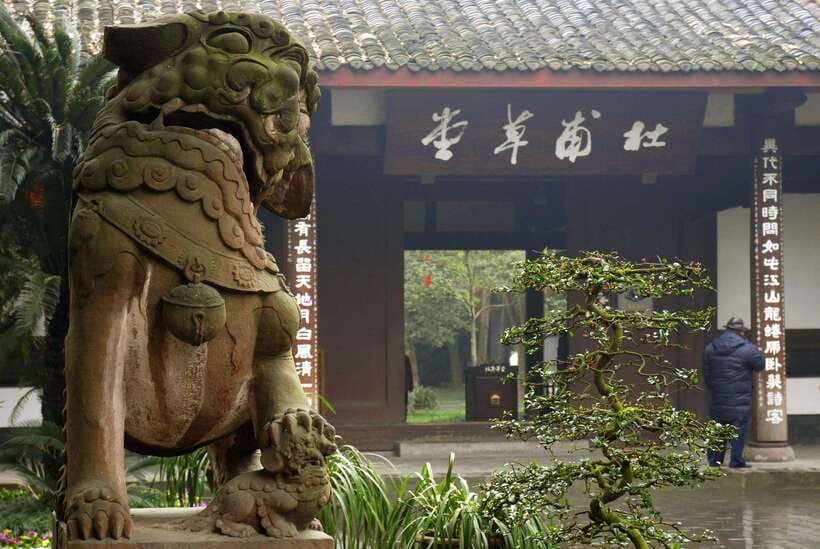
- Du Fu wrote over 240 poems here: His Chengdu years followed his flight from the An Lushan Rebellion in 759 AD.
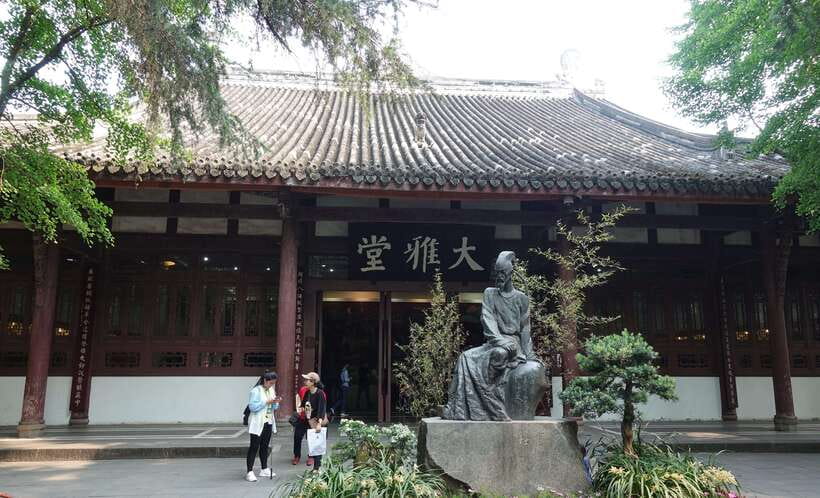
- The Poetry History Hall is the main focus: It contains a statue of Du Fu and plaques bearing famous calligraphy.
- The reconstructed Thatched Hut Area feels different from the formal halls: It offers a glimpse of the rustic home connected with his daily life.
- The grounds cover nearly 300 acres: Allow time for gardens, bamboo groves, streams, courtyards, and the central sequence of historic buildings.
- The museum holds more than 30,000 items: Ancient editions, manuscripts, and translations support the site’s literary importance.
- The ticket is simple but passport-dependent: Use your passport or e-voucher at any main gate during the 09:00 to 18:00 opening period.
Why Du Fu’s Chengdu home matters
Du Fu arrived in Chengdu during a troubled period in Tang Dynasty China. In the winter of 759 AD, he fled the chaos of the An Lushan Rebellion and settled in the city. By the following spring, friends had helped him build a thatched hut beside Huanhua Stream.
He lived in Chengdu for nearly four years. That is the key fact to keep in mind as you walk around the museum. This was not a brief stop on a grand literary tour. It was a long period in which Du Fu found a home, worked, observed society, and wrote more than 240 poems.
His writing is closely tied to ordinary life and the political troubles of his time. That is why he is known as the Poet Historian. At the museum, you are not only seeing a memorial to an important writer. You are seeing the place linked with the period that helped define his work.
I find that context makes the visit more rewarding. Without it, the halls can look like attractive old buildings in a garden. With it, the site becomes a record of how a displaced poet turned a temporary refuge into a productive home.
Other museums and galleries in Chengdu:
- Private Chengdu Day Tour: Giant Pandas and Jinsha Site Museum
★ 5.0 · 142 reviews - Chengdu: Wuhou Shrine Museum From Three Kingdoms Era
★ 4.7 · 3 reviews - Chengdu: Sichuan Museum – Cultural and Historical Heritage
★ 5.0 · 3 reviews
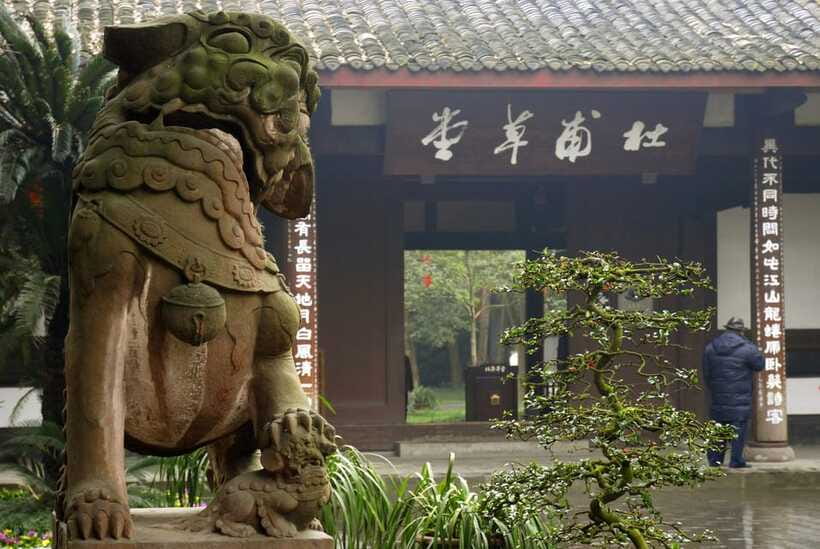
Entering through the gates on Qinghua Road
Du Fu Thatched Cottage is at 37 Qinghua Road in Chengdu’s Qingyang District. Admission is valid for one day, and entry is available at all of the museum’s main gates.
You do not need a physical ticket. Use the ID connected with your booking or show your e-voucher for direct verification. Your passport is important because a passport ID is needed when booking, and the instructions also tell you to bring that passport with you.
The opening and usage time is 09:00 to 18:00. Since the grounds cover nearly 300 acres, I would avoid treating this as a quick photo stop. A visit during the open hours gives you time to move through the central buildings, pause in the gardens, and look at the literary displays without rushing.
The ticket is listed at $15 per adult. That is a fair price if you value both the historic site and the museum collection. You are paying for access to a large cultural property with formal halls, garden areas, reconstructed structures, and more than 30,000 items, not just a small memorial room.
Following the central axis of historic buildings
The main structures are arranged along a central axis. This layout gives the visit a clear order and helps you understand the site as an architectural complex rather than a collection of unrelated rooms.
The sequence includes the Front Gate, Grand Lobby, Poetry History Hall, Chaimen Gate, and Gongbu Shrine. Symmetrical corridors and additional buildings sit to the sides.
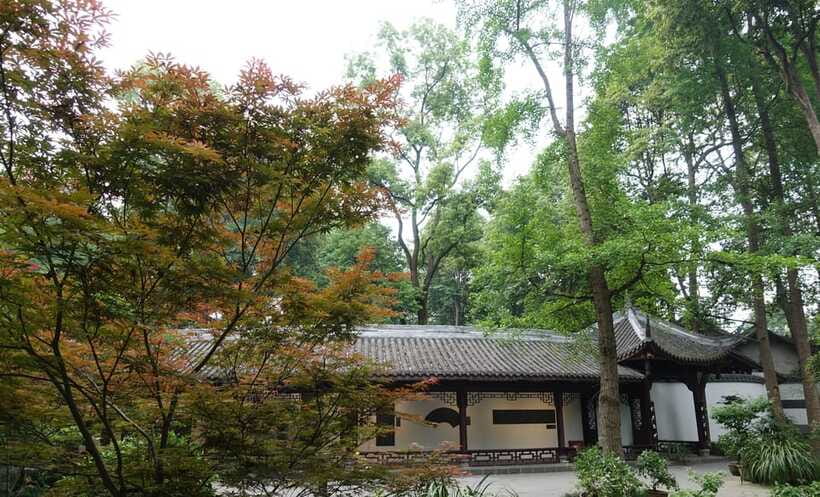
The architecture preserved here reflects later Ming and Qing construction. The site includes features dating from around 1500 and 1811, so the buildings you see are connected with later periods of preservation and rebuilding rather than being a perfectly untouched Tang Dynasty residence.
That distinction matters. Du Fu lived here in the eighth century, but the present architectural setting also tells the story of how later generations remembered and honored him. The museum is therefore both a literary memorial and a carefully maintained example of classical Chinese design.
Take your time with the transitions between buildings. The gates and courtyards create a rhythm that is easy to miss if you hurry straight to the main hall. The covered corridors and symmetrical lines also give you a good sense of traditional planning.
Spending time in the Poetry History Hall
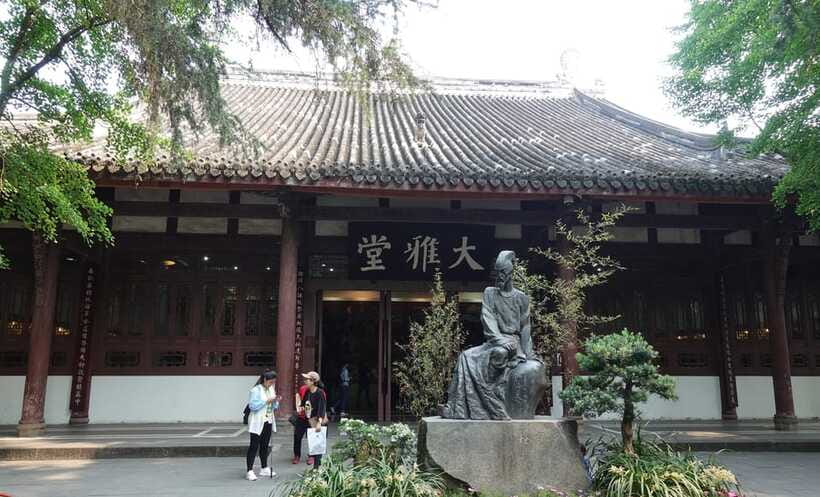
The Poetry History Hall is the centerpiece of the museum. Inside, you can see a statue of Du Fu and plaques inscribed with famous calligraphy.
This is likely to be the most meaningful stop for anyone interested in Chinese poetry. The hall connects the person, the writing, and the tradition of calligraphy in one place. Even if you cannot read the Chinese text, the setting helps explain how Du Fu’s work has been preserved and honored across generations.
I would not expect the hall to explain every poem in detail for a visitor who does not read Chinese. The value comes from the combination of the statue, calligraphic displays, and the wider historical setting. If you want a full literary study, you may need to bring your own background reading or use any available translations and museum information.
The hall also gives you a useful pause before continuing through the grounds. After the open garden paths and formal approach, this is the point where the visit becomes most clearly about Du Fu’s writing rather than only the buildings.
A few more days out in Chengdu worth the ticket
- Chengdu: Giant Panda Breeding Research Base Ticket
★ 4.5 · 580 reviews - Chengdu: Sichuan Opera Shu Feng Yan Yun Evening Show Ticket
★ 4.7 · 185 reviews - Chengdu Sichuan Opera Show Ticket – Shu Feng Ya Yun
★ 4.4 · 73 reviews - Chengdu:Panda Base Entry Ticket & English PDF Guidebook
★ 4.3 · 48 reviews
Seeing the reconstructed Thatched Hut Area
The Thatched Hut Area is a reconstruction of Du Fu’s rustic dwelling. It is one of the most direct ways to picture the kind of home associated with his Chengdu years.
Do not expect the reconstruction to function as a surviving Tang Dynasty interior. Its purpose is interpretive. It helps you imagine the modest setting in which Du Fu lived and wrote, especially when compared with the grander halls and later memorial buildings elsewhere on the property.
I like this contrast. The formal structures tell you how later generations honored Du Fu. The hut gives the visit a more human scale. It brings the story back to a poet living beside a stream, working in a simple home, and observing the world around him.
The area also helps explain why the gardens matter. The hut is not presented as an isolated object in a display case. It belongs to a wider setting of greenery, water, and traditional garden design. That connection between dwelling and surroundings is one of the site’s strongest features.
Walking through bamboo, streams, and classical gardens
The gardens are not just decoration between museum buildings. They are a major part of the experience.
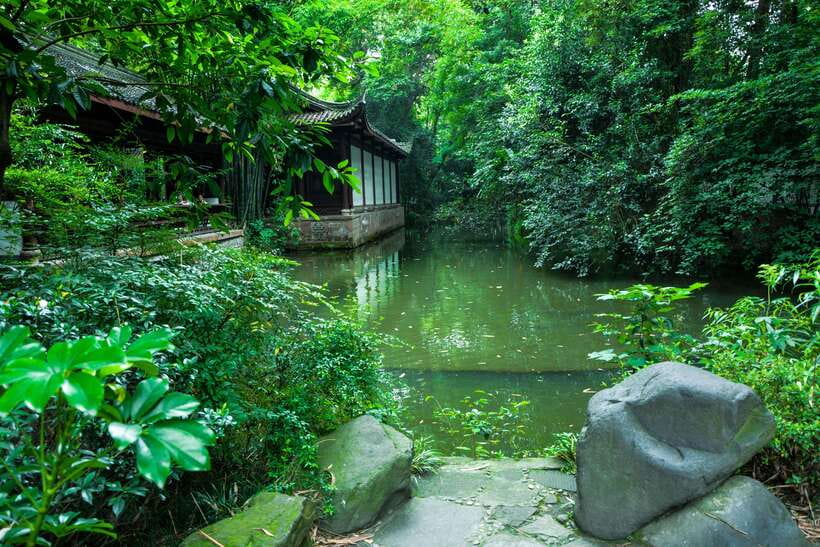
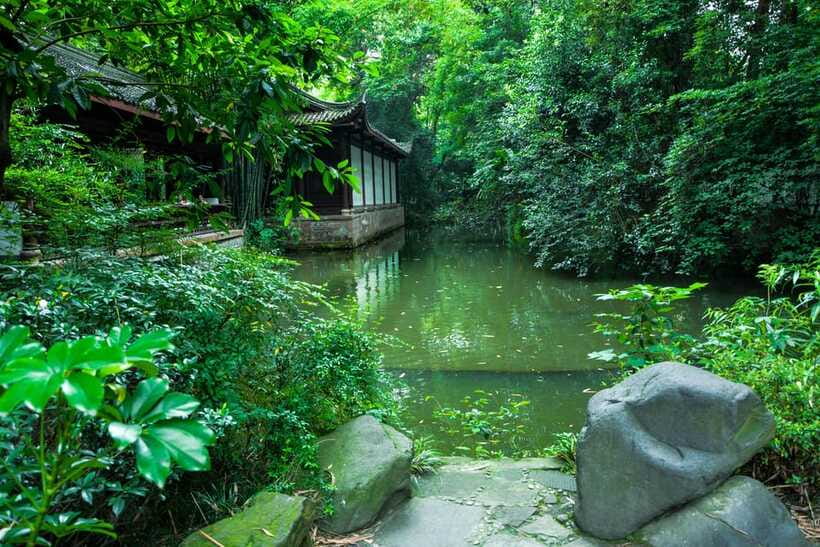
The grounds include bamboo groves, flowing streams, and quiet paths. These features create a softer setting than you might expect from a city museum. If you have already spent time in Chengdu’s busy urban areas, the garden provides a welcome change of pace.
The design also suits the subject. Du Fu’s life in Chengdu is presented through a setting that feels connected to retreat, reflection, and writing. You can move from a calligraphy display to a leafy path, then return to a historic hall. That change in atmosphere gives the visit more variety than a standard indoor museum.
The nearly 300-acre size means you should wear comfortable shoes and leave room in your schedule for walking. The ticket is valid for one day, so there is no need to force the entire visit into a short window. The available information does not give a fixed route or required stopping time, which lets you set your own pace.
The garden can also be the best part of the visit for people who are curious about Chinese design but less familiar with Tang poetry. You can appreciate the balance of buildings, water, planting, and corridors even if the literary displays require translation.
Visiting the Gongbu Shrine
The Gongbu Shrine honors Du Fu alongside Huang Tingjian and Lu You, two poets who also lived in Sichuan.
This adds a wider regional layer to the museum. The site is not only preserving one man’s connection with Chengdu. It also places Du Fu within a longer literary tradition linked to Sichuan.
The shrine is worth seeing after the Poetry History Hall because the two spaces serve different purposes. The hall focuses on Du Fu and his poetry. The shrine connects him with other important writers and shows how literary memory can be shared across different periods.
The inclusion of Huang Tingjian and Lu You also reminds you that Sichuan has attracted writers over many centuries. Du Fu’s time in Chengdu was important, but it was not an isolated moment in the province’s cultural story.
Understanding the 30,000-item collection
The museum holds more than 30,000 items, including ancient editions, manuscripts, and translations of Du Fu’s works. This collection gives the site importance beyond its buildings and gardens.
An ancient edition can show how Du Fu’s work was transmitted and preserved. A manuscript can bring you closer to the physical history of the text. A translation can help connect the poems with people who do not read classical Chinese.
The collection is also useful because the museum’s meaning can otherwise be hard to grasp from architecture alone. A reconstructed hut gives you an image. The collection gives you evidence of the long life of Du Fu’s writing.
You should not assume every item will be equally easy to understand. The information provided does not specify the languages used in every display or promise an individual guide. If you have a strong interest in Tang poetry, some preparation before arrival will help you get more from the collection.
For a casual cultural visit, you can still appreciate the scale of the archive. More than 30,000 items show that this is an active center for studying Du Fu’s life and work, not merely a scenic memorial.
What the ticket includes, and what it does not
The adult ticket includes admission to Du Fu Thatched Cottage Museum. It does not list transport, meals, a private guide, or any separate activity.
That makes the ticket best for independent visitors who want to decide how long to spend in each hall and garden. You are not being locked into a timed tour route, and the one-day validity gives you flexibility during the opening period.
The small-group information says the experience is limited to 10 participants. Since the product itself is an admission ticket and no guide name or guiding service is provided, you should not assume that a guide will lead you through the museum. The small-group label may matter for the booking arrangement, but the included service is museum entry.
Free cancellation is available up to 24 hours in advance for a full refund. You can also reserve now and pay later, which helps if your Chengdu schedule is still changing. These terms are useful, but the main value still comes from the site itself: its size, garden setting, historic buildings, and literary collection.
Who will get the most from this visit
I would recommend the museum to anyone interested in Chinese literature, Tang Dynasty culture, calligraphy, historic architecture, or traditional gardens.
It is also a good choice if you want a quieter cultural stop in Chengdu. The combination of streams, bamboo, and courtyards gives you more breathing room than a compact indoor museum.
Families and first-time visitors may appreciate the reconstructed hut because it turns an abstract literary story into something easier to picture. People with a specific interest in poetry will probably want extra time in the Poetry History Hall and collection areas.
The visit may be less satisfying if you want a guide explaining every poem in English or a tightly organized tour with live commentary. No guide or language service is specified, so you should choose this ticket for independent exploration rather than guided interpretation.
Practical advice for making the most of the day
Bring the passport used for the booking. That is the clearest practical requirement, and forgetting it could complicate entry.
Keep your e-voucher available, even though no physical ticket is required. Entry can be verified with your ID or voucher at any main gate.
Give yourself enough time to walk. The grounds cover nearly 300 acres, and the experience includes more than one building. Rushing from the Front Gate to the main hall and out again would miss much of what makes the site worthwhile.
I would also plan to alternate indoor and outdoor stops. See the Poetry History Hall, then take time in the gardens. Visit the Thatched Hut Area, then continue to the Gongbu Shrine. This approach lets the historical material and the setting support each other.
If Chinese poetry is new to you, read a little about Du Fu before arriving. Knowing that he came to Chengdu after fleeing the An Lushan Rebellion, lived here for nearly four years, and wrote over 240 poems will make the buildings and displays easier to place.
Should you book Du Fu Thatched Cottage Museum?
Book it if you want a flexible cultural visit that combines Tang poetry, later historic architecture, classical gardens, and a substantial museum collection. The $15 adult price offers solid value for a full-day admission ticket, especially if you enjoy taking your time rather than rushing between major attractions.
Skip it if you need a guide, transport, or guaranteed detailed explanations in a particular language. This is best approached as a self-guided visit.
For most people with an interest in Chengdu’s cultural side, I would make room for it. The reconstructed hut gives the story a human face, the Poetry History Hall supplies the literary focus, and the gardens make the visit pleasant even when you are not an expert in Chinese poetry.
FAQ
Where is Du Fu Thatched Cottage Museum?
It is located at 37 Qinghua Road in Chengdu’s Qingyang District, in southwestern China.
How much does the adult ticket cost?
The listed price is $15 per person.
How long is the ticket valid?
The ticket is valid for one day.
What are the usage hours?
Entry is available from 09:00 to 18:00.
Do I need a physical ticket?
No. You can use your ID or e-voucher for direct verification.
Where can I enter the museum?
Entry is available at all main gates of Du Fu Thatched Cottage Museum.
Do I need to bring my passport?
Yes. A passport ID is needed to book, and you should bring the passport used for the booking.
What does the ticket include?
It includes admission to Du Fu Thatched Cottage Museum.
Is the experience guided?
No guide is specified in the provided activity details. The included service is museum admission.
Can I cancel for a refund?
Yes. You can cancel up to 24 hours in advance for a full refund.
New reviews from Chengdu
- Sichuan: Big Panda Volunteer Day tour★ 4.4 · 10 reviews
- Mount Qingcheng Tour: Explore Serene and Sacred Taoist Site★ 5.0 · 12 reviews
- Leshan Buddha boat and food half day trip★ 3.1 · 3 reviews
- Leshan Giant Buddha Tour: Discover Ancient Stone Masterpiece★ 4.3 · 3 reviews
- Leshan Giant Buddha & Huanglongxi/Buddha Temple Day Trip★ 5.0 · 18 reviews
- Jiuzhai Valley National Park:Visit Colorful Fairy Tale World★ 5.0 · 3 reviews
- Jinsha&Sanxingdui archaeological site private day tour★ 4.8 · 4 reviews
- Huanglong Scenic Area: Explore Stunning Five-Colored Ponds★ 5.0 · 6 reviews
Museums, compared.
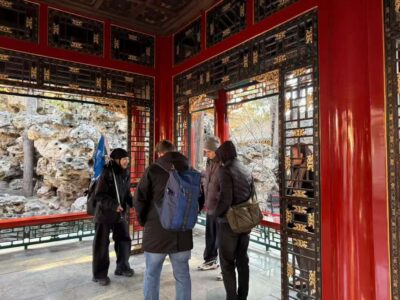
Tianmen Square, Forbidden City & Royal Museum Tours
Read our review →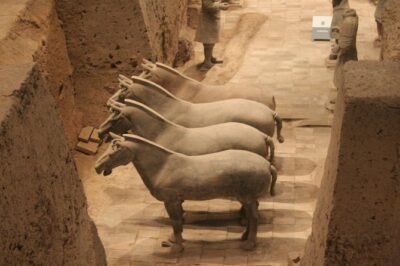
Half-Day Mini Group Xian Tour to Terracotta Warriors Museum
Read our review →
Beijing:Jingshan Park (Palace Museum Garden) Ticket
Read our review →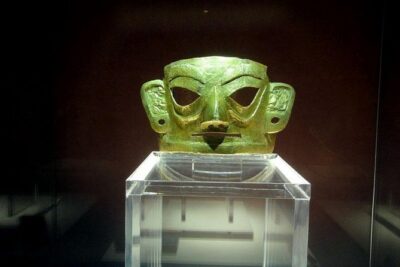
Private Chengdu Day Tour: Giant Pandas and Jinsha Site Museum
Read our review →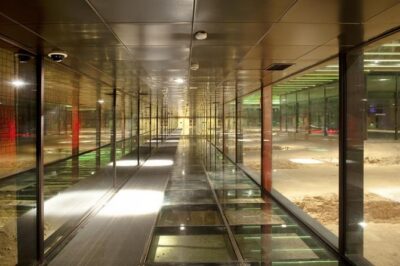
Private Xi’an Tour: Terracotta Warriors, Hanyangling Museum, Cave Homes
Read our review →
Beijing Half Day: National Museum of China In-depth Tour with Subway Transfer
Read our review →
Terracotta Warriors Museum Ticket with Professional English-speaking tour guide
Read our review →Browse the lists this tour appears in