
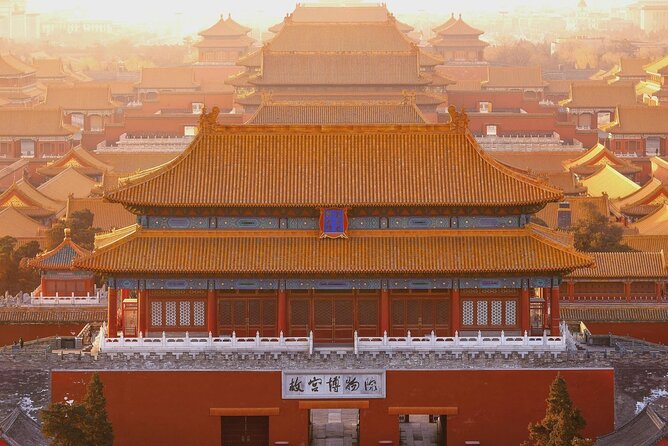
Reviewed · FORBIDDEN CITY TOURS
Beijing: Highlights of Forbidden City+Options Tour
The most useful part of this Beijing tour is simple: it gets you through the Forbidden City, a huge palace complex where the scale can easily overwhelm first-time visitors. A guide leads you from Meridian Gate through the ceremonial halls, imperial residences, garden, and out to Tiananmen Square, turning a long walk through grand buildings into a clear story.
I like the small maximum group of 12 and the included admission, which saves you from sorting out one of Beijing’s more complicated ticket systems. I also like the guides’ practical touch. Linda, Amber, Melodie, Angel, and Harper are all named by past participants, with particular praise for clear English, patient answers, and help beyond the formal tour. The main drawback is the fixed meeting point: hotel pickup and drop-off are not included, and the four-hour schedule includes travel time.
Key points to know before booking
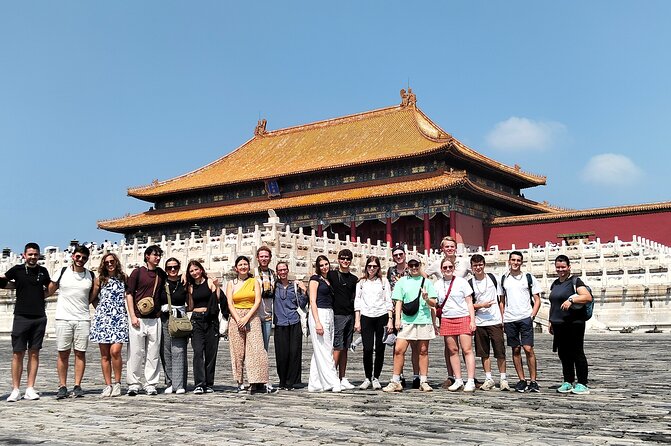
- The route covers the palace core: You see Meridian Gate, the three main ceremonial halls, the imperial living quarters, the garden, and the Gate of Divine Prowess.
- Tiananmen Square is included: The final stop adds a major Beijing landmark without an extra admission charge.
- Entry tickets are handled for you: The tour includes guaranteed entrance, a useful service in a city with strict advance booking rules.
- Guides make the difference: Linda, Amber, Melodie, Angel, and Harper are noted for clear English, patient explanations, and family-friendly storytelling.
- The group stays small: No more than 12 people are scheduled, making it easier to hear the guide and ask questions.
- Budget for extras: Hotel transfers, the Jewelry and Clock museums, and guide tips are not included in the $30 price.
Why this four-hour route works in Beijing
The Forbidden City is not a single palace you walk into, photograph, and leave. It is a vast sequence of gates, courtyards, halls, residences, and gardens, built between 1406 and 1420 during the Ming Dynasty. The site served as the imperial center of China, and its size can make an unguided visit feel like a march through one enormous ceremonial space.
This tour gives you a set route and a guide to explain why the buildings differ. You move from public imperial ceremony toward private court life, then finish in the garden and exit at the north side of the complex. That progression makes sense, especially if you have only one morning or afternoon in Beijing.
The tour lasts about four hours, though that total includes travel time. You should not treat every listed stop as a full museum visit. Several halls receive only 10 to 15 minutes, while the opening section at Meridian Gate and the residential area receive more time. The pace is designed to cover the essential route rather than every corner of the palace.
The group cap of 12 is a real advantage. The courtyards are large, but a guide can still be difficult to hear when a group spreads out. A smaller party keeps explanations more manageable and gives you a better chance to ask about architecture, court customs, or the people who used each building.
Other ways into the Forbidden City from Beijing:
- Beijing: Forbidden City Tour(Group/Private)-Tickets Included
★ 4.8 · 7,974 reviews - Beijing: T-Square & Forbidden City Group or Private Tour
★ 4.8 · 4,446 reviews - All-Inclusive Tour: Tiananmen Square, Forbidden City, Great Wall
★ 5.0 · 2,873 reviews
Starting at Meridian Gate
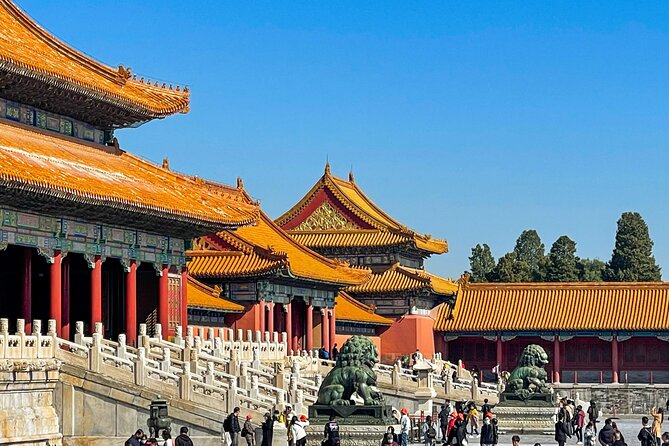
Meridian Gate, known as Wu Men, is the formal starting point for the Forbidden City. It introduces the scale of the complex before you reach the central halls. The tour allows about an hour for this opening section, including the initial explanation of the palace and its place in Ming and Qing imperial life.
I like beginning here because it gives the rest of the walk a clear frame. You are not simply entering a set of old buildings. You are entering the heart of a carefully ranked imperial system, where gates, courtyards, roof lines, and building positions communicated status.
Your guide also explains the palace’s construction during the Ming Dynasty and its use as an imperial center. That context matters. Without it, the ornate roofs and broad stone courtyards can blur together. With it, you begin to notice that the route is ordered from grand public ceremonies toward more private spaces.
The first hour may feel long if you mainly want photographs, but it is useful for orientation. This is also where the tour’s historical storytelling has the most work to do, since the palace complex is too large to understand from labels alone.
The three great halls and imperial ceremony
The Hall of Great Harmony, Hall of Middle Harmony, and Hall of Preserving Harmony form the ceremonial core of the route. The first receives about 15 minutes, while the next two receive about 10 minutes each.
The Hall of Great Harmony is the largest and most important of the three. Your guide explains the duties and sacred role associated with these halls during the imperial period, along with the architectural ranking system used in the palace. The details help you read the site as a place of political theater, not just grand construction.
At the Hall of Middle Harmony, you learn that the emperor used the building for rehearsals. That small detail gives the ceremonial complex a more practical side. Major rituals needed preparation, and even the emperor’s movements followed a set order.
The Hall of Preserving Harmony adds another layer. Imperial examinations were held here, linking the palace to the civil service system that shaped government. This is one of the better moments to listen closely, because the building’s role reaches beyond the imperial family and into the machinery of administration.
The short time at each hall is both a strength and a limitation. You get the central story without spending the whole day in one courtyard, but you will not have long periods for quiet viewing. If you want detailed architectural photography, the group schedule may feel brisk.
From public power to the imperial household
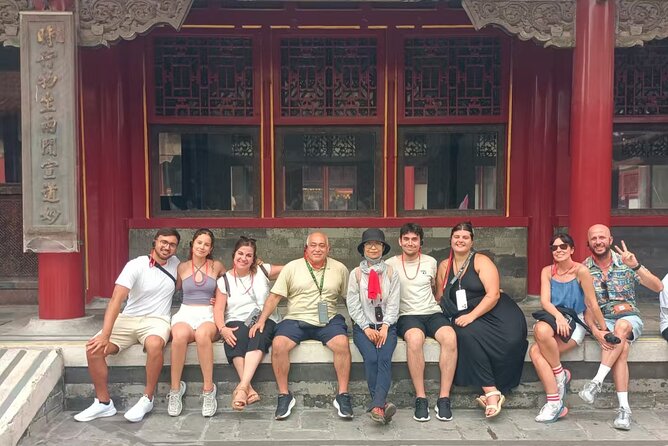
After the ceremonial halls, the route moves into the inner palace area. You visit the Palace of Heavenly Purity, Hall of Union, and Palace of Earthly Tranquility, with about 30 minutes allocated to the first section and shorter visits to the next two.
This change in setting is one of the most interesting parts of the tour. The outer halls represent the emperor’s public duties. The inner palaces show the structures of court life, imperial marriage, and the Qing Dynasty harem system.
At the Palace of Heavenly Purity, your guide points out details tucked into less obvious corners. That is where a guide can add value. Large halls are easy to admire, but small architectural features and court customs often explain more about how the palace functioned.
The Hall of Union is associated with meetings between the emperor and empress. The Palace of Earthly Tranquility served as the empress’s residence and, in the late Qing period, as the honeymoon room for the imperial couple. Those details make the inner palace easier to picture as a lived space rather than a row of formal buildings.
You should expect a focused explanation rather than access to every room. The route is about seeing the main structures and understanding their roles. If your main interest is court women, marriage customs, or Qing palace life, ask your guide questions while you are in this section.
Same city, a completely different day:
- From Beijing: Mutianyu Great Wall Tours with Options
★ 4.9 · 9,216 reviews - MuBus: Mutianyu Great Wall ENG/ESP/RUS Guided Bus Tour
★ 5.0 · 2,361 reviews - 4-Hour Small Group Tour to Forbidden City with Entry Tickets
★ 5.0 · 1,863 reviews - Beijing: Tiananmen Square Registration Service(Ticket)
★ 4.5 · 1,704 reviews
A quieter finish in the Imperial Garden
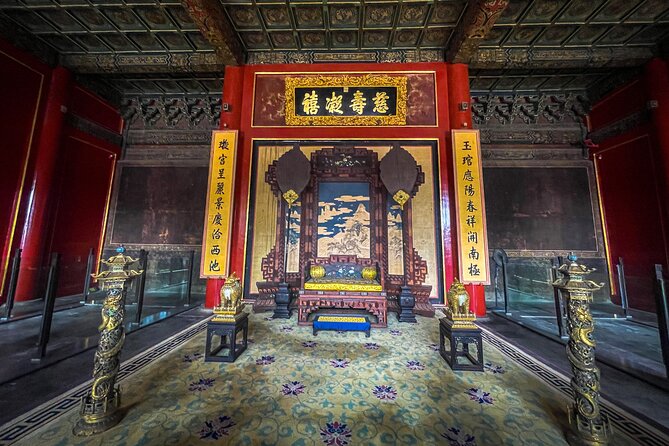
The Imperial Garden of the Palace Museum gets about 20 minutes. Compared with the enormous ceremonial courtyards, it offers a change of mood and a look at traditional Chinese garden design.
The garden combines several elements of older Chinese garden art. It is a useful final interior stop because it gives your eyes a break from the repeated lines of stone courtyards and tiled roofs. You can also compare the garden’s smaller, more varied spaces with the rigid order of the central halls.
Twenty minutes is enough for a guided introduction, but not enough for slow wandering. If you enjoy garden details, use the time carefully and stay aware of the group. The guide’s explanation is especially useful here because garden design often depends on ideas of balance, placement, and framed views that are easy to miss while simply walking through.
Exiting at the Gate of Divine Prowess
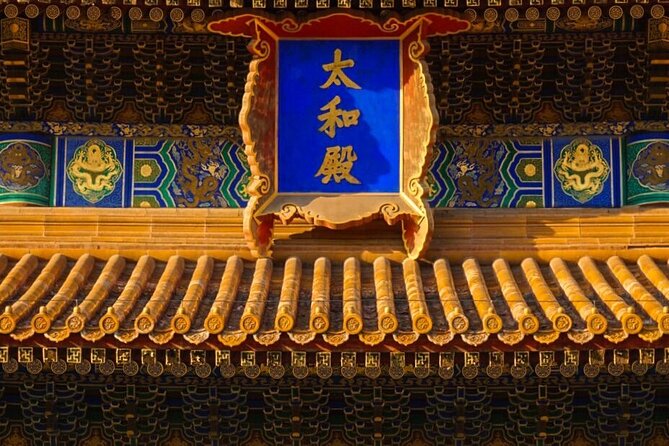
The formal Forbidden City route ends at the Gate of Divine Prowess, or Shenwumen. The scheduled stop is short, about five minutes, but the location matters because it marks the practical end of the palace visit.
Your guide advises you about your next stop after the tour. That is helpful because the exit is not the same place as the starting point. You should listen carefully to the directions, especially if you have another appointment or want to continue sightseeing independently.
The tour does not include hotel transportation. You meet the group at a fixed point, and the company handles the palace admission rather than collecting you from your accommodation. That arrangement keeps the price low, but you need to plan your own route to the meeting point and after the Gate of Divine Prowess.
Tiananmen Square adds modern Beijing
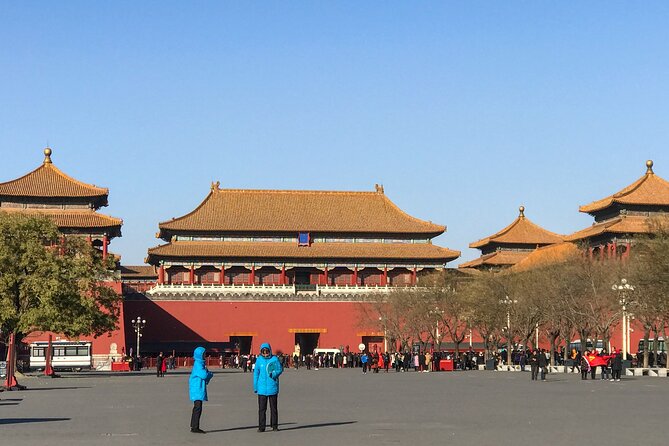
The final stop is Tiananmen Square, with about 30 minutes scheduled and no separate admission charge. The square has been part of Beijing’s central urban story since the Ming Dynasty and has witnessed major changes in China’s political history.
This stop broadens the tour beyond palace architecture. The Forbidden City represents imperial rule, while Tiananmen Square connects the old city to modern China, including revolutions and later reforms. Your guide can help place the square within that longer timeline.
Do not expect another extended museum-style visit here. Thirty minutes gives you time to see the space and hear its basic historical context before the tour ends. It works well as a final stop because the contrast between the enclosed palace complex and the broad public square is clear.
The guides and how much they add
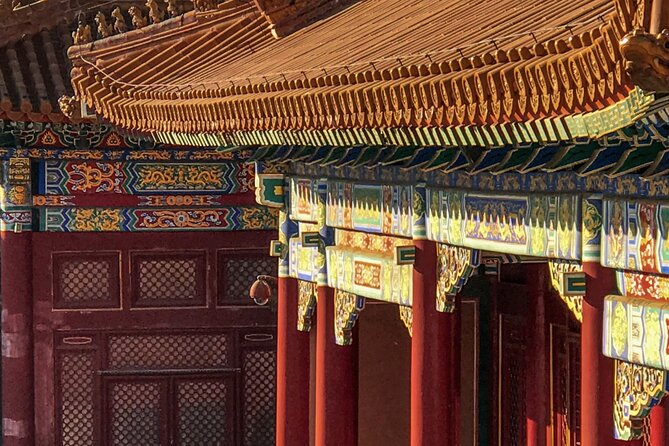
The strongest part of this experience is the guiding. Linda is praised for careful explanations and a kind manner. Amber is noted for storytelling, especially with children, and for linking more than 700 years of palace history into an understandable account.
Melodie is described as clear in English and particularly helpful during a stopover visit. Angel is recognized for punctuality, patience, and flexibility with questions. Harper is praised for excellent English and for helping with a restaurant recommendation and food ordering after the formal tour had ended.
Guide assignments can vary, so you should not book solely to secure one particular person. Still, these names give you a useful sense of the service style to expect: clear explanations, attention to questions, and practical help when possible.
This is not a silent escort to the main buildings. The guide is there to explain the ranking system, ceremonial roles, imperial household, and hidden details. Families should find the story-based approach useful, while first-time visitors will benefit from having the complex organized into a logical sequence.
Is $30 a good value?
At $30 per person, the price is attractive for a roughly four-hour guided visit that includes the Forbidden City entrance ticket and Tiananmen Square. The ticket arrangement is especially valuable because the palace uses advance booking rules that can make a last-minute visit harder to organize.
You are paying for three things: admission, a professional English-speaking guide, and help with the entry process. The small group limit improves the value because you are not placed in a large crowd where explanations become hard to follow.
The price does not include hotel pickup or drop-off, tickets for the Jewelry and Clock museums, or a tip for good service. You also need to cover your own transport to the fixed meeting point. Those exclusions are normal for a budget walking tour, but they matter if you are trying to build an exact Beijing day plan.
The tour is a particularly good buy for a first visit, a short stopover, or anyone who wants the key palace buildings without spending a full day inside the museum complex. Independent visitors who already understand the palace and prefer a slow photographic visit may get more from buying entry alone, if they can arrange it.
Who should book this experience?
I would choose this tour if you want the major sights explained in plain English and do not want to manage the Forbidden City’s entry process yourself. It suits families, first-time visitors, and people with limited time in Beijing.
It also works well for a stopover. The route is compact enough to give you the palace highlights, the imperial garden, and Tiananmen Square in one organized outing. Just remember that the four-hour estimate includes travel time and that you must handle your own transport to and from the meeting points.
Families should pay attention to the guide assignment and group size. Amber, in particular, is described as engaging children through stories, while the maximum group of 12 gives younger visitors a better chance to hear and ask questions.
I would hesitate only if you dislike guided schedules or want long, unhurried periods in each courtyard. The three great halls receive short visits, and the itinerary keeps moving. It is a highlights tour, not an exhaustive study of every palace building.
Booking, cancellation, and practical details
You receive a mobile ticket, and confirmation is sent within 48 hours of booking, subject to availability. The experience is near public transportation, and most people can participate.
Free cancellation is available up to 24 hours before the local start time for a full refund. Cancellations or changes made inside that 24-hour window are not accepted for a refund. The experience also requires a minimum number of participants. If that minimum is not met, you are offered another date or experience, or a full refund.
Bring comfortable shoes and keep your schedule realistic. The route crosses a large palace complex, and the tour includes several courtyards and outdoor areas. You will get the most from it if you arrive ready to walk, listen, and keep pace with the group.
Should you book it?
Book this tour if you want efficient access and clear explanations at a modest price. The included admission, English guide, small group, and Tiananmen Square finish make it a sensible introduction to Beijing’s most important central sights.
Skip it if you already know the Forbidden City well, want to explore at your own speed, or need hotel transportation included. For everyone else, especially families and stopover visitors, this is a practical way to see the palace’s essential route without getting lost in its size.
FAQ
How long does the tour last?
The tour lasts approximately four hours, including travel time.
What locations does the tour visit?
It visits Meridian Gate, the Hall of Great Harmony, Hall of Middle Harmony, Hall of Preserving Harmony, Palace of Heavenly Purity, Hall of Union, Palace of Earthly Tranquility, the Imperial Garden, Gate of Divine Prowess, and Tiananmen Square.
Is the Forbidden City admission included?
Yes. The entrance ticket is included, with guaranteed entry stated as part of the service.
Is Tiananmen Square admission included?
Tiananmen Square is included in the route, and the listed admission cost for that stop is free.
Is hotel pickup available?
No. Hotel pickup and drop-off are not included. You meet the group at a fixed meeting point.
What size is the tour group?
The tour has a maximum of 12 participants.
Is the tour conducted in English?
Yes. A professional English-speaking guide is included.
Are the Jewelry and Clock museums included?
No. Tickets to those museums are not included.
Can I cancel for a full refund?
Yes, if you cancel at least 24 hours before the experience start time. Cancellations or changes made less than 24 hours before the start time are not refunded or accepted.
New reviews from Beijing
- Private Transfer to Mutianyu Great Wall with professional driver★ 5.0 · 19 reviews
- One day tour to downtown Tianjin from Beijing by high speed train★ 5.0 · 3 reviews
- camp on the Great Wall overnight with sunrise and sunset on the wall★ 5.0 · 11 reviews
- ZANBUS: Trip to the Jinshanling Great Wall Departing at 7:30 AM★ 5.0 · 5 reviews
- BusDa:Ancient Great Wall &Badaling Great Wall Full-day Bus Tour★ 4.5 · 6 reviews
- Yuxiandu Chinese Royal Cuisine Museum with Show and Royal Banquet★ 5.0 · 4 reviews
- Wild Great Wall Hikes★ 5.0 · 10 reviews
- Wild Great Wall Huanghuacheng Half Day Tour★ 5.0 · 15 reviews
Forbidden City Tours, compared.

Forbidden City Tour(Group/Private)-Tickets Included
Read our review →
T-Square & Forbidden City Group or Private Tour
Read our review →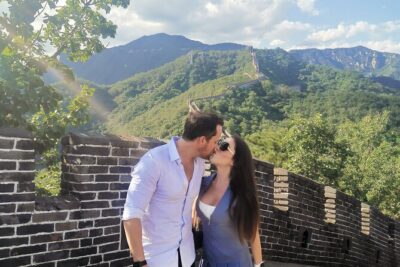
All-Inclusive Tour: Tiananmen Square, Forbidden City, Great Wall
Read our review →
4-Hour Small Group Tour to Forbidden City with Entry Tickets
Read our review →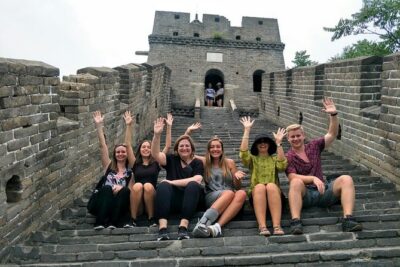
Beijing Full Day Tours: Tiananmen Sq, Forbidden City, Great Wall
Read our review →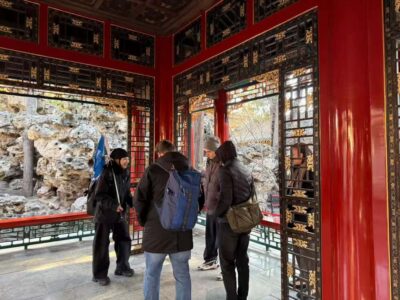
Tianmen Square, Forbidden City & Royal Museum Tours
Read our review →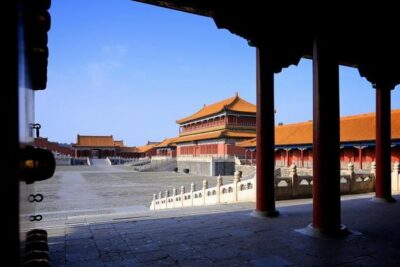
Beijing Forbidden City Ticket Booking (Optional: guide service)
Read our review →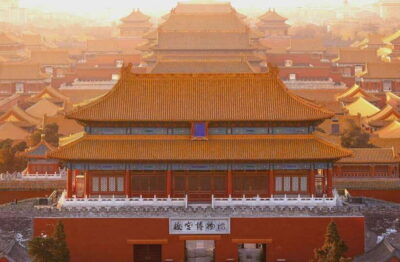
Forbidden City and Tian’anmen Square Waking Tour
Read our review →Browse the lists this tour appears in