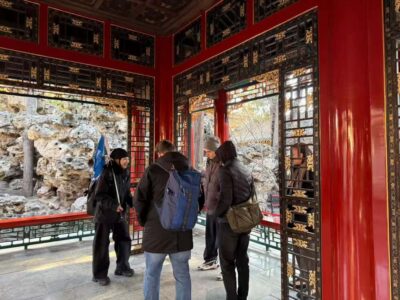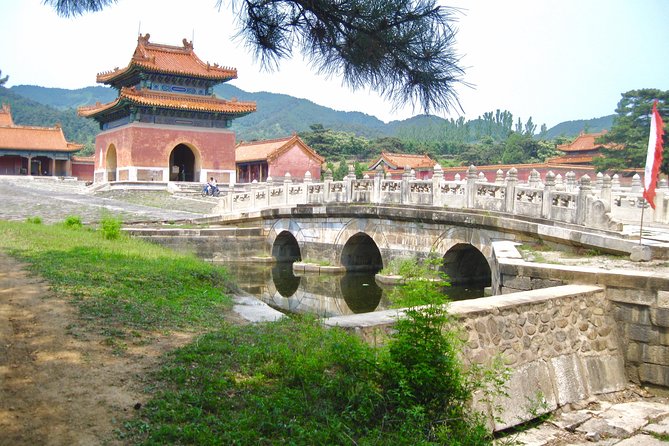
Reviewed · TOURS IN BEIJING
Private Excursion Tour to East Qing Tombs from Beijing
The Eastern Qing Tombs give you a rare look at imperial China away from Beijing’s crowded center. This is the largest and best-preserved surviving burial complex for a Chinese royal family, with grand stone carvings, Qing architecture, and strong Tibetan Buddhist touches. The most useful part is having a private guide explain what you are seeing, rather than wandering among ceremonial gates and tomb buildings without context.
I like the hotel pickup and private car, which make the long trip into the countryside much easier. I also like the quiet setting. Compared with the Ming Tombs, this site sees fewer people, so you have more space for photographs and a calmer look at the architecture. The main drawback is the road time, roughly two hours each way, and lunch is not included.
- Qianlong’s tomb: Look for elaborate stone carving and Tibetan Buddhist details linked to one of the Qing dynasty’s most influential emperors.
- Cixi’s tomb: See the lavish burial complex connected with the powerful Empress Dowager Cixi.
- Private transport: A driver, air-conditioned vehicle, fuel, tolls, parking, hotel pickup, and hotel drop-off are included.
- English-speaking guidance: Guides such as Rita and Cynthia have been praised for clear answers and attentive service.
- A quieter royal site: The Eastern Qing Tombs generally offer a less crowded visit than the Ming Tombs.
- Full-day timing: Plan on 8 to 9 hours, with an extra charge requested if the tour runs beyond nine hours.
Why the Eastern Qing Tombs Are Worth the Long Drive
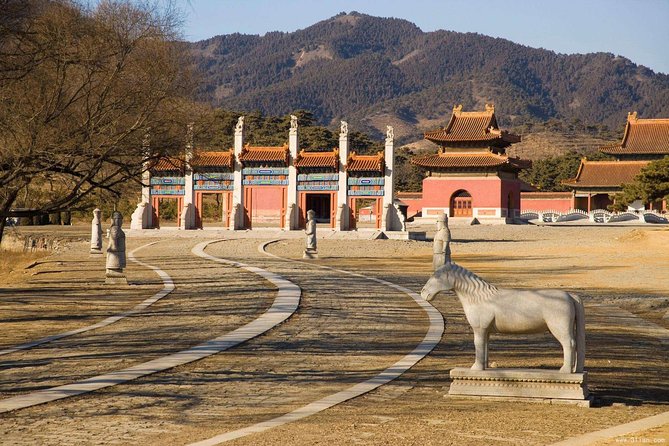
If you have already seen the Forbidden City, you may recognize the formal taste of the Qing court here: axial layouts, carved stone, ceremonial scale, and an insistence on rank. The difference is that the tombs place those ideas in a more open, quieter setting outside Beijing.
The Qing dynasty was the final imperial dynasty of China. It was ruled by Manchurians from northeastern China, and its rulers built these tombs with an eye toward surpassing the grandeur of the preceding Ming dynasty. That ambition is easy to understand once you reach the ceremonial areas. The buildings and carvings were not meant to be modest memorials. They were designed to preserve status after death.
I find the site especially useful for connecting imperial politics with funerary design. A guide can point out how the tombs reflect the personality and position of the person buried there. Without that explanation, you may see beautiful gates and stonework but miss why one complex feels restrained and another feels almost extravagantly decorated.
The area also has a darker chapter. Warlords carried out a major tomb robbery in the 1920s, bringing the Qing tombs to wide public attention. That history adds an uncomfortable but important layer to the visit. These places were built to last, yet they were still vulnerable to political upheaval, greed, and neglect.
A Private Morning Departure From Beijing
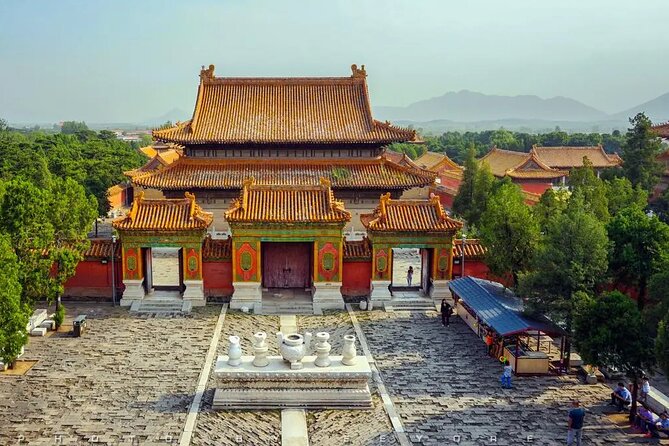
The tour begins with pickup at your Beijing hotel in the morning. You travel in an air-conditioned vehicle with a private driver, and the price includes fuel, tolls, parking, entrance tickets, and the English-speaking guide’s service.
That arrangement matters because the Eastern Qing Tombs are not a quick city stop. The drive takes about two hours according to the tour details, making the private vehicle more than a small luxury. You avoid organizing separate transport and can return directly to your hotel after the visit.
The day lasts about eight to nine hours in total. The listed time at the tomb complex is around three hours, though the complete outing includes the road journey and transfers. You should allow the full day rather than trying to combine this excursion with another major Beijing sight.
A private tour also gives your group more control than a large coach trip. Only your party participates, which lets you ask questions as they come up. It is a good setup for anyone interested in Qing history, architecture, imperial ritual, or photography.
The practical catch is the extra-time rule. If the excursion runs beyond nine hours, an additional fee is requested. That makes it sensible to clarify the planned start time and expected return when booking, especially if you have an evening train, flight, or dinner reservation.
A few more days out in Beijing worth the ticket
- Beijing: Forbidden City Tour(Group/Private)-Tickets Included
★ 4.8 · 7,974 reviews - Beijing: T-Square & Forbidden City Group or Private Tour
★ 4.8 · 4,446 reviews - Beijing:Mutianyu Great Wall Private Trip with English Driver
★ 5.0 · 1,263 reviews
Walking Through the Qing Imperial Burial Grounds
The Eastern Qing Tombs are not one single mausoleum building. They form a broad royal burial complex with ceremonial approaches, architecture, carvings, and separate tomb areas connected with Qing rulers and court figures.
Your guide should help you read the site in layers. First comes the overall design: grand spaces arranged to express imperial authority. Then come the details, including stone carving, religious imagery, and the way the tomb complexes reflect Qing culture.
The site’s scale is part of the appeal. You are not simply stepping into a decorated chamber and leaving five minutes later. The visit gives you time to look at how a royal burial area was planned and how buildings, pathways, and carved elements work together.
At the same time, three hours is not an unlimited amount of time for such a large complex. You may not examine every corner at a leisurely pace. Tell your guide what interests you most, particularly if you care more about architecture, religious symbolism, political history, or the story of the tomb robberies.
Qianlong’s Tomb and Its Tibetan Buddhist Details
The tomb of Emperor Qianlong is one of the main reasons to take this excursion. Qianlong was among the most influential Qing emperors, and his burial complex reflects both imperial confidence and religious imagery.
The stone carvings are a major feature. Tibetan Buddhist elements appear in the tomb, giving the decoration a visual language different from a purely secular royal monument. A guide can explain what those details mean and how they fit into the emperor’s identity and the Qing court’s religious world.
For me, this is where the tour guide adds real value. The carvings may look impressive on their own, but the story becomes clearer when someone explains why they were used and how they relate to the ruler buried there. If you enjoy visual details, keep your camera ready, but give yourself time to look closely rather than treating the tomb as a quick photo stop.
Qianlong’s complex is also useful for comparison. You can think about how the Qing dynasty tried to project authority through architecture, while also drawing on traditions from different parts of the empire. The site is not just a royal cemetery. It is a statement about power, religion, and identity.
Empress Dowager Cixi’s Lavish Tomb
The tomb connected with Empress Dowager Cixi offers a different story. Cixi was one of the most powerful women in late imperial China, and her burial complex is known for its extraordinary luxury.
Her tomb helps you understand how status could be displayed through materials, decoration, and scale. The contrast with Qianlong’s site gives the visit more range. Instead of seeing a series of similar burial grounds, you can compare the choices made for two major figures from the Qing court.
Cixi remains a controversial historical figure, and the tour description rightly presents her as both notorious and powerful. I would ask your guide about that tension. A good explanation should help you separate later legend from the political realities of the court, while still showing why her tomb attracted so much attention.
The tomb robbery of the 1920s is particularly relevant here. The thefts exposed the wealth placed inside these royal burial sites and caused widespread public anger. Knowing that history can change the way you look at elaborate decoration. What once signaled imperial authority also made the tombs a target.
Same city, a completely different day:
- From Beijing: Mutianyu Great Wall Tours with Options
★ 4.9 · 9,216 reviews - All-Inclusive Tour: Tiananmen Square, Forbidden City, Great Wall
★ 5.0 · 2,873 reviews - MuBus: Mutianyu Great Wall ENG/ESP/RUS Guided Bus Tour
★ 5.0 · 2,361 reviews - 4-Hour Small Group Tour to Forbidden City with Entry Tickets
★ 5.0 · 1,863 reviews
Why a Private Guide Changes the Visit
The strongest part of this experience is the guide service. The tour includes an English-speaking guide, and named guides Rita and Cynthia have received especially warm praise for being pleasant, attentive, and able to answer questions clearly.
I would treat the guide as an interpreter of the site, not simply someone who leads you from gate to gate. The best use of a private format is to ask direct questions. You might ask how Qing burial design differed from Ming practice, why Tibetan Buddhist decoration appears at Qianlong’s tomb, or what happened during the 1920s robberies.
A private guide can also adjust the pace within the scheduled visit. If your group is more interested in carved stone than court politics, say so. If you are visiting with children, ask for a simpler explanation of the dynasty and the tomb customs. Children must be accompanied by an adult, and the private format can make that easier than a fixed group tour.
There is one limitation: guide quality can vary by individual assignment. The available comments specifically praise Rita and Cynthia, but you are not guaranteed that either person will lead your date. The included English-language service is valuable, but you should still make your interests clear at the start.
Comparing the Eastern Tombs With the Ming Tombs
Many visitors to Beijing consider the Ming Tombs, so the comparison is useful. The Eastern Qing Tombs are described as quieter and less visited, which gives you a more peaceful experience and better room for photographs.
That does not automatically make them better for everyone. The Ming Tombs may fit more easily into an itinerary focused on other northern Beijing sights, while the Qing Tombs require a longer dedicated outing. The choice depends on whether you want convenience or a quieter look at the final imperial dynasty.
I like the Qing Tombs for their sense of space and their strong connection to Qing rulers. If you have already seen the Forbidden City and want to understand what imperial power looked like outside the capital, this trip adds useful context.
You should also expect a more focused day. The itinerary lists one main stop rather than a series of unrelated attractions. That is good if you prefer depth over constant movement, but less appealing if you want to pack several sights into one excursion.
Price, Included Costs, and What You Still Need to Pay
The price is $176 per person. Whether that is good value depends on your group size and how much you value a private vehicle, private guide, and direct hotel transfers.
For one person, it is a sizable day-trip cost. For a small group, the private setup becomes easier to justify because transport and guiding are shared among the participants. You are paying for convenience as well as admission, and the included fuel, tolls, parking, and entrance tickets reduce the need to manage small payments during the day.
Meals are not included. You should plan for lunch and dinner costs separately, although no specific restaurant or meal arrangement is provided. Personal expenses and gratuities for the guide and driver are also outside the tour price.
Accommodation is not included, which is obvious for a day excursion but worth noting if you are comparing the total cost of several Beijing activities. The main value here is the combination of transport, interpretation, and a less crowded imperial site.
Who Will Enjoy This Day Trip Most
I would recommend this tour most strongly to people who already have an interest in Chinese history, Qing rulers, royal architecture, or religious art. The tombs reward attention to detail, and an informed explanation will make the stonework and ceremonial spaces more meaningful.
It also suits families or small groups who want their own vehicle and guide. Since only your group participates, you do not have to match the pace or interests of a large party.
Photographers should appreciate the quieter setting. The site is described as peaceful and nearly empty at times, giving you a better chance to frame the architecture without a crowd in every picture.
I would hesitate to recommend it to anyone with only a short Beijing stay who wants to focus on central attractions. The two-hour drive each way takes a large part of the day. It is also not the best match if you want a food-focused excursion, since meals are not included and the itinerary centers on the tomb complex.
Wear smart casual clothing. You should also be prepared for a full day out, with time spent in the vehicle and at a large outdoor historical site.
Booking Flexibility and Final Advice
Confirmation is provided at booking, and free cancellation is available up to 24 hours before the experience begins. Cancellations made less than 24 hours before the start time are not refunded, and changes within that period are not accepted. The cut-off follows local Beijing time.
I would book this excursion if you have a full day available and want a quieter, more focused look at Qing imperial history. The private vehicle, hotel transfers, entrance tickets, and English-speaking guide make the long journey manageable, while the site itself offers grand architecture, political drama, and unusually strong visual detail.
I would skip it if your Beijing schedule is tight or if you dislike long drives for a single historical site. For everyone else, especially anyone curious about Qianlong, Cixi, and the final imperial dynasty, this is a worthwhile day beyond the usual city circuit.
FAQ
Where does the tour take place?
The excursion travels from Beijing to the Eastern Qing Tombs, also called the Eastern Royal Tombs of the Qing Dynasty.
How long does the experience last?
The full excursion lasts approximately 8 to 9 hours. The listed visit at the tomb complex lasts about 3 hours.
How much does the tour cost?
The listed price is $176 per person.
Is hotel pickup included?
Yes. Hotel pickup and drop-off are included.
Is transportation included?
Yes. The tour includes an air-conditioned vehicle with a private driver, along with fuel, tolls, and parking fees.
Are entrance tickets included?
Yes. Entrance tickets are included in the tour price.
Is an English-speaking guide provided?
Yes. An English-speaking tour guide is included.
Are meals included?
No. Lunch and dinner are not included.
Is this a private tour?
Yes. Only your group participates in the activity.
Can children join the tour?
Yes, children can participate, but they must be accompanied by an adult.
Is there an extra charge if the tour lasts longer than nine hours?
Yes. An extra fee is requested after nine hours.
What is the cancellation policy?
You can cancel up to 24 hours before the experience starts for a full refund. Cancellations or changes made less than 24 hours before the start time are not accepted, and the amount paid is not refunded.
New reviews from Beijing
- Private Transfer to Mutianyu Great Wall with professional driver★ 5.0 · 19 reviews
- One day tour to downtown Tianjin from Beijing by high speed train★ 5.0 · 3 reviews
- camp on the Great Wall overnight with sunrise and sunset on the wall★ 5.0 · 11 reviews
- ZANBUS: Trip to the Jinshanling Great Wall Departing at 7:30 AM★ 5.0 · 5 reviews
- BusDa:Ancient Great Wall &Badaling Great Wall Full-day Bus Tour★ 4.5 · 6 reviews
- Yuxiandu Chinese Royal Cuisine Museum with Show and Royal Banquet★ 5.0 · 4 reviews
- Wild Great Wall Hikes★ 5.0 · 10 reviews
- Wild Great Wall Huanghuacheng Half Day Tour★ 5.0 · 15 reviews
Tours in Beijing, compared.

Forbidden City Tour(Group/Private)-Tickets Included
Read our review →
T-Square & Forbidden City Group or Private Tour
Read our review →
All-Inclusive Tour: Tiananmen Square, Forbidden City, Great Wall
Read our review →
MuBus: Mutianyu Great Wall ENG/ESP/RUS Guided Bus Tour
Read our review →
4-Hour Small Group Tour to Forbidden City with Entry Tickets
Read our review →
Beijing Full Day Tours: Tiananmen Sq, Forbidden City, Great Wall
Read our review →