
Reviewed · TOURS IN CHENGDU
1-Day Mount Qingcheng and Dujiangyan Irrigation System Tour
Mount Qingcheng and Dujiangyan give you two very different sides of Sichuan in one day: a quiet Taoist mountain and a working water system built about 2,200 years ago. The mountain supplied the scenic mood for Kung Fu Panda, while Dujiangyan still sends water to farms and cities today.
I like the two UNESCO World Heritage sites in one outing, and I like having a private car for the 65-kilometer trip from Chengdu. Guides such as Mark, Weaver, and Diana have earned especially warm praise for clear explanations and patient service. The main drawback is time: the mountain can require walking and waiting, and holiday lines for the cable car can eat into your sightseeing.
Key points
- Two major sights in one day: Pair Mount Qingcheng with Dujiangyan instead of spending separate days on nearby excursions.
- A Taoist mountain with two distinct areas: The Front Mountain has the main temples and historic sites, while the much larger Back Mountain is known for streams, woods, and peaks.
- A still-working ancient project: Dujiangyan is not just an archaeological stop. Its water system continues to serve Sichuan.
- Private transport from Chengdu: An air-conditioned car removes the need to arrange separate long-distance transport.
- Guide choice matters: The private guided option includes an English-speaking guide. The self-guided option uses a Chinese-speaking driver with translation app and English-language support.
- Plan around busy dates: Long waits, especially for the Mount Qingcheng gondola, are possible during the May 1 to 5 Labor Day holiday.
Two UNESCO sites, one long but useful day
This is one of the better day trips from Chengdu if you want variety. Mount Qingcheng gives you temples, Taoist traditions, forest paths, and mountain air. Dujiangyan then shifts the focus to engineering, farming, flood control, and the practical way ancient China dealt with a dangerous river.
The combination works because the stops feel different. You are not spending eight hours looking at similar buildings or repeating the same kind of scenery. You get a cultural mountain visit first, followed by a historic water project that still has a job to do.
The cost is $112 per person, including hotel pickup and drop-off, an air-conditioned private car, entrance tickets, and an English-speaking guide if you choose the private guided option. Lunch is extra. For a pair or small group, that price can be sensible because it covers the long transfer from Chengdu and removes much of the planning.
You should still see this as a full day, not a casual half-day outing. The drive to Mount Qingcheng takes about 80 minutes, and the return journey follows your visit to Dujiangyan. The advertised duration is 8 to 9 hours, with a 9:00am start from your Chengdu hotel.
Other day trips from Chengdu:
- Giant Panda and Buddha 1 day tour
★ 5.0 · 57 reviews - Leshan Giant Buddha and Huanglongxi Ancient Town Day Trip
★ 4.5 · 45 reviews - Chengdu panda & Leshan Buddha One Day Private Tour
★ 4.8 · 25 reviews
The 80-minute ride from Chengdu
Pickup is available from a hotel in downtown Chengdu, though the exact meeting point depends on the option you book. The trip to Mount Qingcheng covers about 65 kilometers and takes roughly 80 minutes by car.
That private transfer is one of the tour’s most useful features. You do not need to work out separate connections between Chengdu, the mountain, and Dujiangyan. After a morning in the city, you can simply settle into the air-conditioned car and let the guide or driver handle the route.
The private format also gives you a little more control than a large coach tour. The experience can be arranged as a private trip or for a small group. A minimum of two people is required, so this is not designed for a solo booking.
If you choose the private guided option, your guide speaks English. If you choose the self-guided option, the driver speaks Chinese only, with a translation app and help from an English-speaking support team. That distinction matters. For temples, Taoist customs, and the story of the irrigation system, the English-speaking guide is the stronger choice if interpretation is important to you.
Mount Qingcheng, the Taoist mountain
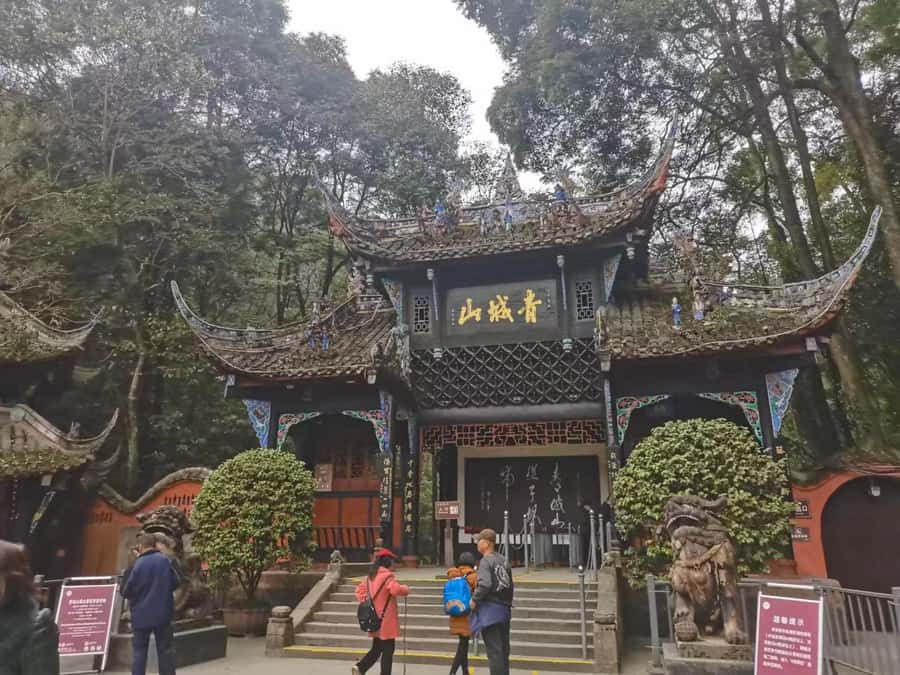
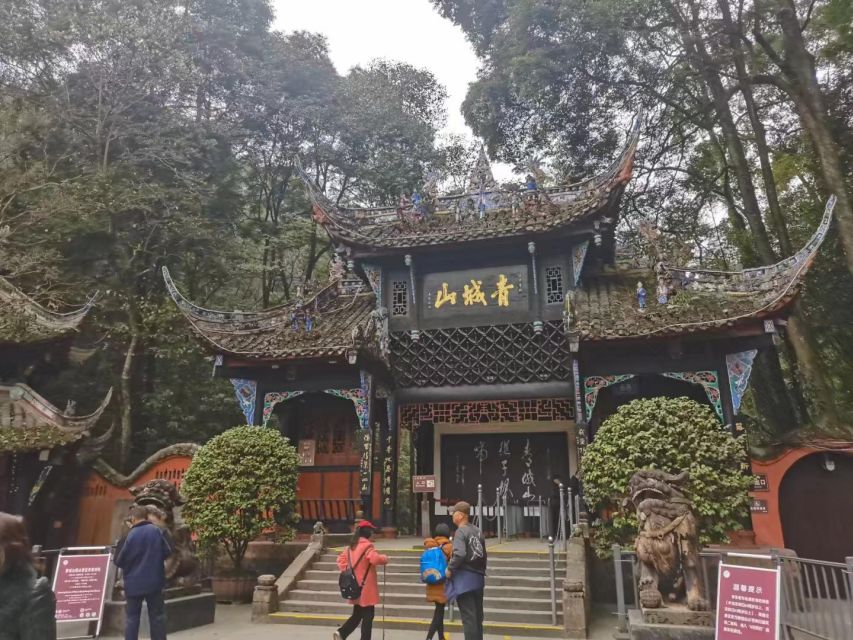
Mount Qingcheng is known as the birthplace of Taoism and is described as one of China’s most famous mountains. The mountain area is divided into the Front Mountain and Back Mountain, and they offer different kinds of visits.
The Front Mountain is the main part of the scenic area and covers about 15 square kilometers. This is where you find the principal cultural and historic sites, including Natural Drawing, Jianfu Palace, Tianshi Cave, Chaoyang Cave, and Shangqing Palace.
For a first visit, the Front Mountain makes the most sense. You get the religious and architectural heart of the area without trying to cover the much larger Back Mountain. The guide can explain how the sites fit into Taoist tradition, rather than leaving you to identify buildings and rituals from signs alone.
The mountain also has a strong seasonal appeal. It can be very cold in winter. In summer, the cooler mountain air makes Qingcheng a popular escape from Chengdu’s heat. That sounds appealing, but you should still dress for the season and expect walking conditions to change with the weather.
The Back Mountain covers about 100 square kilometers and is more focused on natural scenery. Clear streams, thick woods, and impressive peaks make it attractive, with named sights such as Golden Cliff and Sky Storehouse, Goddess Cave, Clouds Caves, and View of Platform Bridge.
There is a practical catch here. A one-day tour cannot give you a full experience of both mountain sections. The Front Mountain contains the main historic sights, while the Back Mountain needs more time for its larger area and scenic routes. If your priority is Taoist temples and cultural sites, stay focused on the Front Mountain. If walking through woods and along streams matters more, ask how the chosen route handles the mountain time.
Cable car waits and the real pace of the mountain
The supplied schedule allows about two hours for the Mount Qingcheng portion. That is enough for an introduction, but it is not a leisurely mountain expedition.
You may also face a wait for the gondola. During China’s May 1 to 5 Labor Day holiday, one visitor found the gondola line painfully long. The guide gave repeated warnings, but the crowd still tested everyone’s patience. That is useful advice: avoid major public holidays when possible, and ask your guide early about current lines.
The gondola detail is especially important because a short scheduled stop can become much shorter if you spend part of it in a queue. Your guide can help you decide how to use the available time, but no private tour can remove a large holiday crowd.
The walking level is not fully specified, so you should not treat this as a sightseeing stop with no physical demands. The mountain includes temples, caves, paths, and elevated viewpoints. If you have limited time or prefer not to walk much, tell the provider when booking and clarify the planned route.
Same city, a completely different day:
- Chengdu: Giant Panda Breeding Research Base Ticket
★ 4.5 · 580 reviews - Half-Day Chengdu Cooking Class with a Local Market Visit
★ 5.0 · 465 reviews - Tuktuk Food Tour Through Chengdu’s Local Eats
★ 5.0 · 435 reviews - Private Half-Day Chengdu Panda Breeding Center Tour with Optional Volunteer
★ 5.0 · 353 reviews
Taoist sites and the Kung Fu Panda connection
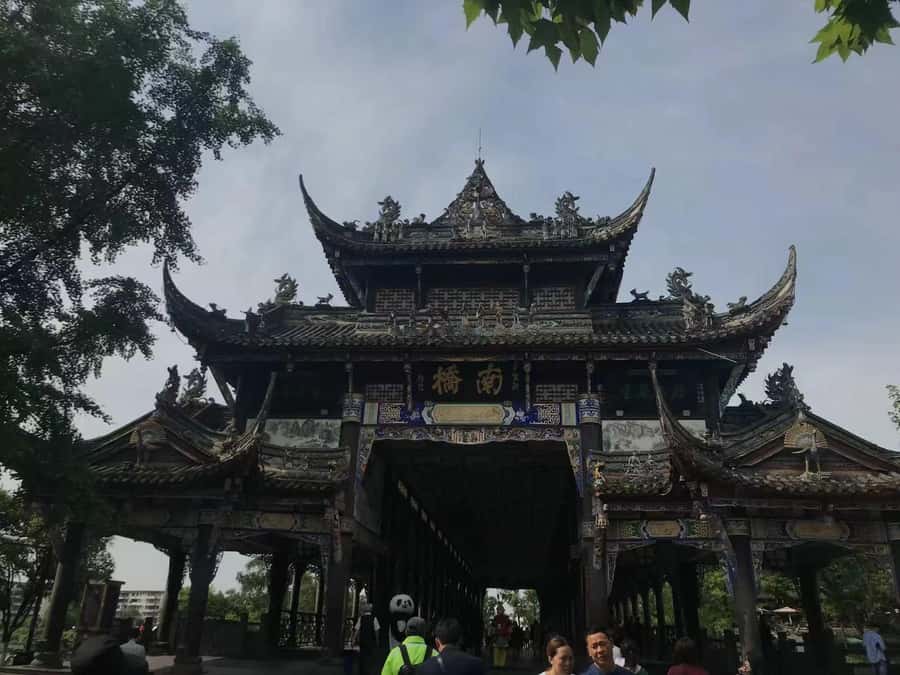
Mount Qingcheng’s appeal is not only its scenery. Its cultural identity gives the visit a clear theme. Jianfu Palace, Tianshi Cave, Chaoyang Cave, and Shangqing Palace provide a sense of the area’s religious importance, while the surrounding mountain keeps the setting from feeling like a city museum.
The Kung Fu Panda connection adds a fun layer, especially for families. The films took scenic inspiration from Mount Qingcheng, so you can look at the peaks, wooded slopes, and traditional mountain architecture with that visual link in mind. It is not the main reason to visit, but it gives children and film fans an easy way into the scenery.
I would listen closely to the guide here. The buildings are more meaningful when you know what you are seeing and why the mountain matters to Taoism. Weaver, Mark, and Diana are among the guides associated with particularly strong feedback for clear explanations, patience, and care with the day’s arrangements. Guide assignments can change, so treat those names as examples rather than a promise.
Dujiangyan, where ancient engineering still works
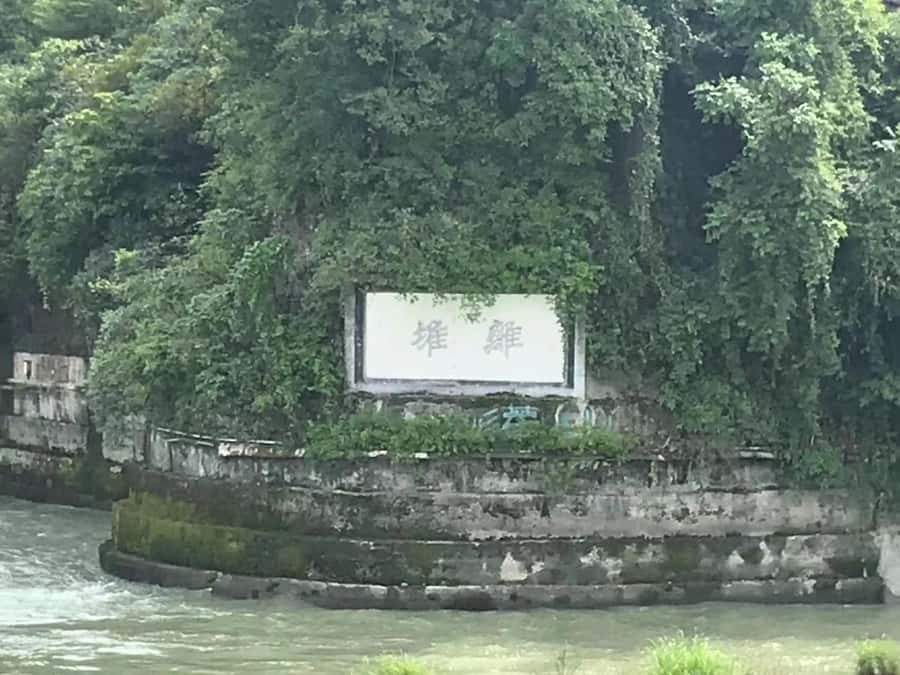
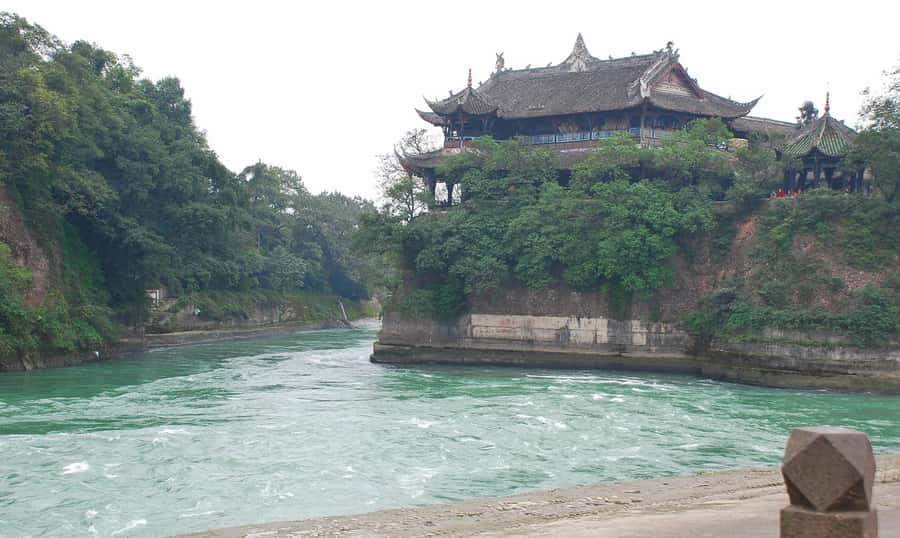
After Mount Qingcheng, the drive to Dujiangyan takes about 30 minutes. The change in subject is welcome. You leave the mountain’s religious sites and move to a major water-control project built about 2,200 years ago.
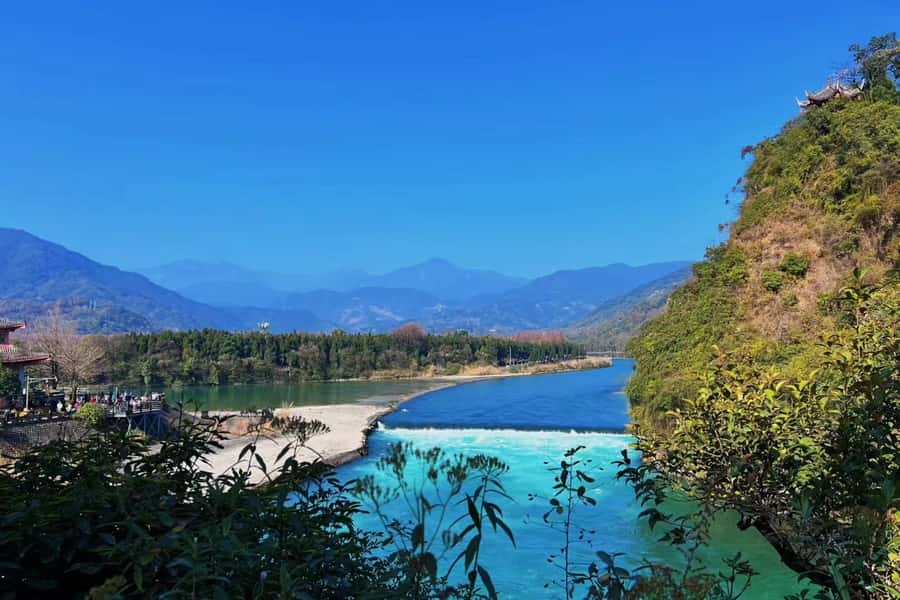
The story begins with the Minjiang River and its frequent floods, which threatened the Chengdu area. Li Bing, a local official of the Shu state, worked with his son and the local people to build an irrigation system designed to control flooding.
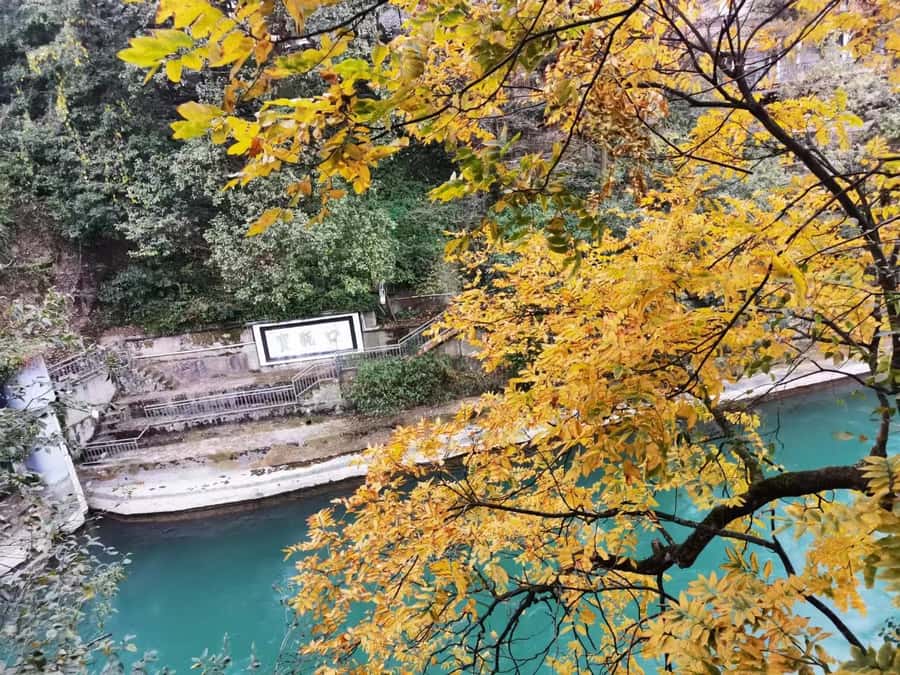
The project took years of study and labor. Its importance is easy to understand once you hear what it does: drain floodwater, irrigate farms, and provide water for more than 50 cities in Sichuan. This is not simply an old structure preserved for display. It continues to play a practical role.
That ongoing purpose is what makes Dujiangyan worth pairing with Mount Qingcheng. At the mountain, you focus on belief, architecture, and scenery. At Dujiangyan, you see how a large public project shaped agriculture and settlement over a very long period.
The visit is scheduled for about two hours, although the exact pace may depend on crowd levels and the time used at Mount Qingcheng. An English-speaking guide adds real value because the engineering idea can be difficult to grasp from a quick look at channels and structures. Ask for the full explanation of how the system handles water, rather than treating the stop as a few photographs and a short walk.
Lunch is flexible, but not included
Lunch is not part of the $112 price. That keeps the package simpler, but you need to budget for a meal and confirm the day’s lunch plan with your guide.
One guide, Weaver, shared a local lunch with the people on the tour, showing that the meal can become part of the day rather than just a rushed break. Still, that arrangement is not listed as an included feature, so do not assume the food is covered or that a specific restaurant is guaranteed.
The best approach is to ask at the start of the day when and where you will eat. A clear plan matters because the tour already has a long transfer, two major stops, and a fixed return window.
How the guide affects the experience
The strongest reason to choose the guided option is interpretation. Mount Qingcheng has several named sites, and Dujiangyan has a technical story that benefits from explanation. A good guide can connect the places to Taoism, local history, Sichuan life, and present-day water use.
Mark is described as prompt, kind, accommodating, patient, and attentive. Weaver is praised for explaining both the two main sights and wider subjects such as Chinese history and daily life. Diana also received particular thanks for making the day a success.
That pattern tells you what to value when booking: not just a driver, but someone who can explain the places and manage the clock. The guide can warn you about lines, help you choose how to use limited mountain time, and make the transition between the two sites easier.
The self-guided option is a different product. You still get transport, but the driver speaks Chinese only. Translation app assistance and an English-speaking support team are available, yet the experience will be less conversational and less detailed than a private English-guided trip.
Is $112 good value?
For two people or a small group, I consider $112 per person fair if you want both sites in one day. You receive private transport from Chengdu, entrance tickets, hotel return, and a guide when selecting the guided package. The 65-kilometer transfer to the mountain alone makes the private car useful.
The price is less attractive if you only want one site, prefer to travel slowly, or are trying to keep every meal and expense inside one fixed amount. Lunch costs extra, and crowded periods can reduce the time you spend at the main sights.
Value also depends on your guide choice. The self-guided option may be enough if you mainly need transportation and can manage with translation support. If you care about context, choose the English-speaking guide and consider the added cost worthwhile.
Free cancellation is available up to 24 hours before departure, and you can reserve now and pay later. Those terms help if your Chengdu schedule is still shifting, but they do not change the need to meet the two-person minimum.
Who should book this Chengdu day trip?
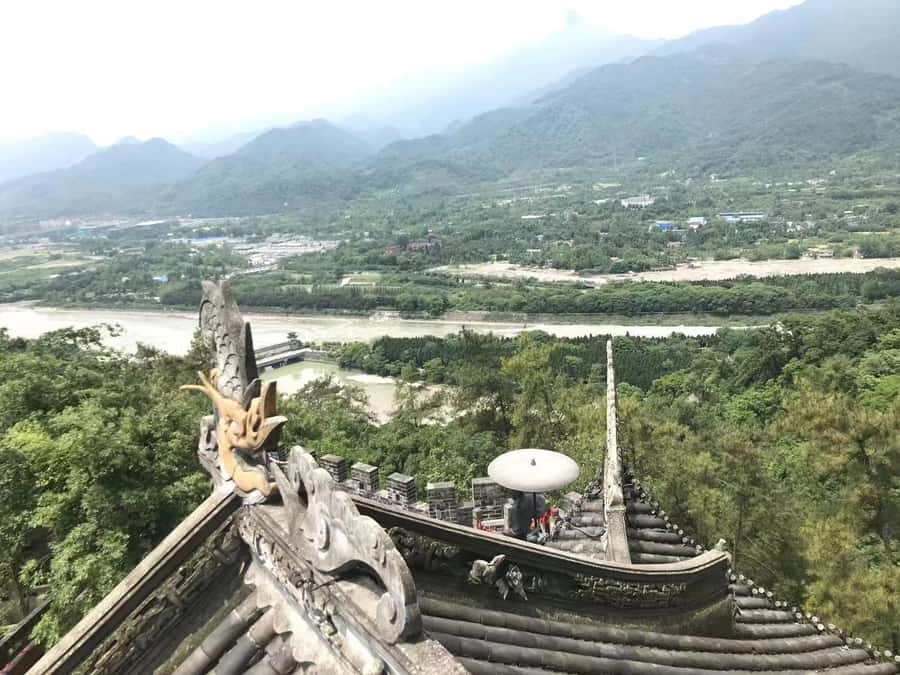
I would recommend this tour to you if you have one free day in Chengdu and want a strong mix of nature, Taoist culture, and Chinese engineering. It also suits families who like the Kung Fu Panda link, couples who prefer private transport, and small groups that want a guide rather than a large coach.
It is less suitable if you want a slow mountain walk, a detailed exploration of both the Front and Back mountains, or a completely flexible lunch and return time. The schedule is efficient, not leisurely.
Avoid the busiest public holidays if you can. A long gondola wait can make an already full day feel rushed. If those dates are unavoidable, go in with realistic expectations and let the guide help you choose priorities.
FAQ
How long does the Mount Qingcheng and Dujiangyan tour last?
The tour lasts about 8 to 9 hours, beginning at approximately 9:00am from your Chengdu hotel.
Where does pickup take place?
Pickup is available from your hotel in downtown Chengdu. The exact meeting point depends on the option booked.
How far is Mount Qingcheng from Chengdu?
Mount Qingcheng is about 65 kilometers from Chengdu, and the drive takes roughly 80 minutes.
How long is the drive from Mount Qingcheng to Dujiangyan?
The transfer from Mount Qingcheng to Dujiangyan takes about 30 minutes.
Is an English-speaking guide included?
An English-speaking guide is included when you choose the private guided day tour. The self-guided option uses a Chinese-speaking driver, with a translation app and English-speaking support team.
Is lunch included?
No. Lunch is not included in the tour price.
What is included in the price?
The price includes hotel pickup and drop-off, an air-conditioned private car, entrance tickets, and an English-speaking guide when that option is selected.
Is there a minimum booking requirement?
Yes. A minimum of two people is required.
Can I choose a private tour?
Yes. Private and small-group options are available.
Can I cancel the tour for a full refund?
You can cancel up to 24 hours in advance for a full refund. You can also reserve now and pay later.
New reviews from Chengdu
- Sichuan: Big Panda Volunteer Day tour★ 4.4 · 10 reviews
- Mount Qingcheng Tour: Explore Serene and Sacred Taoist Site★ 5.0 · 12 reviews
- Leshan Buddha boat and food half day trip★ 3.1 · 3 reviews
- Leshan Giant Buddha Tour: Discover Ancient Stone Masterpiece★ 4.3 · 3 reviews
- Leshan Giant Buddha & Huanglongxi/Buddha Temple Day Trip★ 5.0 · 18 reviews
- Jiuzhai Valley National Park:Visit Colorful Fairy Tale World★ 5.0 · 3 reviews
- Jinsha&Sanxingdui archaeological site private day tour★ 4.8 · 4 reviews
- Huanglong Scenic Area: Explore Stunning Five-Colored Ponds★ 5.0 · 6 reviews
Tours in Chengdu, compared.

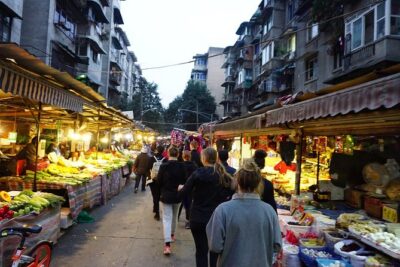
Half-Day Chengdu Cooking Class with a Local Market Visit
Read our review →

Private Half-Day Chengdu Panda Breeding Center Tour with Optional Volunteer
Read our review →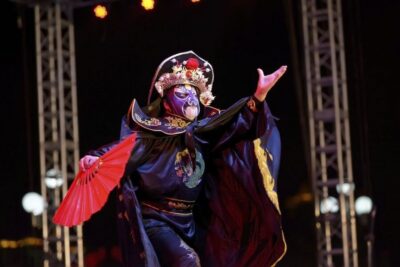
Sichuan Opera Shu Feng Yan Yun Evening Show Ticket
Read our review →
Private Chengdu Day Tour: Giant Pandas and Jinsha Site Museum
Read our review →
Visiting Dujiangyan Yaan Wolong Panda Base Optional Volunteering
Read our review →
Chengdu Sichuan Opera Show Ticket – Shu Feng Ya Yun
Read our review →Browse the lists this tour appears in