
Reviewed · BULLET TRAIN DAY TRIPS
7 Days Private Tour of Beijing, Xian, Shanghai by Bullet Train
China’s imperial capitals and modern skyline all fit into this seven-day private tour, but the real star is the high-speed rail journey linking them. You will walk the Mutianyu Great Wall, face the Terracotta Warriors in Xi’an, and finish with Shanghai’s glowing Bund and Huangpu River after dark.
I like the no-shopping policy, which keeps the days aimed at sights rather than sales stops. I also like the practical setup: hotels, breakfasts, train tickets, entrance fees, airport transfers, and private vehicles are included, so you do not have to patch together a complicated China trip yourself.
The main drawback is the pace. Two long train days and several early starts leave little free time, and some days pack four major stops into one schedule. You should also be ready for basic local facilities, including squat toilets, which can take some getting used to.
Key points at a glance
- Three major cities in seven days: Beijing, Xi’an, and Shanghai give you a clear introduction to China’s imperial past and modern energy.
- Mutianyu instead of only the city sights: You get one of China’s most memorable wall sections, with about three hours to explore.
- Private guiding throughout the sightseeing days: Your own small group travels by air-conditioned vehicle with an English-speaking local guide.
- Two useful bullet train rides: Second-class rail connects Beijing with Xi’an and Xi’an with Shanghai, saving time compared with road travel.
- No shopping stops: The schedule is built around monuments, museums, neighborhoods, and views.
- A demanding but efficient plan: Early departures, long walking days, and tightly arranged sightseeing reward organized visitors.
What this seven-day route gets right
At $1,835.56 per person, this is not a bargain backpacker trip. It is a packaged private journey that bundles six hotel nights, breakfast each morning, domestic rail, private transfers, guides, entrance tickets, and airport or station transportation at both ends.
That price can be sensible if you value convenience. China’s major sights require advance planning, and moving between cities involves train reservations, station transfers, hotel coordination, and timed entrances. Here, those pieces are handled for you. The private format also gives your group its own vehicle and guide rather than placing you on a large coach.
You will need to pay for your own meals, gratuities, personal purchases, the optional hutong rickshaw ride, and any extras not listed as first-gate admission. There is no guide service on the trains, so those portions are independent rail journeys, supported by the station transfers at each end.
The route is best for a first visit when you want the famous sights without spending weeks on planning. It is less suited to you if you prefer slow mornings, long café stops, or several unstructured days in each city.
Other cities a fast train puts within a day of Beijing:
- Beijing to Xi’an See Terracotta Warriors with Bullet Train Round Trip Transfer
★ 5.0 · 238 reviews - Beijing to Datong See YunGang Cave, Hanging Temple (Bullet Train)
★ 5.0 · 39 reviews - Private Day Trip to Tianjin from Beijing by Bullet Train
★ 5.0 · 22 reviews
Day 1: A soft landing in Beijing
Your arrival day is simple by design. A driver meets you at the airport or train station holding a board with your name, then takes you to your hotel. The listed transfer time is about 30 minutes, though the actual journey will depend on your arrival point and traffic.
You have the rest of the day free. That matters because the next two Beijing days are full, and you may need time to recover from an international flight or adjust to the time difference. Do not expect sightseeing or a guide on this first day. Think of it as a useful reset.
The hotel category is listed as comfortable or luxury, with two people sharing a room and breakfast included. The exact hotel is not specified, so ask for its name before departure if location matters to you.
Day 2: Mutianyu, Ming tombs, and Olympic Beijing
The day begins with a hotel pickup after breakfast and a drive to the Mutianyu Great Wall. You get about three hours at the wall, enough time to walk along a substantial section and stop for views across the wooded hills.
Mutianyu is a strong choice for this route because it gives you the classic wall experience away from central Beijing. The stone path rises and falls, so wear shoes with a firm sole. The schedule does not specify which optional transport or access arrangements are available at the wall, so ask your guide about the walking route and any additional costs on the day.
The wall is not a quick photo stop. Even with transport to the site, you will spend much of the morning walking steps and uneven surfaces. Comfortable shoes are not just a polite suggestion here.
Next comes Dingling Underground Palace, part of the Ming tomb area. The visit lasts about 90 minutes and offers a very different experience from the open-air wall. You descend into the excavated burial complex connected with Emperor Wanli of the Ming Dynasty, seeing the scale and construction of an imperial tomb rather than another grand palace above ground.
The last stop is Beijing’s Olympic complex. You can take exterior photos of the Bird’s Nest National Stadium and the Water Cube. Admission is not included for this stop, and the planned visit is only about 30 minutes, so this is a brief look rather than a full stadium tour.
This day works because the sights vary: military architecture, an imperial burial site, and modern China’s Olympic image. It is also one of the more tiring days, with the Great Wall carrying most of the physical effort.
Day 3: Beijing’s imperial center and local lanes
Day three puts Beijing’s major historic sights in one sequence. You begin at Tiananmen Square, where the wide open space gives you a sense of the scale of the capital. The listed visit is 30 minutes, so expect an orientation and photo opportunity rather than a long stop.
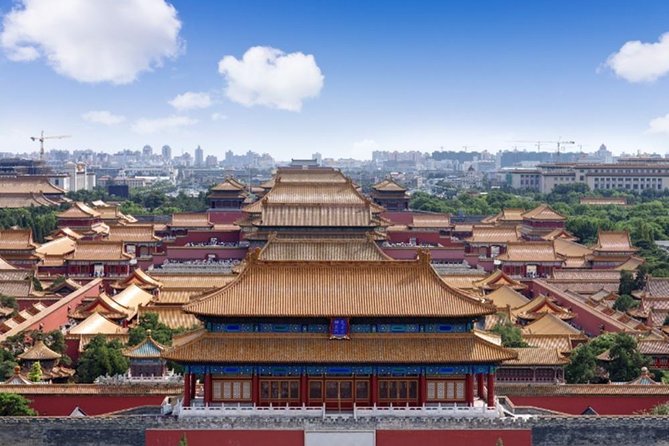
The Forbidden City follows, with about two hours inside the Palace Museum. This is the heart of the Beijing portion of the trip, and your entrance is included. The complex was the imperial palace of the Ming and Qing dynasties, and its courtyards, gates, halls, and long sightlines make the scale easier to grasp on foot.
The Palace Museum is closed each Monday. That detail matters when you choose your start date, since the itinerary must be adjusted if day three falls on that day. Advance passport information is required for all participants, so provide names and document details carefully at booking.
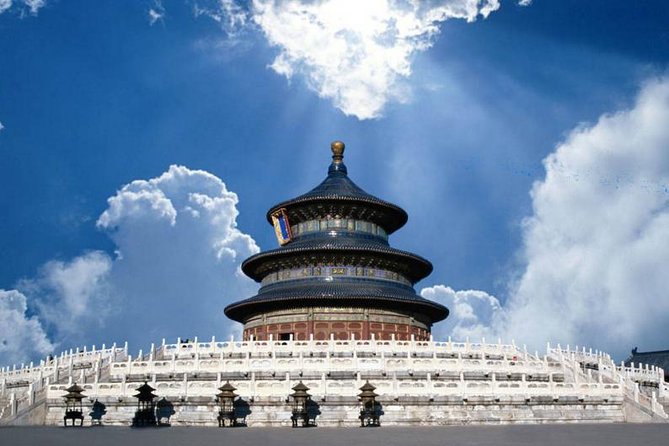
After lunch on your own, the tour continues to the Temple of Heaven. The planned visit lasts about 90 minutes. This former imperial sacrificial complex is known for its ceremonial buildings and broad grounds, giving you a change from the enclosed palace courtyards.
The final stop is a hutong area, where you see traditional Beijing residential lanes and local homes. You may choose a rickshaw ride at your own expense, but you do not need to add it to enjoy the neighborhood on foot. This is one of the day’s more human-scale stops. Instead of only looking at grand monuments, you get a glimpse of how older residential Beijing fits into the modern city.
Taken together, the day moves from national public space to imperial palace, ritual site, and neighborhood streets. It is a full schedule, so you should keep the evening easy.
Other journeys by rail from Beijing:
- Beijing: Xi’an Terracotta Tour by Train-All Tickets Included
★ 5.0 · 27 reviews - Beijing:Bullet Train Tour to Hanging Temple&Yungang Grottoes
★ 5.0 · 16 reviews - Private Day Trip: Discover Tianjin by Bullet Train from Beijing
★ 5.0 · 14 reviews - Beijing to Xi’an Terracotta Tour by Roundtrip Bullet Train
★ 4.8 · 13 reviews
Day 4: Beijing to Xi’an by morning bullet train
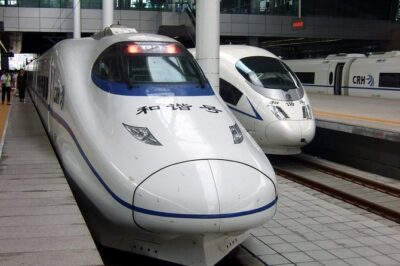
The transfer to Xi’an starts early. A driver is scheduled to collect you around 5:30 a.m. for the trip to Beijing West Railway Station. The listed train departs at 6:53 a.m. and arrives in Xi’an at 11:24 a.m., though a similar service may replace it.
You travel second class, with the train ticket included. There is no guide service on board, so keep your passport, ticket information, and personal items close. The station transfer at each end is the key convenience: a driver gets you to the station in Beijing, and a Xi’an guide and driver meet you after arrival.
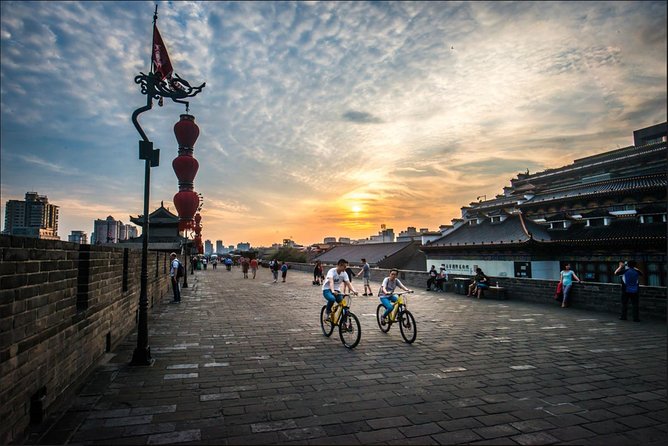
Once in Xi’an, you visit the Ancient City Wall for about an hour. It is one of the best places on this trip to understand the physical shape of a historic Chinese city. You may be able to rent a bicycle and ride along the wall at your own cost, but the schedule does not require cycling.
The Drum Tower and Bell Tower area follows, with an exterior look at both buildings. Then you continue to the Muslim Quarter for about an hour. This central district combines food stalls, restaurants, shops, and historic atmosphere. It is a good place to sample local flavors if you are comfortable buying food on your own, though meals are not included.
The first Xi’an day is less monumental than the next one, but it gives you a useful introduction to the city. The early train makes the day long. By evening, you may want to keep dinner close to the hotel.
Day 5: Terracotta Warriors and Tang-era Xi’an
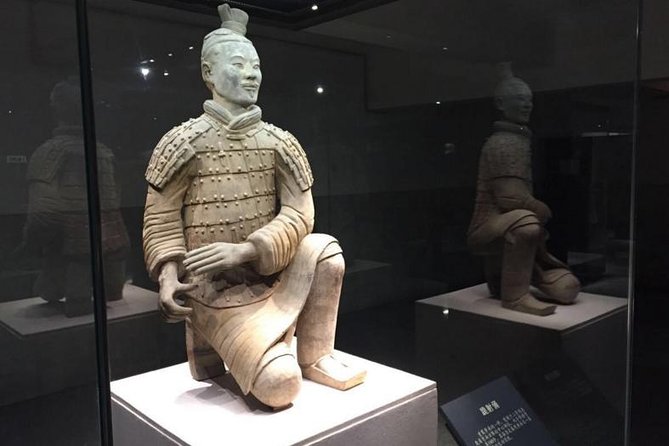
The Terracotta Warriors Museum receives about two hours, and that is enough to see the main pits with a guide. The museum lies about 30 kilometers east of Xi’an, so the private vehicle saves you the trouble of arranging a separate excursion.
This is the reason many people put Xi’an on a China itinerary. The figures were created for the mausoleum of Qin Shi Huang, China’s first emperor, and the large excavation halls show soldiers, horses, and military formations in place. The visit is more impressive when you pause to notice differences in rank, pose, and detail rather than rushing through for a single photograph.
Afterward, the schedule includes a one-hour activity making a small replica terracotta soldier. You can take your finished piece with you. This hands-on stop is especially useful for families, though it adds time to an already full day and may feel less essential if you want more time at the museum.
The Big Wild Goose Pagoda comes next. The one-hour visit focuses on one of Xi’an’s best-known landmarks, a Tang Dynasty Buddhist pagoda originally built to hold scriptures brought back by the monk Xuanzang. The surrounding area then leads into the Grand Tang Dynasty Ever-bright City for about 90 minutes.
That evening district uses Tang-style architecture and lighting to create a theatrical setting. It is not the same sort of experience as visiting an ancient monument, but it gives you a lively look at how Xi’an presents its Tang-era identity today.
Day five is a strong cultural day, but you should watch the clock. The museum, craft activity, pagoda, and evening district leave little unplanned time. Meals remain your responsibility.
Day 6: Xi’an to Shanghai and the Bund after dark
The second rail transfer begins around 7:20 a.m. Your driver escorts you to the station for a scheduled train listed as departing at 8:49 a.m. and arriving in Shanghai at 2:45 p.m. A similar service may be used instead.
This is a long ride, but it saves the time and hassle of flying. Again, the train portion has no guide service. Your Shanghai guide and driver meet you at Shanghai South Railway Station and begin the city visit after arrival.
The Bund is the natural first stop. You spend about an hour along the Huangpu River, looking across the water and back at the row of historic buildings on the riverfront. The mix of Gothic, Baroque, Romanesque, and classical styles gives the Bund its special character.
The evening Huangpu River cruise is included and lasts about an hour. From the water, you see both sides of Shanghai at once: the older riverfront buildings and the tall Pudong skyline. Timing is important here. The cruise is the trip’s big city spectacle, and the contrast with Beijing’s palaces and Xi’an’s ancient wall is exactly why the three-city route works.
This is another long day, but the reward is a sharp change of mood. You leave Xi’an’s archaeological and religious sights behind and arrive in a city defined by finance, trade, lights, and river traffic.
Day 7: Shanghai Museum, Yu Garden, and Xintiandi
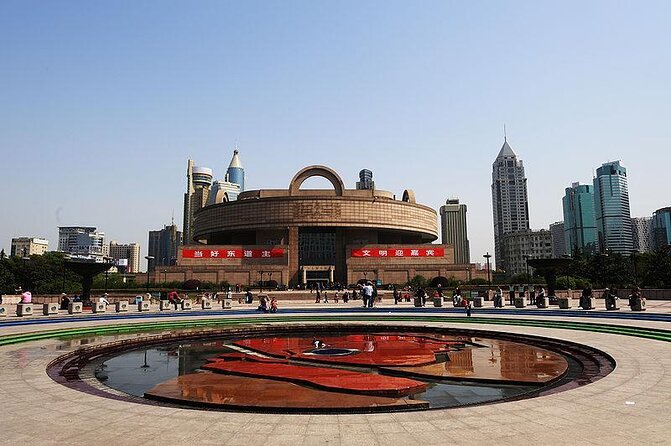
Your final sightseeing day begins at the Shanghai Museum in People’s Square. The planned visit is about an hour, and admission is listed as free. The museum holds a large collection covering Chinese cultural objects from the Old Stone Age through modern times.
One hour is enough for a first look, not a full museum study. If you have a particular interest in ceramics, sculpture, calligraphy, or bronze work, tell your guide so the visit can focus on the areas that matter most to you.
Yu Garden receives about two hours. This classical garden was built as a private retreat for a family, and its rockeries, pavilions, ponds, and tight courtyards offer a quieter counterpoint to Shanghai’s towers. Nearby Yuyuan Market adds a crowded commercial setting, so the stop combines garden design with street activity.
The final sightseeing stop is Xintiandi, a pedestrian district built around preserved Shikumen houses. Old stone-gate architecture now holds restaurants, boutiques, and galleries. It is a polished part of Shanghai, not an untouched neighborhood, but it helps explain how the city mixes older buildings with current urban life.
At the end of the tour, your guide and driver take you to the airport or train station. The final transfer is included, which is useful after a week of moving between cities.
The practical details that affect your choice
The tour is private, and only your group participates. That gives you more control than a large coach tour, though the written schedule remains fairly fixed. Private guiding is most valuable at the Forbidden City, Terracotta Warriors Museum, and major historic sites, where context helps you make sense of large spaces and unfamiliar customs.
Pickup is offered, and you receive the next day’s pickup information at least one day ahead by email. The guide may also call or leave a message through your hotel the night before. Keep your phone and hotel details current.
Vegetarian meals can be accommodated if you request them at booking. Meals themselves are not included, so you should budget for breakfast extras, lunches, dinners, and drinks beyond the daily bottle of mineral water provided for each person.
Children under 18 must travel with an adult. Most people can participate, but the route includes extensive walking, stairs, early starts, and the Great Wall’s uneven surfaces. Comfortable shoes are essential.
Cancellation is flexible only up to six full days before the start for a full refund. A cancellation two to six days ahead receives 50 percent, while cancellations under two days receive no refund. Train and attraction planning make late changes difficult, so check names, passport numbers, expiry dates, and country of issue before submitting the booking.
Is this China tour a good buy?
Book this tour if you want China’s biggest first-visit sights with private transport, rail tickets, hotel arrangements, and local guides already organized. It suits couples, families, and small groups who prefer a clear plan and do not want shopping stops added to their sightseeing.
Think twice if you want long free periods, independent food hunting, or time to explore each city beyond the headline attractions. The early Beijing station transfer, two long train journeys, and tightly filled sightseeing days demand stamina.
For many first-time visitors, the strongest value is not any single entrance ticket. It is the coordination of three very different cities in one route, with private help at the points where China can feel hardest to organize. If that convenience matters more to you than a slow pace, this is a well-focused choice.
FAQ
How long is the tour?
The tour lasts approximately seven days and includes six hotel nights.
Which cities does the tour visit?
The route includes Beijing, Xi’an, and Shanghai.
Are the bullet train tickets included?
Yes. Second-class bullet train tickets from Beijing to Xi’an and Xi’an to Shanghai are included.
Is this a private tour?
Yes. Only your own group participates in the private tour and sightseeing transfers.
Are hotels and breakfast included?
Yes. Six nights of accommodation and daily hotel breakfast are included. Two people share a room, and the accommodation is described as comfortable or luxury.
Are meals included?
No. Lunches, dinners, and other meals are not included. A daily bottle of mineral water per person is provided.
Is the Forbidden City open every day?
The Forbidden City is closed each Monday. Plan your travel dates with that closure in mind.
Is airport pickup included?
Beijing airport or train station pickup on arrival is included. Shanghai airport or train station drop-off at the end is also included.
Is a guide provided on the trains?
No. Guide service on the bullet train journeys is not included, but drivers and local guides meet you at the relevant stations.
Can vegetarian food be arranged?
Yes. A vegetarian option is available if you request it at the time of booking.
New reviews from Beijing
- Private Transfer to Mutianyu Great Wall with professional driver★ 5.0 · 19 reviews
- One day tour to downtown Tianjin from Beijing by high speed train★ 5.0 · 3 reviews
- camp on the Great Wall overnight with sunrise and sunset on the wall★ 5.0 · 11 reviews
- ZANBUS: Trip to the Jinshanling Great Wall Departing at 7:30 AM★ 5.0 · 5 reviews
- BusDa:Ancient Great Wall &Badaling Great Wall Full-day Bus Tour★ 4.5 · 6 reviews
- Yuxiandu Chinese Royal Cuisine Museum with Show and Royal Banquet★ 5.0 · 4 reviews
- Wild Great Wall Hikes★ 5.0 · 10 reviews
- Wild Great Wall Huanghuacheng Half Day Tour★ 5.0 · 15 reviews
Bullet Train Day Trips, compared.
Suzhou Private Day Trip from Shanghai with Bullet Train Option
Read our review →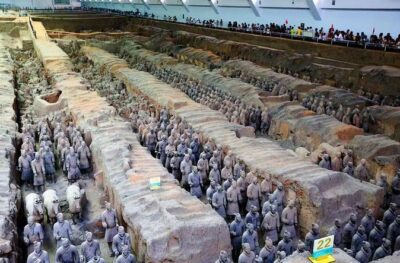
Beijing to Xi’an See Terracotta Warriors with Bullet Train Round Trip Transfer
Read our review →
Flexible Hangzhou Private Tour from Shanghai by Bullet Train
Read our review →

Private Guided Tour to Hangzhou by Bullet Train
Read our review →
Hangzhou Private Customized Day Trip from Shanghai by Bullet Train
Read our review →
Beijing to Datong See YunGang Cave, Hanging Temple (Bullet Train)
Read our review →Browse the lists this tour appears in