
Reviewed · TOURS IN XI'AN
The Legend Of Camel Bell In Xi’An
Xi’an’s Legend of Camel Bell is not a quiet historical pageant. It is a large-scale water show built around the Silk Road, with camels, wolves, snow, fire, a roaring river, and a huge Buddha rising from the stage. I like the way it turns a familiar history lesson into something you can see and feel, especially the link between Chang’an and the trade routes reaching across Eurasia. I also like the practical hotel pickup and drop-off, which saves you from sorting out transport after an evening performance.
The main thing to watch is the timing. The show itself lasts about 60 minutes, but the full outing is advertised at three to four hours, depending on your hotel, show time, and transfers. Seats in the lower rows may get wet, so ask about your seat before settling in. The provider, Noble Tour, is also praised for quick communication and same-day ticket help, a real advantage if your Xi’an plans are still shifting.
Key points at a glance
- A 60-minute Silk Road story: Follow the camel caravan from the desert to Xuanzang’s Buddhist kingdom and back to Chang’an.
- A water theater with a rotating stage: The audience sits around a stage using 2,000 tons of water and 360-degree movement.
- Big effects, not a small folk performance: Expect erupting volcanoes, heavy snow, charging wolves, rising statues, and desert scenes.
- Hotel transfers included: Pickup and drop-off make this easier than arranging your own route to the theater.
- Four to eleven performances daily: Show times run from 11 a.m. to 7 p.m., subject to availability.
- Lower rows can get wet: If you choose a seat below row 11, bring that possibility into your plans.
Why this Xi’an show tells a bigger Silk Road story
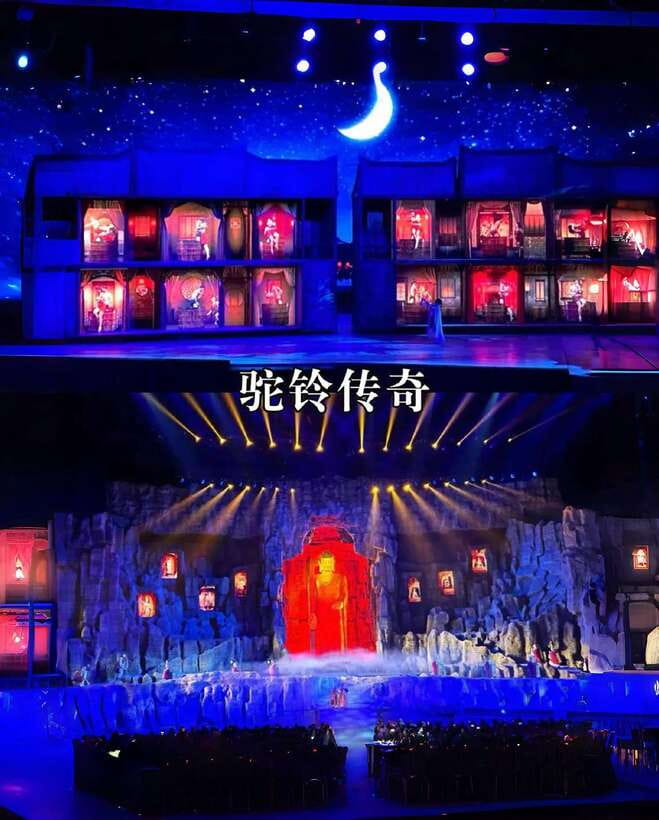
The production takes its name from the sound that once marked a caravan’s progress across the desert. Camel bells meant movement, trade, and contact between distant places. In the story, the caravan becomes a friendly link between China and the countries along the old Silk Road.
The show also draws on the journey of Master Xuanzang, the Buddhist monk who traveled west to obtain sacred texts. You follow the caravan through danger and hardship before it reaches the Buddha’s country, meets Xuanzang, and returns safely to Chang’an.
That basic plot gives the performance a useful historical frame. You are not simply watching disconnected stage tricks. The camel team represents the exchange of religion, goods, ideas, and diplomatic ties between China and Eurasia. The final return to Chang’an points toward the prosperity of the Tang Dynasty and the period when foreign envoys came to celebrate friendship.
I would not choose this show as a substitute for visiting Xi’an’s archaeological sites. It is a theatrical retelling, not a museum lecture. But it can add a lively evening view of the Silk Road, especially if you have already seen the Terracotta Warriors and want a more dramatic take on the forces that shaped the city.
What else travellers book in Xi'an:
- Mini Group Xian Day Tour to Terracotta Army, City Wall, Pagoda and Muslim Bazaar
★ 5.0 · 1,320 reviews - Xi’an: Terracotta Army Mini Group or Private Tour
★ 5.0 · 926 reviews - Xi’an Evening Food Tour by TukTuk
★ 5.0 · 715 reviews
Entering a theater built over water
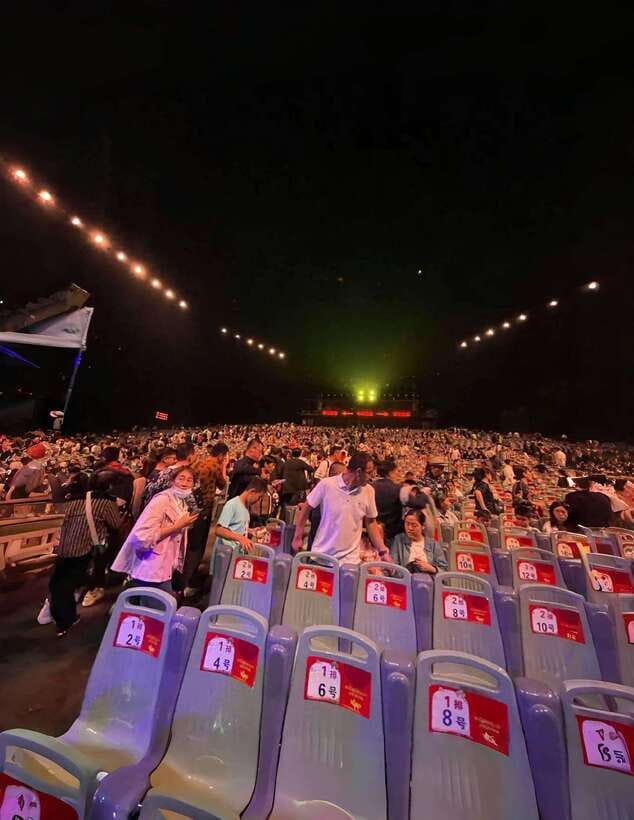
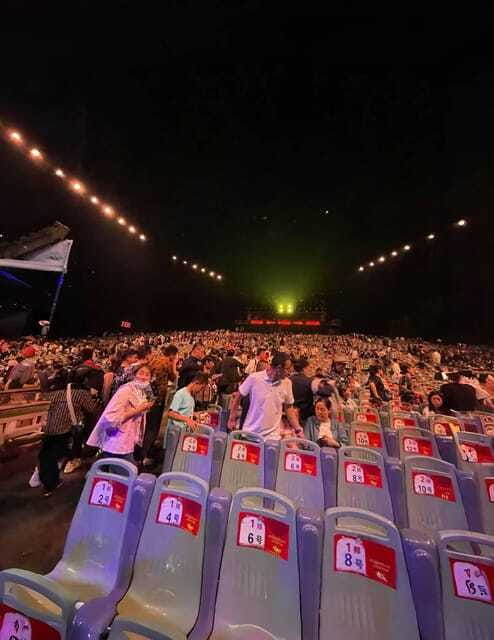
The theater is designed to make the audience part of the action. The auditorium holds about 3,000 people, and the seating and stage are set around water. The performance uses a 360-degree rotating stage, wide screens, scenery, and moving set pieces to change the audience’s viewpoint from one scene to the next.
This is important because you are not sitting in front of one fixed backdrop for an hour. At the end of each scene, the audience is moved to the position intended for the next one. The production can then surround you with new scenery and effects.
The set reportedly uses 2,000 tons of water. That helps explain both the scale of the show and the warning about wet seats. If your ticket places you in a lower row, especially below row 11, you may receive more than a close view of the action. You may also get sprayed. Families may find this entertaining, but anyone carrying cameras, phones, or a good jacket should plan with care.
The best seats are included with this arrangement, according to the booking details. Still, seat placement matters here in a way it might not at a standard indoor theater. Ask Noble Tour where your seats are and if they are in the splash area.
The opening journey across the desert
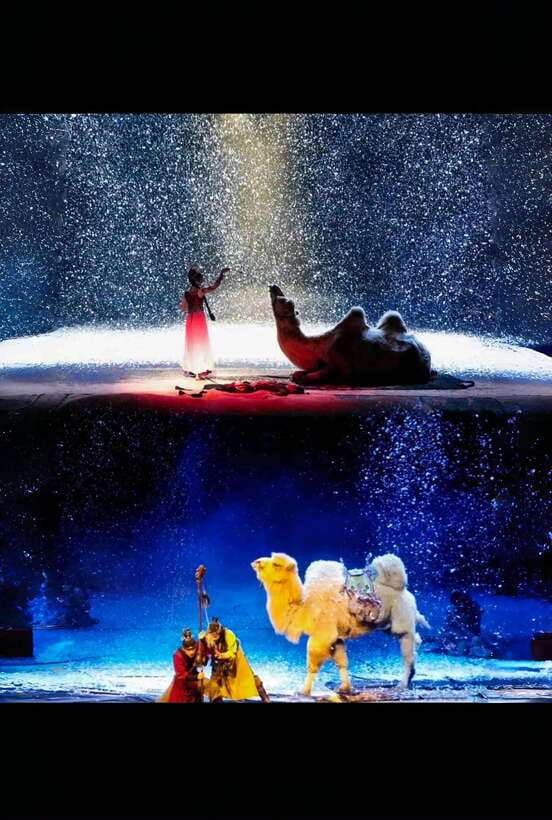
The story begins with the camel caravan moving through the desert. The camel bells provide the main image of the production, and the set aims to make you feel surrounded by a broad, empty wilderness rather than looking at a small stage scene.
This part works as a simple introduction to Silk Road travel. The caravan is not just crossing sand for dramatic effect. It is carrying the idea of trade and contact between places that were far apart in distance, language, and custom.
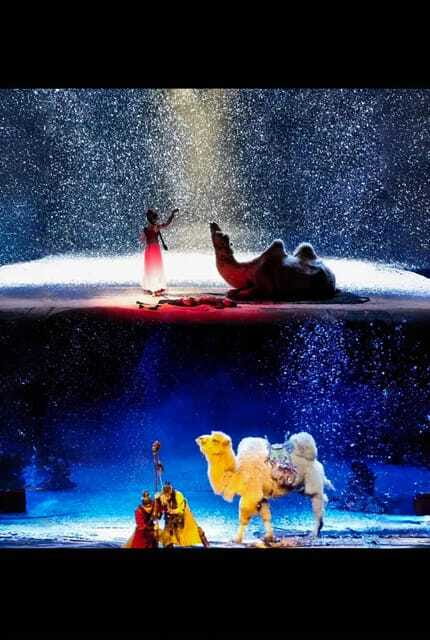
The show then turns the desert journey into a series of threats. A pack of fierce wolves rushes toward the audience, a moment designed to provoke a physical reaction. You may hear people shout when the animals charge. It is a good example of what this production does best: using scale and surprise to make an old route feel dangerous.
The effects are likely to appeal most to families, first-time visitors to Xi’an, and anyone who prefers history with motion. If you want a quiet, precise account of dates and dynasties, this will feel broad and theatrical. If you enjoy live staging and do not mind spectacle, the desert section gives the show a strong start.
Volcanoes, snow, and a river in motion

The journey does not remain in the desert. Volcanoes erupt, snow fills the air, and a river roars across the stage. The production uses water, projection screens, physical sets, and stage movement to change the mood quickly.
These effects are not small decorations around a spoken story. They are central to the experience. The natural forces represent the obstacles facing the caravan, and the changes in weather and terrain make the trip feel long and difficult.
The use of water is especially important. It gives the theater a sense of movement and makes the stage feel larger than its physical dimensions. It also explains why the production can appeal to someone who has already seen historical shows elsewhere. You are not only watching actors move between scenery. The entire room changes around the performance.
The drawback is that large visual effects can sometimes compete with the story. You may remember the volcano, the wolves, or the snow more clearly than the exact sequence of events. That is not a problem if you see the production as a visual introduction to the Silk Road. It matters more if you want detailed historical explanation.
Same city, a completely different day:
- Xian: Terracotta Army Ticket & Guided Bus Tour with Options
★ 4.6 · 579 reviews - Customized Private Day Tour of Terracotta Warriors and Xi’an
★ 5.0 · 513 reviews - Xi’an: Exclusive Terracotta Army Tour & Local Family Lunch
★ 4.9 · 484 reviews - Half-Day Mini Group Xian Tour to Terracotta Warriors Museum
★ 5.0 · 467 reviews
Meeting Xuanzang and the rising Buddha
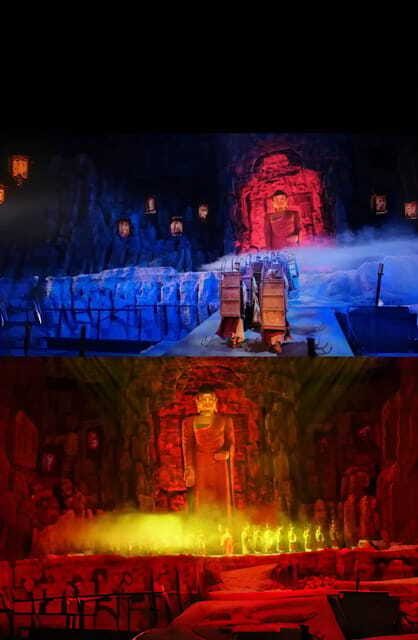
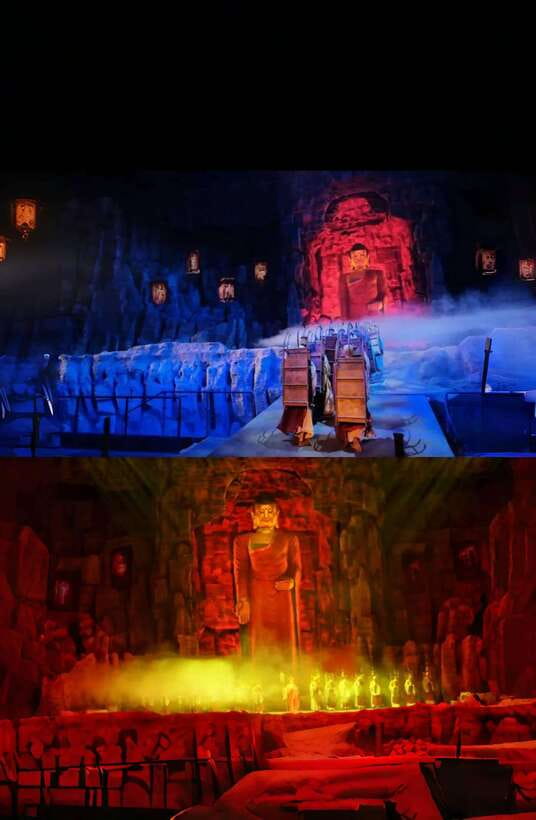
The caravan eventually reaches the Buddha’s country, where an 18-meter Buddha statue rises slowly. This is the show’s most solemn image, after the action-heavy desert scenes and natural disasters.
The appearance of Xuanzang connects the journey to a specific figure in Chinese religious and cultural history. His westward mission is one of the best-known stories linked with the Silk Road, and the show uses his meeting with the camel caravan to join the religious and commercial sides of the route.
The rising statue should be treated as a stage picture rather than a literal reconstruction of an event. It gives the production a moment of wonder and provides a clear turning point. The caravan has survived its trials and reached a place associated with knowledge, faith, and sacred texts.
For you, this section may be the strongest reason to see the show if you are interested in the connection between Xi’an and Buddhism. It also gives the performance more weight than a simple procession of special effects.
Returning safely to Chang’an
The final part brings the camel team back to Chang’an. The caravan has completed its mission, the Silk Road is open, and the production closes with a celebration of friendship among nations.
This ending presents the route as more than a line across a map. The story suggests that trade encouraged cultural contact, strengthened economies, and helped build relationships between countries. It also links the Silk Road with the prosperity of the Tang Dynasty.
The message is clearly positive and ceremonial. You will not get a critical discussion of the Silk Road’s conflicts, exploitation, or political complications. The focus is on connection and cooperation. That tone fits a major cultural stage show, but you should know what kind of history you are receiving: a grand, symbolic retelling rather than a balanced academic account.
I like this ending because it gives the effects a purpose. The wolves and volcanoes are not the whole point. The production returns to the camel bells and the people moving between regions, which brings the story back to travel, trade, and human contact.
What the $68 price includes
At $68 per person, this is not the cheapest evening activity in Xi’an. The value depends on how much you would otherwise pay for transport, ticket handling, and a good seat.
The package includes hotel pickup and drop-off, best seats, and assistance with getting the ticket. Those pieces matter because the show has several daily time slots, and the theater may not fit neatly into your sightseeing route. You are paying for an organized outing, not just admission.
The advertised duration varies between three and four hours. The performance lasts 60 minutes, and you should check your ticket 30 minutes before the start. The rest of the time is used for pickup, transfer, arrival, and return. Ask for the exact pickup time rather than assuming the outing will take only the length of the show.
Food and drinks are not included. Plan to eat before or after the performance, since the listed package does not provide a meal.
The provider contacts you after booking to arrange ticket collection and explain how to receive your ticket. In one case, Noble Liu accepted a booking only two hours before the show and waited at the entrance with the ticket. That does not guarantee last-minute availability, but it shows why quick communication can be useful when your plans change.
You may be asked for a photo of the driver or receive one before pickup. Save the information on your phone so you can identify the vehicle and driver more easily.
Choosing a show time between 11 a.m. and 7 p.m.
There are four to eleven performances a day, with show times listed from 11 a.m. through 7 p.m. The exact schedule depends on availability, so check before building the rest of your day around it.
A daytime performance may fit well after a morning visit to a museum or historic site. An evening show can work after sightseeing, but leave enough time for the pickup and the required ticket check 30 minutes before the performance.
The large number of showings is useful if you are staying in Xi’an for only a short visit. It also makes the experience easier to combine with other plans. Still, do not treat every time slot as interchangeable. Your hotel pickup time, traffic, and return time will change with the selected performance.
Noble Tour’s communication is one of the stronger practical points here. The provider has used WhatsApp for quick contact, and prompt replies can help with the ticket, driver details, and meeting arrangements. Confirm the communication method after booking and keep your phone available.
Who will enjoy this performance most
I would recommend The Legend of Camel Bell to:
- Families looking for a large, visual show
- First-time visitors who want a Silk Road introduction
- People interested in Xuanzang, Buddhism, or Tang Dynasty history
- Anyone who prefers a planned transfer over finding the theater alone
- Visitors who enjoy water, sound, stage movement, and special effects
- People with a free afternoon or evening and flexible sightseeing plans
You may want to skip it if you dislike loud theatrical effects, large crowds, or symbolic storytelling. It is also not the best choice if your main goal is a detailed historical lecture or a small performance rooted in local music and dance.
The production is wheelchair accessible, which makes it a useful option for visitors who need an accessible activity. Ask about the exact seating and transfer arrangements when booking, since the available details confirm accessibility but do not describe the vehicle or seating setup.
Should you book The Legend of Camel Bell?
Book it if you want to see the Silk Road presented as a full-scale visual event rather than read about it in a guidebook. The rotating stage, water effects, erupting volcanoes, charging wolves, snow, and rising 18-meter Buddha give the story a memorable shape.
The $68 price is easier to justify if you value hotel transfers, best seats, and help with ticket collection. It is less attractive if you already have transport, prefer a small cultural performance, or want to spend the evening exploring at your own pace.
Before paying, confirm three things: the exact show time, the pickup time, and your seat location. If you are in a lower row, prepare to get wet. If you want the simplest plan, let Noble Tour handle the driver and ticket details, and keep your phone ready for the provider’s message.
FAQ
How long does The Legend of Camel Bell last?
The show itself lasts 60 minutes. The complete activity is listed as three to four hours, depending on the pickup, transfer, and selected performance time.
What time do the shows run?
Shows are offered at different times from 11 a.m. until 7 p.m. Availability varies, so check the schedule before booking.
How early should I arrive?
You should check the tickets 30 minutes before the show starts.
Is hotel pickup and drop-off included?
Yes. Hotel pickup and drop-off are included in the activity.
Are the best seats included?
Yes. The booking information states that the best seats for the show are included.
Can I get wet during the show?
Yes. If you sit in rows below row 11, you may get wet because of the water effects.
Are food and drinks included?
No. Food and drinks are not included.
How do I receive my ticket?
After you book, the provider will contact you and explain how to get the ticket. Ticket pickup is handled separately rather than being included as a meal or other service.
Can I cancel the booking?
You can cancel up to 24 hours in advance for a full refund. The activity also offers reserve now and pay later booking, so you do not have to pay at the time of reservation.
New reviews from Xi'an
- Top 3 Xian Sites to Terracotta Army & Dinner Show w/ Options★ 4.7 · 11 reviews
- Terracotta Army Day Tour from Xi’an-Tickets&Flexible Pickup★ 5.0 · 8 reviews
- Terracotta Warriors And Xi’An DowntownTour★ 5.0 · 6 reviews
- Terracotta Army, Huaqing Palace & Song of Everlasting Sorrow★ 5.0 · 3 reviews
- Terracotta Army E Ticket with Optional Transfer or Guide★ 5.0 · 32 reviews
- Private Xian Mt. Huashan Adventure Tour: Explore in Your Own★ 4.9 · 6 reviews
- From Xi’an: Mt. Huashan Private Tour and Cable Car Ride★ 4.8 · 3 reviews
- Private Tour: Xi’an’s Must-See 3 UNESCO Sites in One Day★ 4.7 · 4 reviews
Tours in Xi'an, compared.
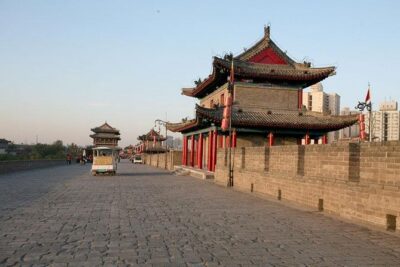
Mini Group Xian Day Tour to Terracotta Army, City Wall, Pagoda and Muslim Bazaar
Read our review →

Terracotta Army Ticket & Guided Bus Tour with Options
Read our review →
Customized Private Day Tour of Terracotta Warriors and Xi’an
Read our review →
Exclusive Terracotta Army Tour & Local Family Lunch
Read our review →
Half-Day Mini Group Xian Tour to Terracotta Warriors Museum
Read our review →
Browse the lists this tour appears in