Reviewed · TOURS IN BEIJING
Beijing: Beihai Park Full Access Ticket – Must-See in China
Beihai Park gives you a rare chance to see an imperial garden in the middle of Beijing without the noise and formal ceremony of a palace visit. The big lake, old pavilions, temples, sculpted rocks, and White Dagoba make this a place for slow walking and looking closely.
I like the direct electronic entry, since you do not need to meet a representative at the gate. I also like that the White Dagoba ticket and an English visual guide are included. The main consideration is that this is a self-guided visit, so you will need to read the guide and plan your own route.
Key points to know before booking
- The White Dagoba ticket is included, along with admission to Beihai Park.
- You enter with electronic tickets, without meeting the activity provider in person.
- An English text and visual guide helps you identify the park’s main sights.
- Four hours is a sensible visit length, especially if you want to see the lake, gardens, exhibits, and historic buildings.
- No live guide or audio guide is provided, so this suits independent sightseeing.
- Wheelchair access is available, and cancellation is free up to 24 hours before the visit.
Why Beihai Park is worth four hours
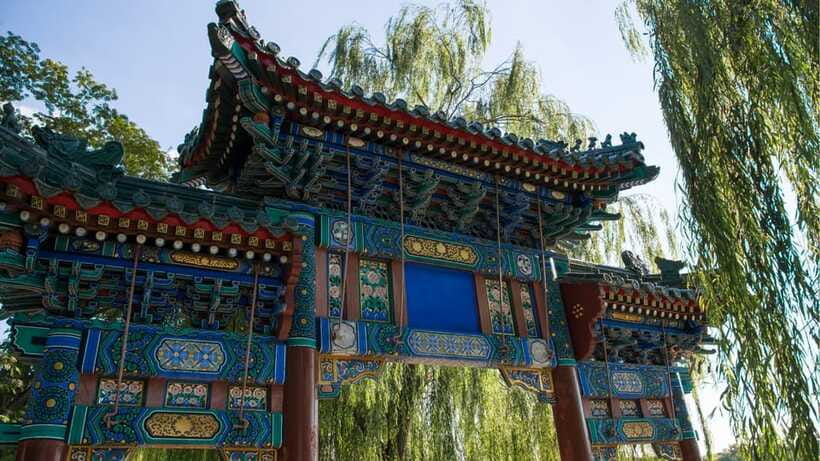
Beihai Park is one of Beijing’s oldest and best-preserved imperial gardens. That gives your visit a different feel from a standard city park. You are not simply walking beside a lake. You are moving through a carefully planned setting where water, trees, rocks, bridges, religious buildings, and pavilions were placed to create changing views.
The park sits in central Beijing, yet the lake and shaded paths can feel removed from the city. That contrast is part of the appeal. You can spend time beside the water, then turn toward an old temple or a roofed pavilion and get a very different view within minutes.
I would allow the full four hours if you enjoy gardens, architecture, or photography. A shorter visit can cover the main sights, but the park is large enough that rushing will flatten the experience into a checklist.
The visit is also useful for understanding a Chinese garden at a practical level. You can see how a path does not always run straight toward its destination. Instead, it may lead you around a rock formation, under trees, across a bridge, or toward a framed view of the lake. The visual guide can help you notice these choices instead of simply walking past them.
A few more days out in Beijing worth the ticket
- Beijing: Forbidden City Tour(Group/Private)-Tickets Included
★ 4.8 · 7,974 reviews - 4-Hour Small Group Tour to Forbidden City with Entry Tickets
★ 5.0 · 1,863 reviews - Beijing: Tiananmen Square Registration Service(Ticket)
★ 4.5 · 1,704 reviews
Getting your ticket and entering the park
This experience uses electronic tickets rather than a traditional meeting point. After you book, you provide the passport name and passport number requested by the provider through email or WhatsApp. The electronic tickets and other visit information are sent through one of those channels six days before your planned visit.
You should check your messages before heading to the park. Keep your passport or ID card with you, since it is listed as required. The direct-entry setup has worked smoothly for people using the QR codes at the gate, but you still need the correct ticket information ready on your phone.
This arrangement is useful if you dislike coordinating with a guide at a busy entrance. You can arrive on your own schedule within the available booking time, show the electronic ticket, and start exploring. It also means you are responsible for reading the instructions and finding the correct entrance.
The provider says the ticket lets you skip the ticket line. That is a practical benefit, especially when you want to spend your time inside the garden rather than sorting out admission. Still, skip-the-line entry does not mean every entrance or security check will be instant. Keep your passport details accessible and allow a little time to orient yourself.
Starting beside the central lake
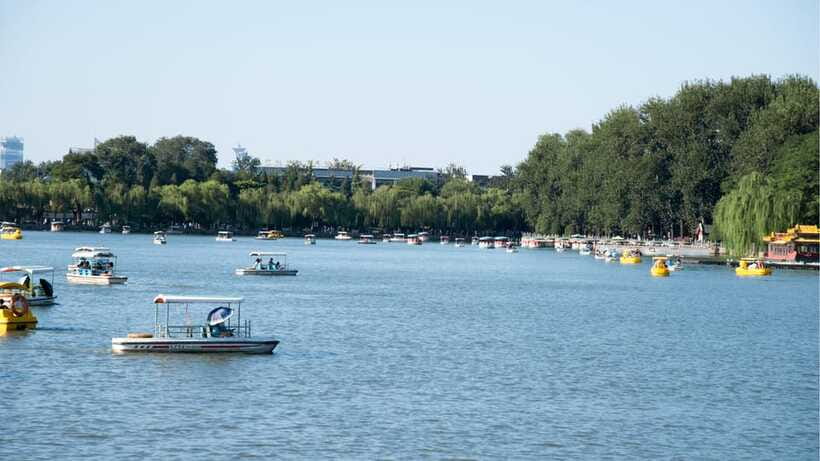
The central lake is the park’s main visual anchor. From its shores, you get a sense of how the garden is arranged. Willow-lined water, bridges, traditional structures, and the White Dagoba create the broad picture first. Then the smaller details begin to matter: roof shapes, rock arrangements, narrow paths, and reflections on the lake.
I would begin with a walk along the water before heading toward the more concentrated architectural sights. This gives you a clear sense of direction and lets you see the White Dagoba from different angles. The first view may be broad and distant. Later views can be partially framed by trees, pavilions, or garden walls.
The lake also gives the park a calm rhythm. You can stop often without feeling that you are missing a scheduled explanation. Since there is no live guide, you control the pace. Take time to compare the open water with the enclosed garden areas, where the views become smaller and more carefully framed.
A boat ride is available on the lake, according to the experience information, but it is not listed as part of the included ticket. Treat it as an optional activity rather than a guaranteed feature of your package. If you want to take a boat, check the operating details and any extra cost locally.
Walking through the imperial garden design

The pleasure of Beihai Park is in the transitions. One moment you are beside the lake. The next, you are among old trees, rock formations, bridges, or pavilions. These changes are what make a garden visit more rewarding than a single monument stop.
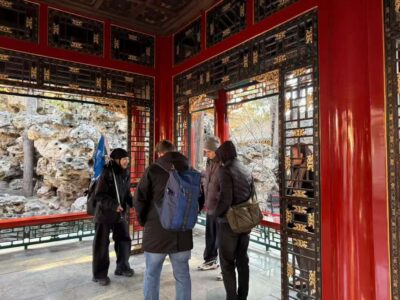
The park’s traditional design gives you plenty to examine. Look at how the paths meet the water, how bridges connect different sections, and how pavilions provide places to pause. The rock formations are not random piles of stone. They form part of the garden’s visual structure, adding height, texture, and a sense of natural scenery within a designed setting.
The English text and visual guide is especially useful here. A short description can tell you why a building or garden feature matters, while the images can help you match the information to what you see. This is not the same as having a person explain every detail, but it is enough to make a self-guided visit more focused.
You might also find exhibits and well-preserved features along the route. A previous booking experience described the park as having many exhibits and a very good state of preservation. That makes this more than a scenic walk. You can combine garden appreciation with a look at objects and structures connected to the park’s past.
Same city, a completely different day:
- From Beijing: Mutianyu Great Wall Tours with Options
★ 4.9 · 9,216 reviews - Beijing: T-Square & Forbidden City Group or Private Tour
★ 4.8 · 4,446 reviews - All-Inclusive Tour: Tiananmen Square, Forbidden City, Great Wall
★ 5.0 · 2,873 reviews - MuBus: Mutianyu Great Wall ENG/ESP/RUS Guided Bus Tour
★ 5.0 · 2,361 reviews
Reaching the White Dagoba
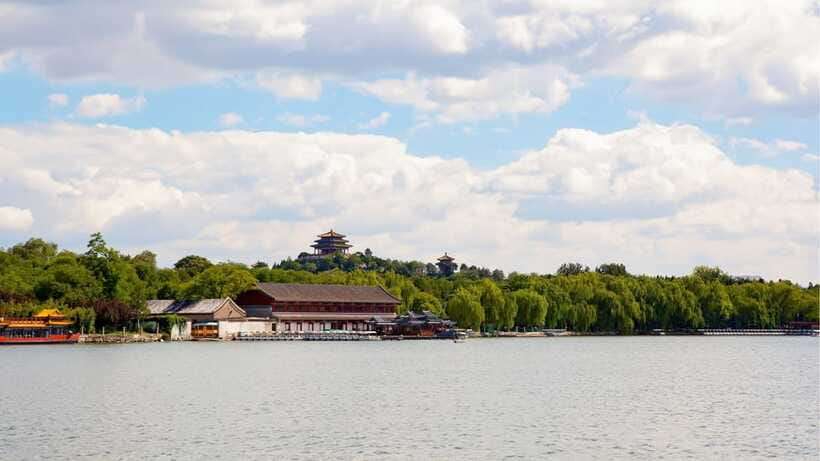
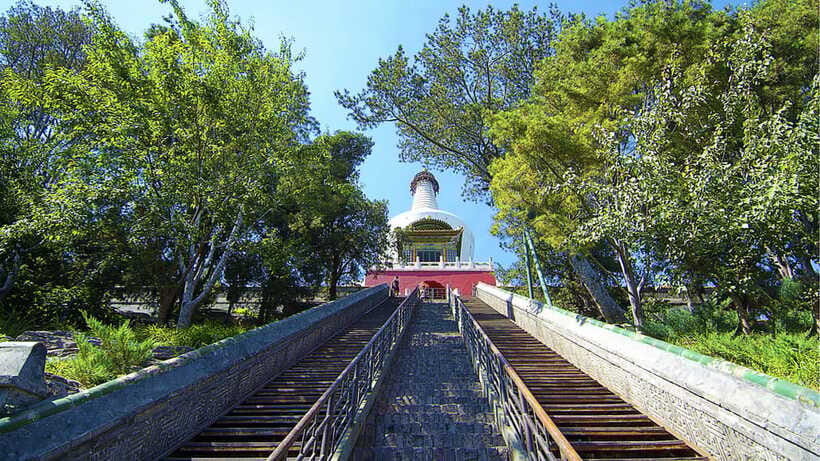
The White Dagoba, also called the White Tower in the ticket information, is Beihai Park’s signature landmark. It is a Tibetan-style stupa set above the surrounding garden and lake, and the ticket for this area is included with the experience.
The climb or approach to the White Dagoba is one of the visit’s key moments. From higher ground, you can look back across the park and toward Beijing. The view gives meaning to the garden’s layout. Instead of seeing separate paths, buildings, and water edges, you can understand how the different pieces fit together.
The panoramic view is a strong reason to include this ticket rather than buying only basic park admission. You are paying a modest price, listed at about $9 per person, for access to both the park and the White Dagoba area. If you already plan to visit Beihai Park, that added access makes the package good value.
The White Dagoba section may require more effort than a flat lakeside stroll. The exact walking conditions are not described in the supplied information, so use your own judgment and allow extra time if you prefer a slower pace. Wheelchair accessibility is listed for the activity, but the ticket information does not explain access conditions at every individual path or viewpoint. If the tower area is essential for you, confirm the route details before booking.
Temples, pavilions, bridges, and smaller sights
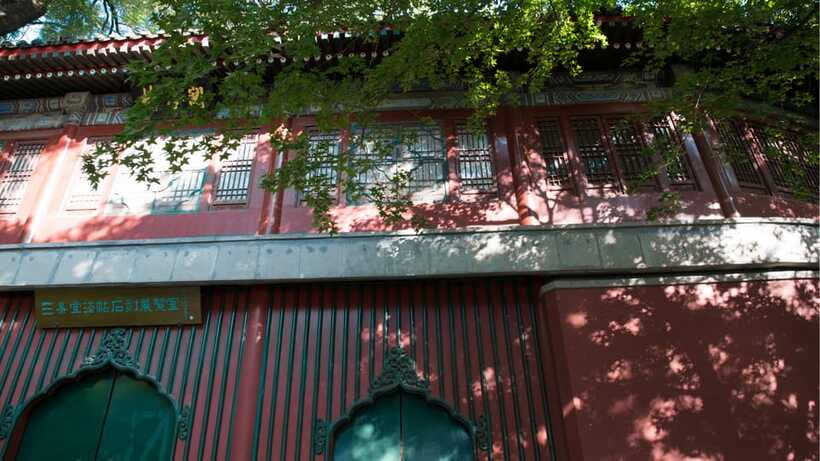
Beihai Park rewards curiosity. The White Dagoba is the obvious landmark, but it should not be the only reason you visit. Historic temples, traditional pavilions, bridges, and garden structures fill out the experience.
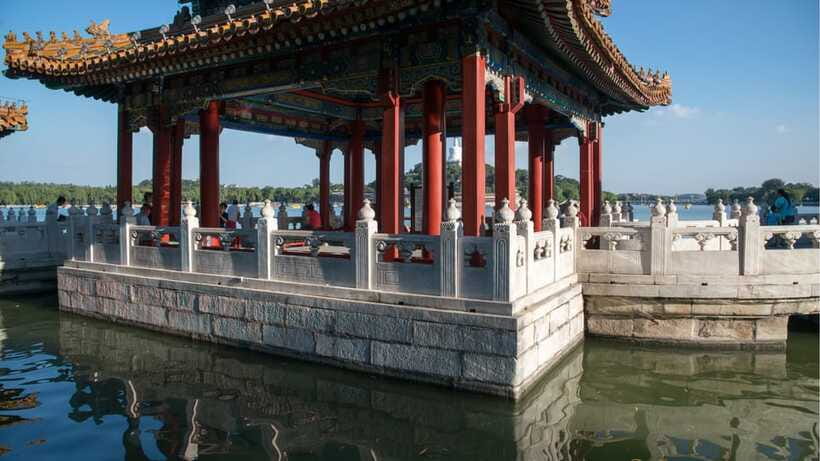
Pavilions are useful places to pause and compare views. From one, the lake may dominate your sightline. From another, you may notice a bridge, a rocky garden, or a roofline. The park’s appeal comes from these small shifts rather than from one grand interior display.
The temples add a more serious tone. They show that the park was not designed only for leisure and scenery. Religious architecture sits within the garden setting, giving you another way to read the site. The guide can help you identify the buildings, but you should not expect a live explanation of rituals, symbols, or construction details.
Bridges and paths also make the visit feel active. You are continually changing position, not standing in one large courtyard. That is good news for visitors who like to explore at their own pace. It can be less satisfying if you prefer a tightly organized tour with a guide leading from one named stop to the next.
How to use the English visual guide
The guide is a practical tool, not a replacement for a professional historian. Use it before you start walking so you know which sights matter most to you. Then check it again as you reach the White Dagoba, lakefront, temples, exhibits, and garden features.
The visual element should help when several buildings or paths look similar. Match the guide’s images with what is in front of you, then decide if you want to follow the suggested order or create your own. This approach works well for independent visitors who want context but do not want to stay with a group.
I would save the guide to your phone and keep your screen brightness high enough to read outdoors. The supplied information does not promise a printed copy, so do not depend on paper material being handed to you at the gate.
There is no audio guide included. That matters if you prefer to listen while walking. You will need to stop and read, or review the material before moving on. For some people, this is a drawback. For others, it is a fair trade for a quiet visit with no commentary in your ears.
Timing your four-hour visit
Four hours gives you enough room for a relaxed route, but you should still make choices. The park is large, and one booking experience specifically advised arriving early if you want to see everything. Early arrival can also help you enjoy the lakefront before you feel tired from walking.
A sensible plan is:
- Start at the lake and get your bearings.
- Follow the main garden paths toward the White Dagoba.
- Spend time at the tower viewpoint.
- Continue to temples, pavilions, bridges, and exhibits.
- Leave room for a second lakeside walk or an optional boat ride.
You do not need to follow this order exactly. The important point is to avoid spending your first hour at one attractive spot and then rushing through the rest. Use the visual guide to identify your priorities at the beginning.
Four hours is also long enough for pauses. Sit beside the lake, study the rock formations, and let the park’s design work at a slower pace. If you are traveling with children, older relatives, or anyone who dislikes constant sightseeing pressure, the flexible schedule is helpful.
What the $9 price really gives you

At about $9 per person, this is a low-cost way to add a major garden and landmark to a Beijing itinerary. The value comes from the combination of park entry, White Dagoba access, electronic admission, and the English text and visual guide.
You are not paying for personal guiding. There is no live tour guide and no audio guide. If you want expert interpretation at every stop, you may find the package too basic. If you are comfortable exploring independently, the price keeps the visit simple and affordable.
The ticket also saves you from handling standard admission at the gate. That convenience has real value in a city where entrance procedures can take time, especially if you are unfamiliar with the local system. The electronic QR codes have been used successfully for direct entry, and the provider sends instructions for getting there.
Free cancellation up to 24 hours before the visit adds useful flexibility. You can also reserve now and pay later, which helps if your Beijing schedule is still changing. These terms do not improve the park itself, but they reduce the risk of booking a fixed activity too early.
Who will enjoy this self-guided visit
I would recommend this experience to you if you like gardens, historic buildings, lake views, photography, and independent walking. It works especially well for someone who wants a quiet break from Beijing’s larger sights without leaving the city center.
It is also a good choice if you want a clear destination but dislike group tours. You receive the ticket and guide, then decide how long to spend at each feature. The park’s range of sights means different people can enjoy it in different ways.
Families may appreciate the open space and flexible pace, though four hours of walking can be a lot for small children. The activity is listed as wheelchair accessible, but the information does not describe every route or the specific conditions around the White Dagoba. If full access to the tower area is important, ask for detailed accessibility information before you commit.
You may prefer another option if your main goal is detailed historical explanation. The English guide offers useful support, but it cannot answer questions or adapt its explanations to your interests. In that case, a live guide would offer more depth, though likely at a higher price.
Booking details that matter
After booking, send the requested passport name and number by email or WhatsApp. The tickets and visit information are sent six days before the visit through email or WhatsApp, so check both channels and make sure the details match your identity document.
Bring your passport or ID card. Keep the electronic ticket easy to open, since you will use it to enter directly. You do not need to arrange an in-person meeting with the activity provider.
The overall rating is 4.4 out of 5 from 10 ratings, with strong praise for fast information, clear QR codes, easy entry, the park’s beauty, and the amount there is to see. One practical point comes through clearly: arrive early if you want to cover a large portion of the park instead of choosing only the main sights.
Should you book Beihai Park Full Access?
Book this if you want an affordable, flexible garden visit with access to the White Dagoba and enough time to explore without a group. The direct electronic entry is convenient, and the English visual guide gives you more structure than a basic admission ticket.
Skip it if you need a live historian, audio commentary, or a tightly led route. This is a self-guided experience, and you must manage the ticket information, walking pace, and sightseeing order yourself.
For most independent visitors, the $9 price is easy to justify. You get one of Beijing’s most attractive imperial garden settings, a major viewpoint, and four hours to explore at your own speed. Arrive early, bring your passport or ID card, keep the QR code ready, and leave enough time for the lake as well as the famous tower.
FAQ
How long does the Beihai Park experience last?
The stated duration is four hours. That gives you time to visit the lake, gardens, historic buildings, White Dagoba, exhibits, bridges, and other park features at a relaxed pace.
Is the White Dagoba included in the ticket?
Yes. The package includes the Beihai Park entry ticket and the White Tower ticket, referring to the White Dagoba area.
Is a live tour guide included?
No. A live tour guide is not included. You receive an English textual and visual guide for self-guided sightseeing.
How do I enter Beihai Park?
You receive electronic tickets and use them to enter directly. No in-person meeting with the activity provider is required. Bring your passport or ID card.
When will I receive the electronic tickets?
After you provide your passport name and number by email or WhatsApp, the electronic tickets and related information are sent six days before your visit through email or WhatsApp.
Can I cancel the booking?
Yes. You can cancel up to 24 hours before the visit for a full refund. The activity also offers a reserve-now-and-pay-later option.
New reviews from Beijing
- Mutianyu Wall, Summer Palace & Old Summer Palace Day Tour★ 4.8 · 34 reviews
- Night Market Haggling Adventure with an English Guide!★ 4.8 · 7 reviews
- Mutianyu Great Wall Ticket with Roundtrip Cable Car★ 5.0 · 20 reviews
- BusDa-Mutianyu Great Wall&Forbidden City Full-day Coach Tour★ 4.9 · 11 reviews
- Mutianyu Great Wall Bus Trip+Ticket 7/8/9/10/13/13:30/15:30★ 4.7 · 24 reviews
- Mutianyu Great Wall Entry Ticket Chairlift Up Toboggan Slide★ 4.9 · 8 reviews
- Mutianyu Great Wall 5-KM Guided Hike with Uphill Cable Car★ 4.8 · 16 reviews
- Mutianyu Great Wall Admission Ticket★ 3.6 · 7 reviews
Tours in Beijing, compared.


Forbidden City Tour(Group/Private)-Tickets Included
Read our review →
T-Square & Forbidden City Group or Private Tour
Read our review →
All-Inclusive Tour: Tiananmen Square, Forbidden City, Great Wall
Read our review →
MuBus: Mutianyu Great Wall ENG/ESP/RUS Guided Bus Tour
Read our review →
4-Hour Small Group Tour to Forbidden City with Entry Tickets
Read our review →
Beijing Full Day Tours: Tiananmen Sq, Forbidden City, Great Wall
Read our review →