
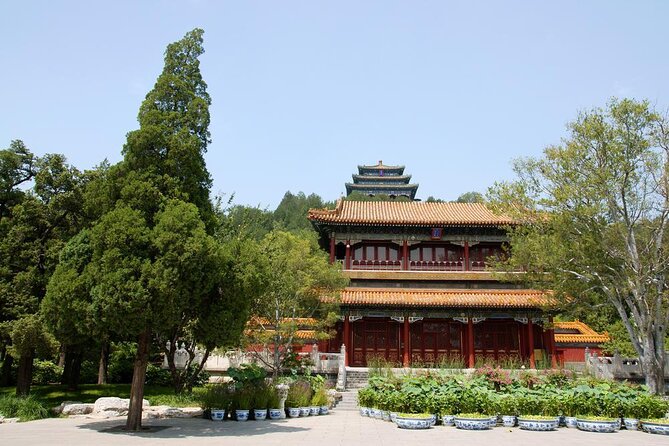
Reviewed · SIDECAR & RICKSHAW TOURS
4 Hours Private Discover Beijing Tour by Sidecar
Beijing looks different from the passenger seat of a sidecar. You slip through hutong lanes, follow the old central axis, and stop where a larger vehicle could not. Guide John, also called Johnny, adds local stories, photo stops, and small detours that turn a four-hour ride into a quick introduction to the city.
I like the direct contact with daily Beijing life, especially the hutong alleys and the Muslim quarter around Niujie. I also like the practical setup: hotel pickup, Bluetooth communication through the helmet, bottled water, snacks, and the chance to switch seats halfway through. The main consideration is weather. This is an open-air motorcycle trip, so cold, rain, or strong sun can affect your comfort.
Key points at a glance
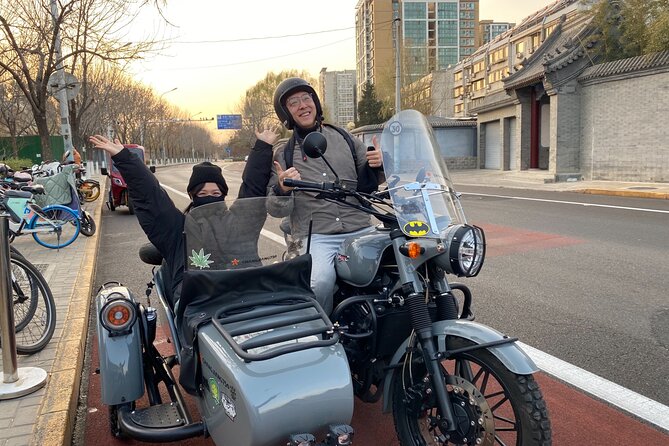
- A private ride for your own group: You are not sharing the tour with strangers, and groups of more than eight can ask about extra availability.
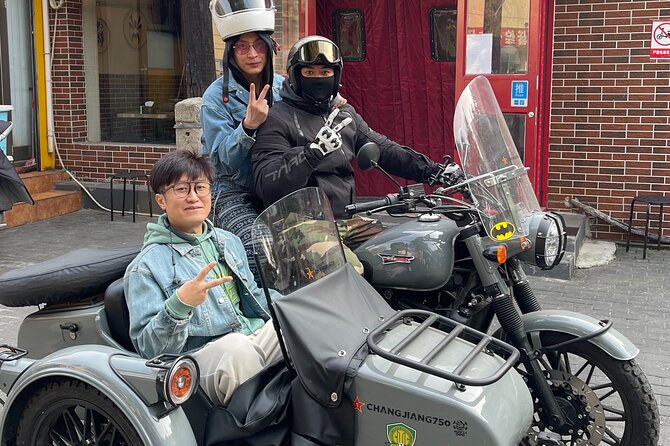
- Two passengers share one sidecar motorcycle: One person rides in the sidecar and one sits behind the driver, with a seat change possible halfway through.
- The hutongs are the star: Small lanes near the Bell and Drum Towers and Houhai show a side of Beijing that is difficult to reach by standard sightseeing vehicle.
- Niujie adds food and neighborhood life: You stop in Beijing’s famous Muslim area for local fast food, snacks, tea, coffee, or another drink.
- Useful comfort details are included: Helmets, Bluetooth communication, bottled water, rain gear, a phone charging cable, and hotel pickup and drop-off are provided.
- The route links old Beijing landmarks: The ride covers Baita Si, Yongding Gate, the Ming city wall, and the city’s north-south central axis.
Why a sidecar works so well in old Beijing
Beijing is a city of grand avenues and tiny lanes. A normal sightseeing vehicle handles the broad roads, but it cannot give you much sense of how the old neighborhoods fit together. The sidecar lets you move between both worlds.
You begin around 9:30 a.m., with pickup from your hotel. From there, the motorcycle heads toward the central axis, the north-south line that helps explain Beijing’s historic layout. You are not simply being driven from one monument to another. The route connects old gates, temples, neighborhoods, lakes, and surviving walls.
The sidecar also keeps you close to the street. You can see alley entrances, shop fronts, bicycles, courtyard doors, and the everyday rhythm of the hutongs as you pass. It is a better choice than a sealed vehicle if you want to feel the city air and get frequent photo stops.
There is one practical limit. A motorcycle does not offer much storage or weather protection. You should dress for the forecast and expect the ride to be more exposed than a car tour. Raincoats are included, and past outings have also included a small scarf and warm tea in cold conditions, but your clothing still matters.
Other short rides around Beijing:
- Beijing Old Hutongs Tour by Rickshaw
★ 3.5 · 73 reviews - 2-Hour “Ancient & Modern” Beijing Sidecar Tour (Day /Night)
★ 5.0 · 36 reviews - Beijing:Ancient & Modern City Tour by Sidecar(Day/Night)
★ 4.9 · 15 reviews
Bell and Drum Towers: a clear start in central Beijing
The first major stop is the Bell and Drum Towers. These landmark buildings sit near the northern section of Beijing’s old central axis and provide an immediate sense of the city’s scale and age.
You have about 10 minutes here, with no admission charge included because no ticket is required for the stop. This is mainly a photo and orientation point rather than a long museum visit. Your guide can explain how the towers fit into the old city and point out the surrounding hutong area.
I like this opening because it gives you a useful map in your head. Beijing can feel enormous on a first visit. Seeing the towers, then heading into the smaller lanes, makes the contrast easy to understand.
Do not expect a long, formal lecture or a detailed interior visit. The appeal is the location and the transition into the old neighborhoods. If your priority is spending a great deal of time inside historic buildings, this tour moves too quickly for that. If you want an overview with plenty of street-level movement, the pace works well.
Hutongs and Houhai: the most personal part of the ride
The hutongs are where this experience earns its place. These narrow traditional lanes reveal a more ordinary side of Beijing, away from the city’s grand monuments. The motorcycle can enter smaller passages and reach corners that are awkward for a bus or larger car.
You will see the lanes at close range, with stops for photographs and short walks. The goal is not to treat the hutong as a museum. It is to show you a living neighborhood and let you notice how homes, small businesses, and public spaces sit close together.
From there, the route reaches Houhai, a lake surrounded by old hutong areas. You ride along the water and have time to pause for coffee or tea. This break is welcome because it slows the morning down after the traffic and turns through the lanes.
The exact feel of Houhai will depend on the day and the pace of your private group. The tour promises a stop beside the lake, not a long café visit or a boat outing. Still, it is a useful change of scene. You get water, old neighborhoods, and a chance to talk with your guide while looking at Beijing from a calmer angle.
The hutong section is also where the guide matters most. John is described as a local who grew up in Beijing and can explain landmarks while pointing out less obvious streets. Communication is handled through a Bluetooth-equipped helmet on some rides, which makes it easier to hear commentary over traffic and wind.
Baita Si and the route south
The ride continues south toward Miaoying Temple, commonly called the Temple of the White Dagoba, or Baita Si. Its white tower is one of the route’s most recognizable religious landmarks.
You stop for about 15 minutes, again without an admission charge listed for the visit. This is a compact visit, so you should think of it as a look, a few photographs, and historical context rather than a full temple tour.
That short stop suits the overall design. The sidecar tour is about connections and variety. You see a temple, then return to the road, rather than spending most of the four hours in one complex. If religious architecture is your main interest, you may want a separate temple visit with more time. If you want several parts of Beijing in one morning, Baita Si adds a worthwhile landmark without taking over the schedule.
The route also passes one of Beijing’s oldest Buddhist temples, where rare Buddhist sutras are preserved and the Buddhist Academy of China is located. The supplied schedule does not name this temple or promise a formal stop, so treat it as a passing point with commentary rather than a guaranteed visit inside.
A few more days out in Beijing worth the ticket
- Beijing: Forbidden City Tour(Group/Private)-Tickets Included
★ 4.8 · 7,974 reviews - Beijing: T-Square & Forbidden City Group or Private Tour
★ 4.8 · 4,446 reviews - Beijing:Mutianyu Great Wall Private Trip with English Driver
★ 5.0 · 1,263 reviews - Private Mutianyu Great Wall Trip with English-Speaking Driver
★ 5.0 · 927 reviews
Niujie Mosque and Ox Street food
Niujie, or Ox Street, gives the tour one of its strongest neighborhood changes. This is Beijing’s famous Muslim area, and the stop includes time for local food, a snack, or a drink such as coffee or tea.
You have about 30 minutes here. That is enough for a taste and a look around, but it is not a full food tour. The included meal is described as Beijing local fast food or snacks for lunch. You should not book this expecting a long restaurant meal with several courses.
I like this stop because food makes a city easier to understand. The ride is not limited to imperial sites and walls. Niujie brings in a working neighborhood, local eating habits, and a different part of Beijing’s cultural life.
The area is also a practical place to ask your guide what to try. John’s role includes choosing or suggesting a local bite, and the tour allows some flexibility around the drink or snack. If you have allergies or strict dietary needs, contact the provider before booking rather than assuming the food can be changed.
The 30-minute stop is short enough to keep the tour moving. That is good for a first look, but it means you may need another visit if you want to explore the area at length.
Yongding Gate and the old central axis
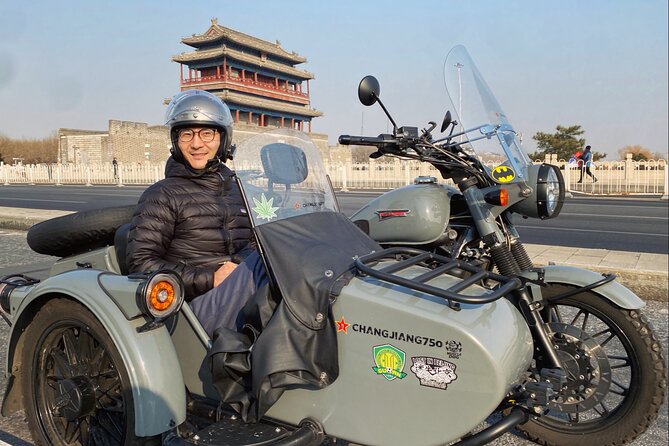
After Niujie, the motorcycle continues toward Yongding Gate, the southern starting point of Beijing’s old central axis. This is one of the most useful stops for understanding the city’s design.
From here, the north-south layout becomes easier to picture. Earlier, you saw the Bell and Drum Towers at the northern end of the route. Yongding Gate helps complete that mental line and shows how Beijing’s historic core was organized around a strong central direction.
This stop is especially helpful if you enjoy understanding how a city is put together, not just collecting isolated sights. Your guide can connect the northern towers, the old neighborhoods, the temples, and the southern gate in one explanation.
The schedule does not give a fixed visit length for Yongding Gate. It is best understood as a viewpoint and orientation stop along the ride. The main value is the explanation and the larger picture, not a long period of independent sightseeing.
The Ming city wall park and the final ride
The final named stop is the Site of Ming City Wall Park. Here you explore surviving sections of the roughly 600-year-old Ming city wall while the motorcycle passes through the older part of the city.
The stop lasts about 15 minutes and has no admission charge listed. It gives the tour a strong finish because the wall makes Beijing’s former boundaries visible. After seeing narrow hutongs and central landmarks, you end with a physical reminder that the old city was once enclosed and carefully planned.
Again, the time is limited. You will get photographs and a brief look rather than a full wall walk. That is a fair trade if you want a broad introduction, but not if your goal is to study the wall in detail.
By the end, the route has covered a useful range: traditional lanes, a lake, temples, a Muslim neighborhood, the central axis, and an old defensive wall. The ride gives you a city lesson through movement, not a string of disconnected photo stops.
What the private format really adds
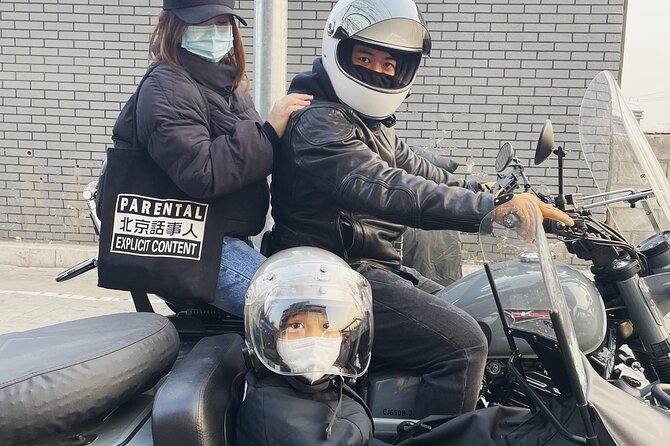
This is a private activity, so only your group takes part. That matters on a motorcycle tour. You can ask questions without holding up a large party, and the guide can adjust the emphasis toward food, architecture, local streets, or photographs.
The vehicle carries two passengers: one person in the sidecar and one behind the driver. You can switch positions halfway through, which is important because the two seats offer different views and riding positions.
The sidecar seat gives you a broad view of the street and is likely the more distinctive position. The rear seat places you directly behind the driver and may make conversation easier, depending on the helmet setup. Ask to switch so both people get a fair try.
The tour is suitable for most participants, and service animals are allowed. Since this is an open-air ride, you should still think about your own comfort on a motorcycle. The provided information does not give height, weight, or mobility limits, so contact the provider if you need a specific arrangement.
Price, timing, and what you receive for $129
The price is $129 per person. That is not the cheapest way to see Beijing, but the comparison is not with a public bus or a self-guided subway ride. You are paying for a private vehicle, a professional driver and guide, hotel pickup and drop-off, a four-hour route, and a very small group.
The included extras improve the value: helmet, bottled water, raincoat, phone charging cable, and lunch in the form of local fast food or snacks. A Bluetooth helmet has also been used so passengers can hear the guide while riding. Those details reduce the small annoyances that can make an unusual tour less comfortable.
I would call the price reasonable for two people who want a private introduction and do not want to plan every transfer themselves. It is less compelling if you already know Beijing well or prefer to spend hours inside major museums and historic sites.
The tour is often booked about 23 days in advance. That is a useful sign that you should not leave it until the last morning of your trip, especially if you want a particular date or guide. More than eight people require a separate availability request.
Who should book this Beijing sidecar tour?
I would choose this for a first or second day in Beijing, when you want to understand the city before tackling longer visits to major sights. It gives you a quick map of the old center and may help you decide which neighborhoods deserve more time later.
It suits couples, friends, and small private groups who enjoy unusual transportation and frequent photo stops. It is also a good fit if you want a local guide who can explain the city while taking you beyond the most obvious avenues.
You may want another type of tour if you dislike motorcycles, need a fully enclosed vehicle, or prefer a slow schedule at each monument. The four hours are packed, and the named stops are generally short. You will see a lot, but you will not have time for detailed visits inside every temple, tower, or wall site.
The provider also offers Great Wall trips and tailor-made experiences on request. If your group wants a different balance of sights, it is worth asking about customization before booking rather than assuming every change is possible on the day.
Should you book it?
Book this tour if you want Beijing to feel close and immediate. The best parts are the hutong lanes, the private conversations with John or Johnny, the Niujie food stop, and the way the route explains the city’s central axis.
Skip it if you want a traditional walking tour with long museum visits or guaranteed indoor comfort. For the right person, $129 buys more than transport. It buys a personal orientation to old Beijing, with enough local streets and neighborhood life to make the city easier to read when you explore on your own.
You can cancel for a full refund up to 24 hours before the start time. Changes made within 24 hours are not accepted, and poor weather may lead to a different date or a full refund. Keep that weather rule in mind when fitting the ride into a short Beijing stay.
FAQ
What time does the tour start?
The stated start time is 9:30 a.m.
How long is the sidecar tour?
The experience lasts approximately four hours.
How many people ride in one sidecar motorcycle?
Two passengers ride on each motorcycle, with one person in the sidecar and one behind the driver. You can switch seats halfway through.
Is hotel pickup included?
Yes. Hotel pickup and drop-off are included.
What food and drinks are provided?
The tour includes Beijing local fast food or snacks for lunch. Bottled water is provided, and the route includes a stop for coffee, tea, or another beverage. Local food is also included around Niujie.
What happens if the weather is poor?
The experience requires good weather. If it is canceled because of poor weather, you will be offered another date or a full refund. You can also cancel up to 24 hours before the start time for a full refund.
New reviews from Beijing
- Mutianyu Wall, Summer Palace & Old Summer Palace Day Tour★ 4.8 · 34 reviews
- Night Market Haggling Adventure with an English Guide!★ 4.8 · 7 reviews
- BusDa-Mutianyu Great Wall&Forbidden City Full-day Coach Tour★ 4.9 · 11 reviews
- Mutianyu Great Wall Ticket with Roundtrip Cable Car★ 5.0 · 20 reviews
- Mutianyu Great Wall Bus Trip+Ticket 7/8/9/10/13/13:30/15:30★ 4.7 · 24 reviews
- Mutianyu Great Wall Entry Ticket Chairlift Up Toboggan Slide★ 4.9 · 8 reviews
- Mutianyu Great Wall 5-KM Guided Hike with Uphill Cable Car★ 4.8 · 16 reviews
- Mutianyu Great Wall Admission Ticket★ 3.6 · 7 reviews
Sidecar & Rickshaw Tours, compared.
2-Hour “Ancient & Modern” Beijing Sidecar Tour (Day /Night)
Read our review →
Browse the lists this tour appears in