Reviewed · TOURS IN BEIJING
10-Day China Tour to Beijing, Xian, Chengdu and Shanghai
The most memorable part of this 10-day route is its range. In one trip, you go from imperial Beijing to the Terracotta Army in Xian, from panda enclosures in Chengdu to Shanghai’s glowing skyline. The tour gives you China’s headline sights without making you arrange four cities, two train journeys, and a domestic flight on your own.
I like the private group format, since your party travels with its own guides and driver rather than joining a large bus tour. I also like the practical routing: high-speed trains connect Beijing with Xian and Xian with Chengdu, while a flight handles the longer jump to Shanghai. The main drawback is pace. You cover a lot of ground in 10 days, with several early mornings and some long sightseeing days.
Key points to know before booking
- Mutianyu Great Wall with cable-car transport gives you a less complicated way to reach the wall and time to walk along its stone ramparts.
- The Terracotta Army and Giant Pandas are the tour’s two most distinctive stops, and both are scheduled at useful times.
- Private touring means only your own group participates, with a professional guide and experienced driver.
- Nine breakfasts, three lunches, trains, a flight, hotels, and transfers are included in the $2,979 price.
- Shanghai adds both old and new China, from the Bund and Huangpu River to Yu Garden and Zhujiajiao.
- The itinerary is active, with limited unscheduled time and several transfers between cities.
Four cities, one carefully packed route
This trip works because each city has a clear role. Beijing supplies the grand imperial sights and the Great Wall. Xian brings China’s ancient military past and a strong Muslim cultural tradition. Chengdu adds giant pandas and a slower neighborhood visit. Shanghai finishes with colonial-era riverfront buildings, high-rise views, gardens, and a water town.
You are not simply ticking off monuments. You also get a taste of how modern China moves. Two long rail journeys are part of the plan, and the train rides make sense here. They are more interesting than spending another half-day in an airport, though you should bring snacks, fruit, a book, or a device for the journey.
The price is $2,979 per person based on twin sharing. That is not a budget trip, but the number includes a lot: hotel accommodation, private ground transport, guides, nine breakfasts, three lunches, one high-speed train from Beijing to Xian, another from Xian to Chengdu, and an economy flight from Chengdu to Shanghai. For a first visit, you are paying for coordination as much as sightseeing.
What else travellers book in Beijing:
- From Beijing: Mutianyu Great Wall Tours with Options
★ 4.9 · 9,216 reviews - Beijing: Forbidden City Tour(Group/Private)-Tickets Included
★ 4.8 · 7,974 reviews - Beijing: T-Square & Forbidden City Group or Private Tour
★ 4.8 · 4,446 reviews
Beijing begins with imperial scale
Your first day is deliberately light. A guide meets you at Beijing Capital Airport and transfers you to the hotel, leaving the rest of the day open. That is useful after an international flight, since you can rest, adjust to the time difference, or take a simple walk near the hotel without missing a major visit.
Day two starts at Tiananmen Square. The scheduled visit is only about 30 minutes, so think of it as an introduction and photo stop rather than a long historical session. The square is enormous, and its size helps explain the scale of Beijing’s political center.
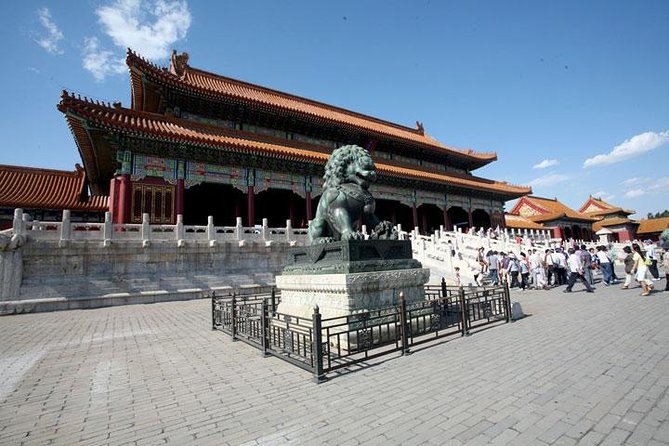
From there, you enter the Forbidden City, now known as the Palace Museum. Three hours gives you enough time to see the main halls, gates, and courtyards, though not every corner of this vast complex. Your guide can help turn rows of red walls and ceremonial buildings into a story about imperial government, court ritual, and daily palace life.
Wear comfortable shoes. The Forbidden City involves a lot of walking on broad stone surfaces, and the day continues after lunch.
The Lama Temple, or Yonghe Temple, changes the mood. This well-preserved lamasery brings together Han, Manchu, Mongolian, and Tibetan design influences. Allow about 90 minutes. It is a more intimate stop than the palace, with a religious focus rather than an imperial one.
The Temple of Heaven closes the day. Here, the emperors performed ceremonies intended to secure good harvests. The architecture is memorable, but the larger value is seeing how political authority and religious ritual once worked together. At 90 minutes, the visit is long enough to understand the site without turning the day into a museum marathon.
The Great Wall at Mutianyu and Beijing’s old lanes
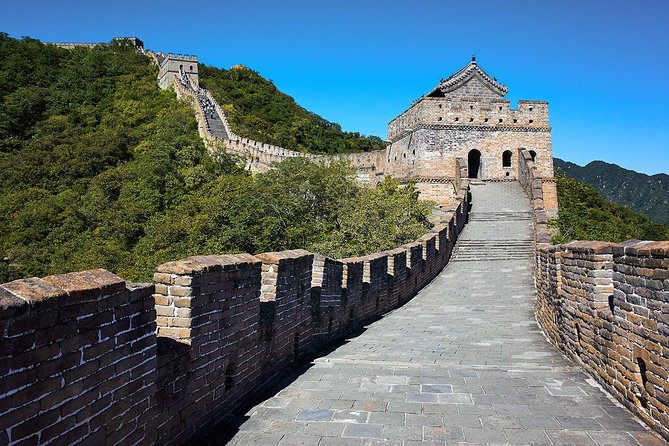
Day three begins with Mutianyu, one of the strongest parts of the trip. You spend about three hours at the Great Wall, and a round-trip cable car is arranged. That matters because reaching the wall can otherwise consume much of your energy before you even begin walking.
You will still need to walk on uneven surfaces and climb sections of the wall. The cable car reduces the approach, not the effort required on the ramparts. Take your time and look along the ridgeline rather than rushing from tower to tower. The wall’s curves and watchtowers are the point, not simply the act of getting one photograph.
Back in central Beijing, the group stops at the Bird’s Nest National Stadium for about 20 minutes. The visit is from a distance, and admission is not included. This is a quick Olympic-era photo stop, not a stadium tour, so keep your expectations modest.
The afternoon finishes with a rickshaw ride through hutongs, Beijing’s narrow residential lanes lined with old courtyard homes. This is one of the more human-scale parts of the Beijing schedule. Instead of only seeing palaces and monuments, you get a look at the traditional street pattern that once shaped much of the city.
The hutong visit lasts about 90 minutes. It is worth paying attention to the lanes between the rickshaw ride, since the quiet courtyards and everyday details are more revealing than a fast ride alone.
Day four begins at the Summer Palace, the largest surviving imperial garden in Beijing. You have about two hours there, enough for a good look at its buildings and graceful setting around the lake. Then comes the first major transfer: an afternoon high-speed train to Xian, taking roughly four and a half hours.
Xian brings warriors, walls, and Muslim food
The rail journey is listed as about five hours including the transfer period. You should plan for a long travel block, even though the train itself is about four and a half hours. Snacks are worth carrying, and a book or downloaded film will make the ride easier.
Xian’s main event is the Museum of Qin Terracotta Warriors and Horses. Four hours gives you time to visit the three excavated pits and understand the scale of the site. The figures, weapons, and military formations were made for the tomb of China’s first emperor, and the pits are far more impressive in person than a photograph suggests.
This is also one of the busiest sightseeing stops on the route. Stay close to your guide and give yourself time at each viewing area. The large first pit is the famous one, but the other pits help show how archaeologists piece together the full army.
Back in the city, you visit the Giant Wild Goose Pagoda. This square brick pagoda has survived more than 1,300 years of change, and its simple shape contrasts with the vast scale of the Terracotta Army. One hour is enough for an exterior visit and an explanation of its importance.
The evening stop at Grand Tang Dynasty Ever Bright City is more modern and theatrical. It is a popular pedestrian area where people dress in traditional clothing and enjoy food, lights, and performances. You have about 90 minutes, so use it for atmosphere rather than expecting a quiet archaeological site.
Day six begins at the Xian City Wall. The visit lasts about two and a half hours and includes time in the City Wall Park, where you can watch ordinary city life before going onto the fortification itself. This is a good place to understand how Xian’s old center was organized.
The wall is one of the most complete surviving urban fortifications in China. You can appreciate its size from ground level, but the elevated route gives you a much better sense of the old city grid. The surface can be tiring, so comfortable shoes matter again.
Next comes the Great Mosque, one of China’s oldest and best-preserved Islamic mosques. The scheduled visit is only 30 minutes, but it adds a valuable cultural layer to Xian. The city’s Muslim quarter is not just a shopping stop. It reflects centuries of trade and contact between China and the wider Islamic world.
You then have about an hour in the Muslim Quarter to buy handicrafts or eat halal snacks at your own cost. This is one of the few places where the tour gives you a clearly independent food choice, so take advantage of it. The schedule is short, but a snack here can be more memorable than another set lunch.
That afternoon, a high-speed train takes you from Xian to Chengdu in about four hours. Your Chengdu guide meets you at the station, which removes one more piece of arrival-day confusion.
Same city, a completely different day:
- All-Inclusive Tour: Tiananmen Square, Forbidden City, Great Wall
★ 5.0 · 2,873 reviews - MuBus: Mutianyu Great Wall ENG/ESP/RUS Guided Bus Tour
★ 5.0 · 2,361 reviews - 4-Hour Small Group Tour to Forbidden City with Entry Tickets
★ 5.0 · 1,863 reviews - Beijing: Tiananmen Square Registration Service(Ticket)
★ 4.5 · 1,704 reviews
Chengdu gives the schedule a softer middle
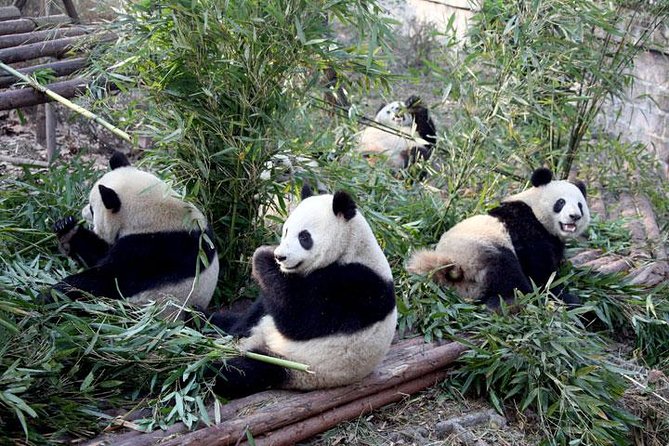
The Giant Panda Breeding Research Base requires an early start. That is good planning, since pandas are more active in the morning. You spend about two hours seeing these rare animals, and the visit is one of the tour’s strongest family-friendly moments.
Do not treat the early pickup as a nuisance. Later in the day, pandas are more likely to be resting, and the morning timing gives you a better chance to see movement and feeding behavior. The stop is tightly focused, so two hours should feel useful rather than rushed.
Afterward, the tour shifts from wildlife to ordinary city life in the Xiaojiahe residential district. You have about three hours there, including lunch at your own cost at Yongle Restaurant. This is an important change of pace. Instead of another major monument, you see how local people spend time in a residential area and eat as locals do.
Because this is a neighborhood visit, do not expect a polished tourist attraction. That is its value. The stop offers a small break from formal sightseeing and lets you choose your own meal. It also gives you a chance to ask your guide about daily life in Chengdu.
Shanghai moves from river history to modern China
On day eight, you are escorted to Chengdu airport for the economy-class flight to Shanghai. The airport transfer and flight process take about three hours in the schedule, but you should still treat this as a travel morning rather than a sightseeing morning.
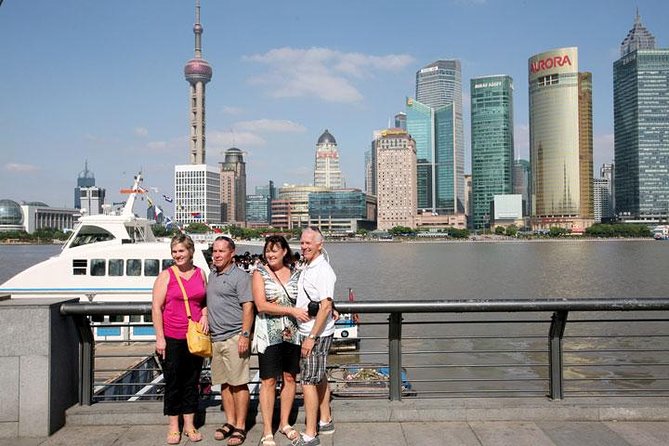
After hotel check-in, you visit the Bund on the west bank of the Huangpu River. Its early 20th-century buildings preserve the visual imprint of Shanghai’s foreign concessions and trading past. From the promenade, you can look across toward the city’s newer towers and see the contrast that defines modern Shanghai.
A one-hour Huangpu River cruise follows. This is a smart pairing with the Bund because the view changes from street level to the water. On one side, you see historic European-style buildings. On the other, the skyscrapers show how quickly Shanghai has changed.
The cruise is included, and it is one of the easier ways to get broad city views without another long walk. Bring a layer if you are sensitive to wind on the river, though the provided information does not specify seasonal conditions.
Yu Garden and Zhujiajiao close the trip
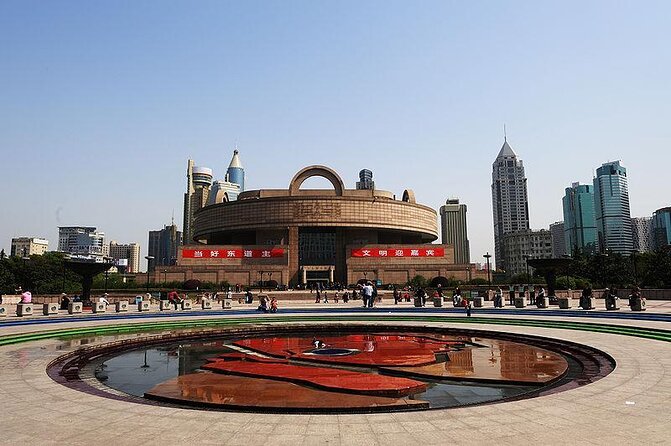
Day nine starts at the Shanghai Museum, with two hours devoted to ancient Chinese art. This is a welcome indoor stop after several days of outdoor walking and transport. Your guide can help you focus on the collections rather than trying to see everything at once.
Yu Garden follows. The Nine Zigzag Bridge and mid-lake pavilion are the signature sights, with carefully arranged paths, rockwork, and traditional buildings. The visit lasts about two hours and includes a farewell lunch at your own cost, described as an a la carte meal. Since the exact menu and price are not specified, budget separately for it.
In the afternoon, you go to Zhujiajiao Ancient Town for about two hours. Its riverside residences and older streets provide a contrast to Shanghai’s tall buildings and commercial center. The town is promoted as Oriental Venice, but the more useful way to think about it is as a preserved water-town setting close to the city.
You should expect a popular historic area, not an untouched village. Still, its canals and old homes give the final day a different texture. The timing is enough for a walk and a feel for the place, though not a slow, all-day exploration.
Day ten is an airport transfer timed to your international flight. The tour can arrange the transfer, and a maglev train ride to Pudong Airport may be available if you prefer that option. The supplied details do not confirm whether the train is included, so ask before counting on it as part of the price.
What the $2,979 price really covers
The strongest value is the amount of transport and coordination included. You receive twin-share hotel accommodation, private vehicle transfers, guides, drivers, train tickets, the Chengdu to Shanghai flight, nine breakfasts, three lunches, and bottled water, two bottles per person per day.
You still pay for international airfare, a China visa if required for your nationality, guide and driver gratuities, and some meals. The Bird’s Nest admission is also not included. A minimum of two people is required, so this is not designed for a solo booking.
A five-star rating and 100 percent recommendation mark from 17 ratings suggest a very strong satisfaction record, but you should still match the tour to your habits. The trip is private, yet the schedule itself is fixed and busy. Private does not mean leisurely.
The tour is not suitable for people over 80, and most participants can take part according to the supplied information. Expect walking, stairs, uneven surfaces, early departures, and repeated luggage transfers. If you dislike moving hotels or changing transport, this route may feel tiring.
Who should book this China route?
I would choose this tour if you are visiting China for the first time and want the major highlights handled by local guides. It suits couples, families, and small groups who value a private vehicle and do not want to negotiate train stations, domestic flights, and hotel transfers alone.
It is especially good for people who want variety. You get imperial architecture, a world-famous wall, a major archaeological site, an Islamic cultural quarter, pandas, river views, gardens, and a historic water town.
I would hesitate if you want long free afternoons, slow meals, or time to explore each city independently. Beijing alone could fill a week, and this itinerary gives you only a short window in every place. The tour favors breadth over lingering.
The cancellation policy is strict: the experience is non-refundable and cannot be changed for any reason. Confirm passport names, numbers, expiry dates, and issuing countries carefully at booking, since those details are required for all participants.
Should you book it?
Book this tour if you want a well-organized first look at China’s essential sights and you are comfortable with a brisk pace. The route is thoughtfully balanced, and the most difficult logistics, especially the trains, airport transfers, and cross-country connections, are handled for you.
Skip it if you need flexibility or prefer to spend several days in one city. For the right person, the $2,979 cost buys more than admission tickets. It buys a private framework for seeing four very different parts of China without having to build the machinery of the trip yourself.
FAQ
How long is the China tour?
The tour lasts approximately 10 days, beginning with airport pickup in Beijing and ending with an airport transfer in Shanghai.
Which cities does the tour visit?
The route includes Beijing, Xian, Chengdu, and Shanghai.
Are train and flight tickets included?
Yes. The tour includes one high-speed train from Beijing to Xian, one high-speed train from Xian to Chengdu, and one economy-class flight from Chengdu to Shanghai.
Is accommodation included?
Yes. Hotel accommodation based on twin-sharing rooms is included.
Are meals included?
Nine breakfasts and three lunches are included. Other meals, including the farewell lunch in Shanghai described as a la carte, may be at your own cost.
Is this a private tour?
Yes. Only your group participates, and the tour includes a professional guide, experienced driver, and air-conditioned vehicle. A minimum of two people per booking is required.
New reviews from Beijing
- Private Transfer to Mutianyu Great Wall with professional driver★ 5.0 · 19 reviews
- One day tour to downtown Tianjin from Beijing by high speed train★ 5.0 · 3 reviews
- camp on the Great Wall overnight with sunrise and sunset on the wall★ 5.0 · 11 reviews
- ZANBUS: Trip to the Jinshanling Great Wall Departing at 7:30 AM★ 5.0 · 5 reviews
- BusDa:Ancient Great Wall &Badaling Great Wall Full-day Bus Tour★ 4.5 · 6 reviews
- Yuxiandu Chinese Royal Cuisine Museum with Show and Royal Banquet★ 5.0 · 4 reviews
- Wild Great Wall Hikes★ 5.0 · 10 reviews
- Wild Great Wall Huanghuacheng Half Day Tour★ 5.0 · 15 reviews
Tours in Beijing, compared.
Forbidden City Tour(Group/Private)-Tickets Included
Read our review →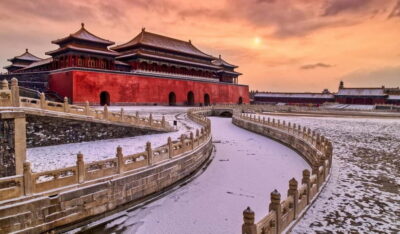
T-Square & Forbidden City Group or Private Tour
Read our review →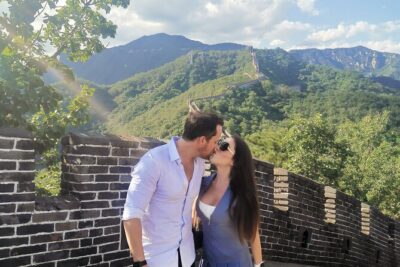
All-Inclusive Tour: Tiananmen Square, Forbidden City, Great Wall
Read our review →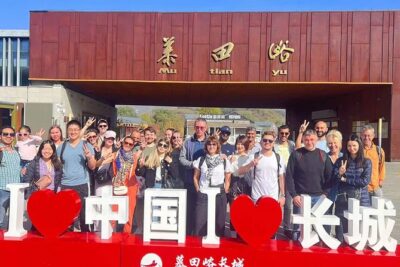
MuBus: Mutianyu Great Wall ENG/ESP/RUS Guided Bus Tour
Read our review →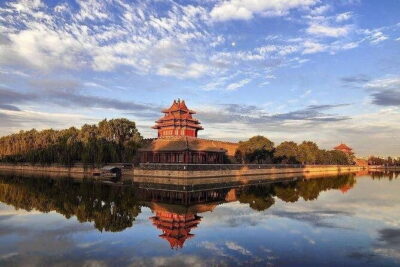
4-Hour Small Group Tour to Forbidden City with Entry Tickets
Read our review →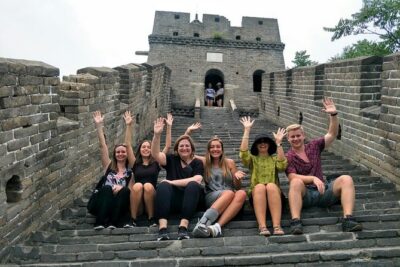
Beijing Full Day Tours: Tiananmen Sq, Forbidden City, Great Wall
Read our review →